

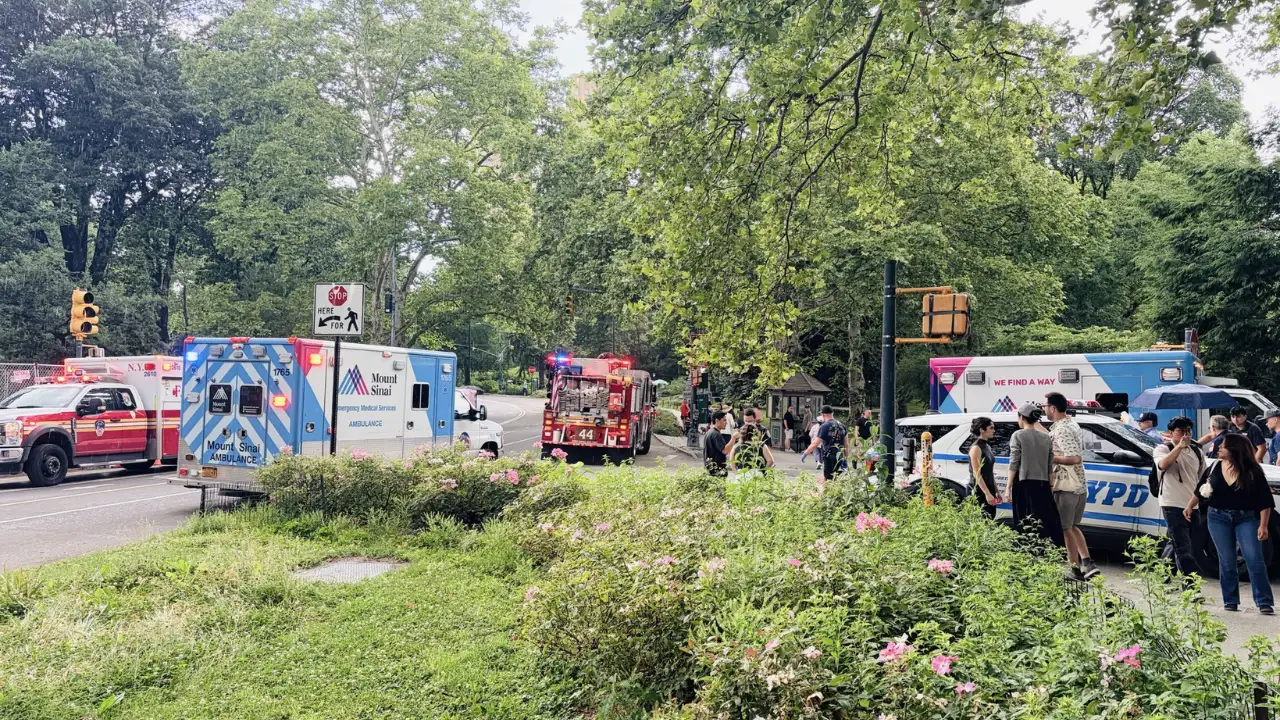
New Delhi, June 18, 2026: A devastating tragedy occurred in New York City’s Central Park when an 18-year-old tourist from India, Romanch Mahajan, lost his life following a horrific horse-drawn carriage accident. The heartbreak unfolded during what was supposed to be a dream vacation for the Mahajan family, marking their very first trip to the United States. The fatal accident has not only shattered a family but has also reignited an intense, city-wide political debate over the safety and ethics of the century-old carriage industry operating in the heart of Manhattan.
The incident took place during a bright afternoon on a busy loop inside Central Park, near West 72nd Street and West Drive. Romanch was riding in the red-and-white carriage alongside his parents, Deepak and Priya Mahajan, and his younger brother. Desiring a keepsake to remember their historic trip, the family asked the carriage driver to take a group portrait. In violation of strict industry regulations, the driver stepped away from the carriage at arm’s length to snap the photograph.
It was during this brief moment of vulnerability that the seven-year-old carriage horse, named Sampson, became startled and abruptly bolted. With no one at the reins to control the animal, the carriage accelerated down West Drive at a terrifying speed. Witnesses described a chaotic scene, with the carriage operator desperately sprinting behind the runaway vehicle while the passengers screamed for help.
As the carriage hurtled uncontrollably through the crowded park, the situation took a tragic turn near Cherry Hill Fountain. Romanch’s mother, Priya, was violently thrown from the swaying cab. Witnessing his mother fall to the ground, Romanch heroically attempted to reach out and save her, but the momentum ejected him from the careening carriage as well. Romanch struck his head heavily on the paved roadway, rendering him immediately unresponsive.
The driverless carriage continued its erratic path down the loop until it clipped the wheels of another stationary carriage near the iconic Tavern on the Green restaurant, causing the entire vehicle to flip over completely. While the other family members escaped with minor injuries and declined formal medical treatment at the scene, Romanch was rushed to the New York-Presbyterian Weill Cornell Medical Center in critical condition. Despite the exhaustive efforts of medical personnel, the teenager succumbed to his severe head trauma the following day.
The tragedy has sparked immediate accountability and swift repercussions within the carriage industry. The Transport Workers Union (TWU Local 100), which represents New York City’s carriage drivers, immediately condemned the actions of the operator. Union officials labeled the driver’s decision to step away from the horse “completely unacceptable.” In the wake of the initial investigation, the carriage owner indefinitely suspended the driver, and Sampson—who had only been working in Central Park for six weeks and was uninjured in the crash—has been permanently retired from the carriage trade.
This fatal mishap has rapidly accelerated political pressure on New York City officials to overhaul or completely eliminate horse-drawn carriages from public spaces. The Central Park Conservancy, a non-profit organization that manages the park, released a scathing statement expressing absolute devastation over the young man’s death. The organization stated that a visitor losing their life is not an acceptable cost for an antiquated industry operating in one of the most heavily used public spaces in America.
Animal rights advocates and public safety groups are leveraging this tragedy to demand the immediate passage of “Ryder’s Law.” This proposed city legislation seeks to completely ban horse-drawn carriages across all five boroughs of New York City, while offering transitional job placement services to affected drivers. The law was named after a carriage horse that collapsed on a hot city street in 2022, drawing international scrutiny to the working conditions of the animals.
The urgency surrounding Ryder’s Law is amplified by a string of recent high-profile incidents involving park carriages. Just over a week prior to Romanch’s death, a 16-year-old carriage horse named Deniz collapsed and died near West 72nd Street after accidentally ingesting a highly toxic Japanese yew plant growing along the park’s curb. Furthermore, another carriage had overturned just a month prior in May after a horse became spooked on the same busy traffic loop. According to data provided by safety advocates, this crash marks the eighth major horse-related incident in the vicinity of Central Park within a 13-month window.
While opponents argue that the bustling, vehicle-heavy streets of modern New York are entirely unsuitable for large animals, defenders of the 150-year-old industry maintain that carriage rides are a cherished cultural tradition. Supporters argue the industry provides a nostalgic experience for millions of global tourists while sustaining hundreds of stable jobs for local drivers, stable hands, and independent horse farmers. Union representatives have cautioned against a total ban, suggesting instead that the city focus on broader traffic and safety regulations that encompass all park vehicles, including e-bikes, delivery carts, and pedicabs.
As the New York City Police Department (NYPD) continues its formal investigation into the exact triggers of the crash, a grieving family faces the unimaginable reality of returning to India without their eldest son. Romanch Mahajan‘s sudden passing has transformed a routine tourist attraction into a painful catalyst for legislative reform, forcing New York City leaders to confront the delicate balance between historic tourism and modern public safety.