

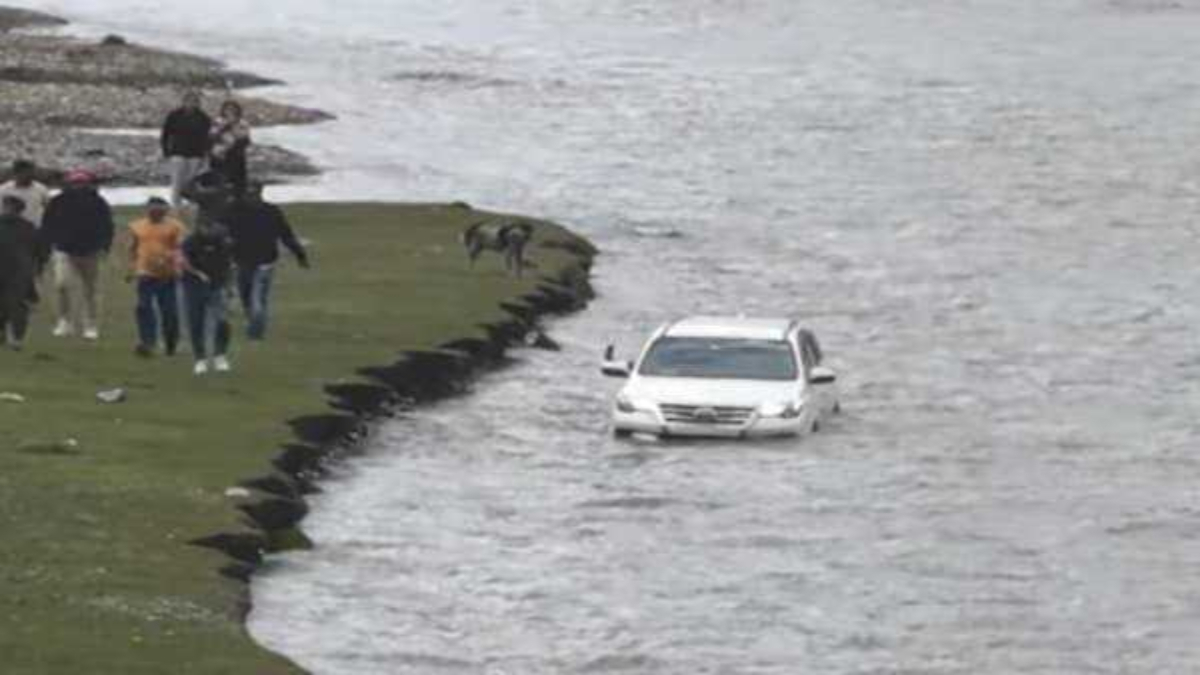
New Delhi, June 24, 2026 — A new viral video showing a tourist driving a massive white Toyota Fortuner SUV directly through a flowing stretch of the Jhelum River has sparked a fierce debate over public safety and ecological destruction in Kashmir.
The footage, which rapidly gained traction across social media platforms like X (formerly Twitter), shows the heavy sport utility vehicle cutting through the river currents. To the horror of local viewers, the driver appears to be casually recording the stunt from inside the cabin with one hand on the wheel. Meanwhile, groups of onlookers gathered along the riverbanks can be seen holding up their phones, filming the spectacle rather than discouraging it.
While the heavy SUV managed to navigate the uneven, rocky riverbed and climb out onto dry land without visibly breaking down, the incident has left a trail of anger among residents, conservationists, and civic authorities.
A Fragile Ecosystem Under Siege
For locals, the Jhelum River—historically revered as the Vitasta—is not just a scenic backdrop for tourist selfies; it is the lifeblood of the Kashmir Valley. Heavy vehicles driving directly through natural water bodies pose an immediate threat to these highly sensitive environments.
Environmentalists warn that if this behavior goes unpunished, it will open the floodgates for similar copycat stunts. The Jhelum’s ecosystem is already under stress from rapid urbanization, waste dumping, and climate variations. Allowing tourists to treat a historic river like an off-road amusement park could cause long-term, irreversible damage to local aquatic life.
Social Media “Clout” vs. Civic Sense
As the video continued to accumulate hundreds of thousands of views, the online commentary shifted heavily toward condemnation. Locals and responsible travelers alike have expressed exhaustion over the length to which modern travelers will go to secure online engagement and “clout.”
Many users pointed out a frustrating double standard, questioning why the same citizens who strictly follow rules and respect local environments when traveling abroad treat domestic, ecologically vulnerable destinations with such blatant disregard.
The Commercial Influence: Blaming the Ads?
The incident has also forced a deeper look into how modern sports utility vehicles are marketed to the public. A segment of the online debate highlighted how television commercials and social media influencers frequently romanticize extreme off-roading.
Automobile advertisements regularly showcase high-end SUVs splashing effortlessly through deep rivers, climbing pristine mountainsides, and conqureing untouched wilderness to prove their “water-wading” and rugged capabilities. Experts note that regular drivers often try to replicate these highly managed, professional stunts in real life without understanding the legal consequences, mechanical risks, or severe ecological damage they leave behind.
Calls for Iron-Fisted Enforcement
With the valley witnessing a major influx of travelers this summer season, residents are calling on the Jammu and Kashmir administration to transition from awareness campaigns to strict legal actions.
Many are demanding that local police and transport authorities track down the vehicle using its registration plate, impose heavy financial penalties, and impound the SUV. There is a growing consensus that without a strong, visible deterrent, the fragile landscapes of popular tourist spots will continue to suffer.
As Kashmir strives to balance its economically vital tourism industry with environmental preservation, this viral incident serves as a stark reminder: without strict rules and a shared sense of respect, the very beauty that draws millions to the valley could be destroyed by those claiming to admire it.