

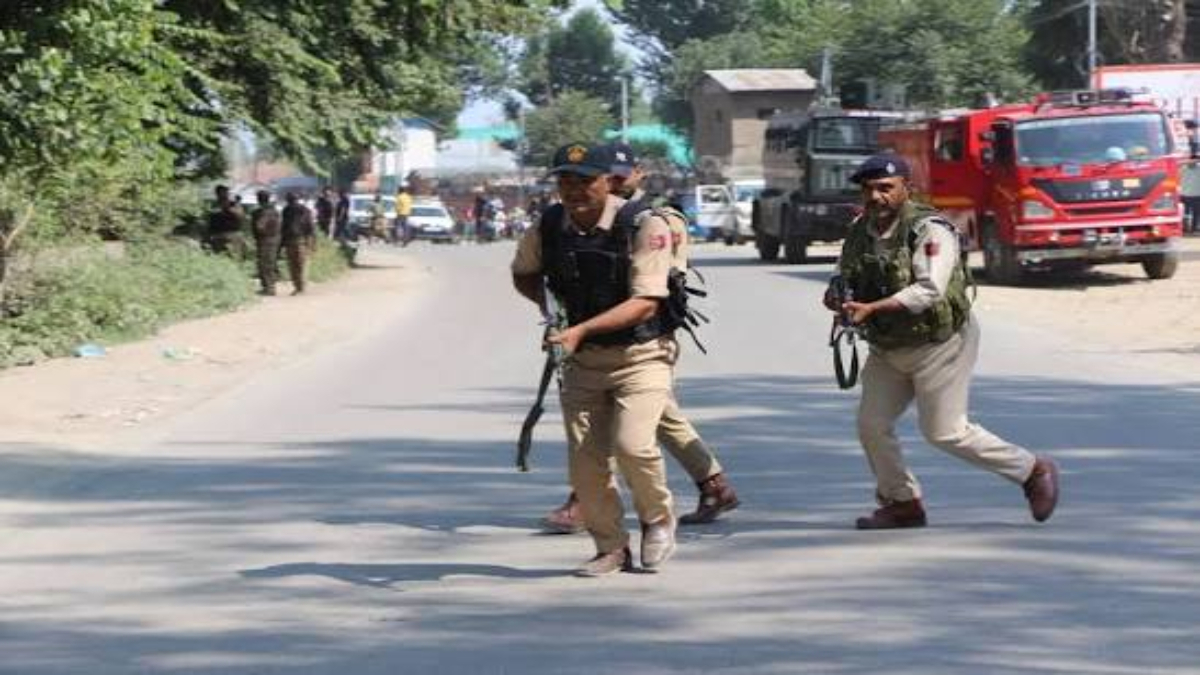
New Delhi, June 27, 2026: As part of the highly intensified security preparations for the upcoming Shri Amarnath Ji Yatra 2026, the Anantnag Police, alongside elite multi-agency security forces, executed a specialized grenade attack response mock drill at the critical emergency landing strip in Jablipora, Bijbehara. The high-stakes simulation, conducted on Friday, June 26, 2026, is part of a series of tactical exercises designed to fortify the South Kashmir transit corridor and ensure an impenetrable security blanket for hundreds of thousands of pilgrims heading toward the holy cave shrine.
The strategic landing strip at Bijbehara, situated along the critical national highway axis, serves as a pivotal geographical checkpoint for the pilgrimage convoy. Recognizing its tactical significance, security administrators transformed the site into a simulated crisis zone to evaluate real-time tactical maneuvers, multi-tier perimeter defense coordination, and medical evacuation capabilities under hostile conditions.
Tactical Execution and Crisis Simulation
The specialized exercise began with a realistic threat simulation, mimicking a surprise militant grenade assault targetting a hypothetical transit camp or convoy at the landing strip. The initial blast trigger launched an instantaneous, pre-engineered chain of tactical responses from the deployed personnel. Within seconds, perimeter security forces took strategic positions, establishing a rapid containment cordon to prevent further infiltration and secure the outer bounds of the landing strip.
Simultaneously, quick response teams (QRTs) and specialized tactical squads swooped into the epicenter of the simulated blast area. The primary focus of the teams was divided between neutralising potential secondary threats and executing a swift, systematic evacuation of the wounded. Medical first responders attached to the security columns demonstrated the critical triage process under simulated fire, applying immediate battlefield first aid before shifting casualties to standby armored emergency vehicles.
The drill heavily prioritized checking the resilience of field communication frameworks. To ensure there are no tactical dead zones during an actual emergency, forces integrated state-of-the-art radio communication networks, linking ground units at Bijbehara directly with the central district command center in Anantnag.
Part of a Larger Anti-Terror Preparedness Blueprint
This grenade attack response drill is not an isolated event but a critical cog in a broader, multi-layered security blueprint being deployed for the 2026 Yatra. Over the last two weeks, South Kashmir has seen an array of specialized anti-terror exercises. Just a day prior, on June 26, the Anantnag Police successfully carried out a highly technical Sniper Response Mock Drill at nearby Batangoo, testing the precision engagement and rapid deployment capabilities of sharpshooter units positioned along towering vantage points.
Earlier in the month, a massive joint mock drill involving the Railway Protection Force (RPF), Jammu and Kashmir Police, the Indian Army, and the Central Reserve Police Force (CRPF) was staged at the Anantnag Railway Station, practicing crowd management, emergency evacuation protocols, and explosive detection drills.
The integration of these diverse exercises emphasizes the administration’s defensive stance, which shifts from standard stationary guarding to aggressive, dynamic contingency management. By simulating various forms of asymmetric warfare—ranging from stand-off sniper fire and railway sabotage to sudden grenade attacks in open corridors like landing strips—the security apparatus aims to eliminate any element of surprise that hostile elements might exploit.
Command Review and Operational Standards
Senior police and security administrators who overseen the drill at the Bijbehara landing strip expressed satisfaction with the synchronization displayed between the different operational tiers. Reviewing officers emphasized that the structural layout of the Jablipora landing strip requires high-speed mobility and flawless coordination, as large open stretches can leave crowds vulnerable if standard operating procedures (SOPs) are not executed with absolute precision.
Addressing the participating troops at the conclusion of the drill, senior commanders reiterated that regular, grueling exercises are mandatory to maintain peak operational readiness. Field commanders were instructed to analyze the minor micro-seconds of latency observed during the simulation to further streamline the time taken between an initial alert and full tactical deployment.
The administration has made it clear that minimizing response time is the single most critical factor in mitigating casualties during explosive or kinetic terror incidents.
Ensuring a Safe and Smooth Pilgrimage
The Shri Amarnath Ji Yatra is one of the most significant annual spiritual journeys in the country, attracting devotees from across the globe who trek through the challenging mountainous terrain of South Kashmir to reach the holy cave. Given the geopolitical sensitivities of the region, ensuring a completely incident-free pilgrimage remains the highest priority for the Union Territory administration and central security agencies.
With the 2026 pilgrimage season fast approaching, the Anantnag Police have reiterated their unwavering commitment to establishing a foolproof security framework. The deployment of high-tech surveillance drones, automated threat-detection mechanisms, round-the-clock highway patrolling, and reinforced joint pickets are being paired with these practical mock drills to reassure the public.
The successful completion of the grenade attack response drill at the Bijbehara landing strip sends a clear message of reassurance to oncoming pilgrims: the security forces are fully prepared, highly coordinated, and equipped to handle any contingency with absolute precision and overwhelming force.