

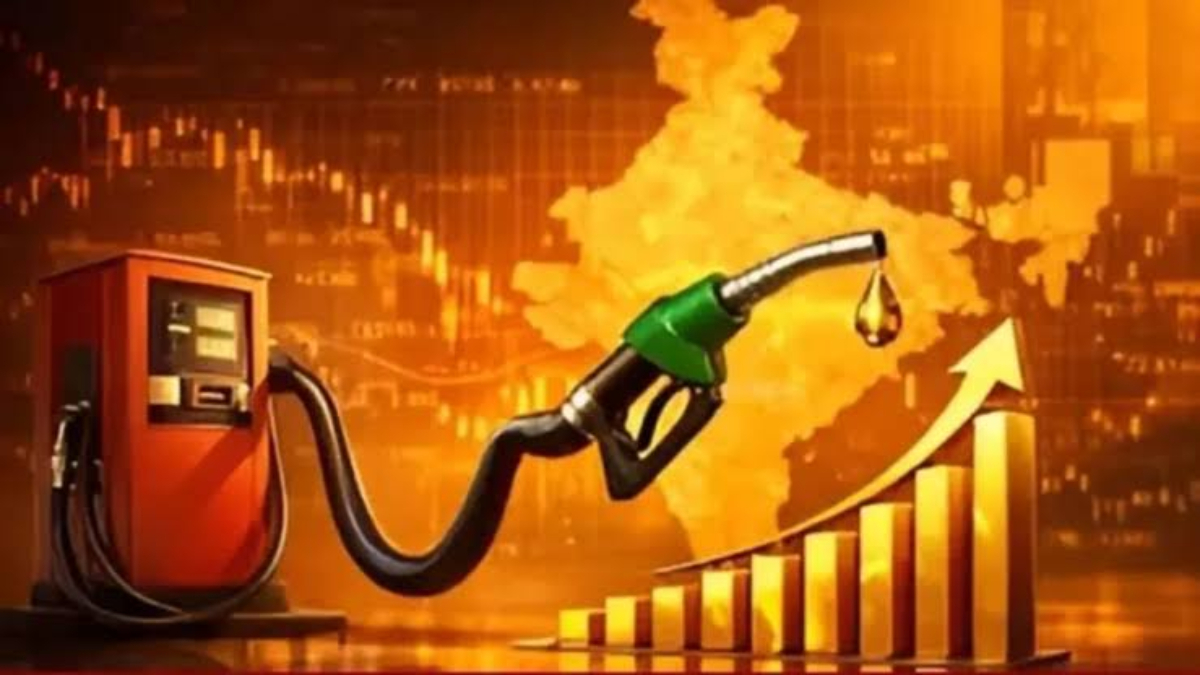
New Delhi, July 3, 2026 — Consumers hoping for immediate relief at the gas pump following the easing of the West Asia crisis will have to wait. Despite a recent drop in international crude oil benchmarks, retail fuel prices are projected to remain elevated for the next two to three months. Energy experts and government officials confirm that oil marketing and refining companies are currently clearing out expensive crude oil inventories purchased at the peak of the recent geopolitical conflict.
The dynamic highlights a persistent reality of the energy sector: the lag between crashing international crude markets and local retail price cuts. Because refiners buy their raw materials months in advance, the expensive legacy of the spring conflict will continue to dictate consumer costs well into the summer.
The Two-Month Pricing Lag
At a recent press briefing detailing the financial fallout of the West Asia conflict, Union Petroleum and Natural Gas Minister Hardeep Singh Puri shed light on the mechanics delaying cheaper fuel.
Oil marketing companies typically secure crude shipments at least 60 days before they are processed, refined, and distributed as retail fuel. Consequently, the petroleum products flowing through gas stations today were manufactured from crude bought in April and May, when tensions in the Persian Gulf spiked international benchmarks.
During the peak of the crisis—which featured a volatile conflict involving an international coalition, intense security threats, and the temporary disruption of vital shipping lanes like the Strait of Hormuz—crude prices regularly swung wildly, averaging well over $110 to $120 per barrel. While an interim agreement reached in mid-to-late June successfully cooled the market—pulling Brent crude down into the low $80s—refiners must first process and sell their high-cost inventory before they can pass those savings on to consumers.
Cushioning the Blow: A Historic Deficit
The financial data released by the Ministry of Petroleum underscores the massive scale of the crisis. State-owned oil marketing companies (OMCs) shouldered an under-recovery—essentially a loss from selling fuel below its actual import cost—amounting to a staggering ₹74,781 crore for the April–June quarter alone. Cumulatively, when factoring in rolling losses from the previous fiscal quarter, total under-recoveries reached ₹2.1 lakh crore.
Despite this intense financial pressure, the government’s fiscal framework chose to shield domestic consumers from the full force of global market volatility. While retail prices remained fixed and elevated, they did not track the exponential 40% to 60% spikes seen in neighboring and Western nations.
The government noted that maintaining steady domestic supplies without shortages, long queues, or “dry-outs” at local stations was a major logistical success, even if it meant delaying price cuts on the back end of the crisis.
When Will Pump Prices Drop?
For drivers, the burning question is when prices will finally begin to trend downward. According to industry analysts, a domestic retail price review will only become viable if global crude prices remain stabilized at lower levels—specifically around or below the $70–$75 per barrel range—over the next few weeks.
If the current fragile peace holds and international supply chains normalize, the cheaper crude bought in late June and early July will finally arrive at refining hubs by late August or September. Until then, energy companies will be focused on repairing their balance sheets and absorbing the multi-billion dollar losses incurred over the spring.
Looking ahead, India is actively pushing to expand its strategic crude storage capabilities and domestic refining capacity to 300 million metric tonnes per annum (MMTPA) to better insulate its economy from future geopolitical shocks. But for the immediate future, commuters will have to bear the lagging costs of a conflict that has physically ended, but economically lingers.