

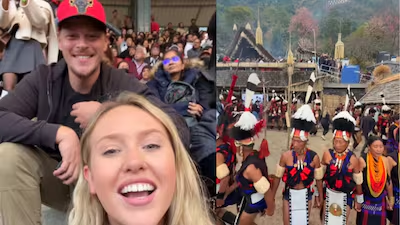
New Delhi, December 3, 2025: A vibrant and highly enthusiastic video clip shared by a foreign tourist, identified as Emma from Bangkok, showcasing her “crazy” and exhilarating experience at the Hornbill Festival in Nagaland has become a massive viral hit. The footage, which captured the overwhelming sensory explosion of the event, was widely promoted as a stunning, lesser-seen perspective of India’s incredible cultural diversity and tribal heritage.
Sensory Overload Is Experienced
The widely circulated video documented the tourist’s intense immersion in the “Festival of Festivals” held annually at the Naga Heritage Village, Kisama. The tourist was observed smiling, dancing, and engaging with members of the various Naga tribes. Images of the grand opening, featuring warriors dressed in stunning traditional attire, along with the powerful log drum beats and cultural dances, were captured.
The traveler emphasized that nothing could have prepared her for the sheer energy, colour, and pure joy witnessed at the festival. Her caption noted that every tribe was seen sharing its own unique story through performance, food, and music, providing an experience that was completely distinct from typical Indian travel itineraries.
Also Read: Indian Rescuer’s Tender Care for Infant in Sri Lanka Goes Viral
A New Perspective of India Is Showcased
The reason for the video’s explosive virality was its explicit claim: “This is India you don’t see in the usual travel videos.” The clip successfully steered attention away from the traditional Golden Triangle tourist circuit (Delhi-Agra-Jaipur), positioning Nagaland and its rich tribal culture as a must-visit destination.
The video was immediately celebrated by Indian netizens, particularly those from the Northeast, who applauded the foreigner’s choice to explore a region often overlooked by international tourism. The candid appreciation for the region’s diverse heritage and the warmth of the Naga people was seen as a powerful, authentic endorsement of the state’s cultural richness.
Unity and Heritage Are Applauded
The Hornbill Festival is annually organized to encourage inter-tribal interaction and to preserve, protect, and revive the richness of Naga heritage, with all 18 major tribes of the state taking part. The tourist’s video reinforced this core objective, highlighting the collective effort made by the tribes to showcase their unique traditions, arts, crafts, and cuisine in one place.
The footage ultimately became a powerful visual advertisement for the festival, compelling a global audience to recognize the unity, resilience, and creative energy of the Naga people. The tourist’s overwhelming delight effectively amplified the festival’s status as a premier global platform for cultural exchange.