

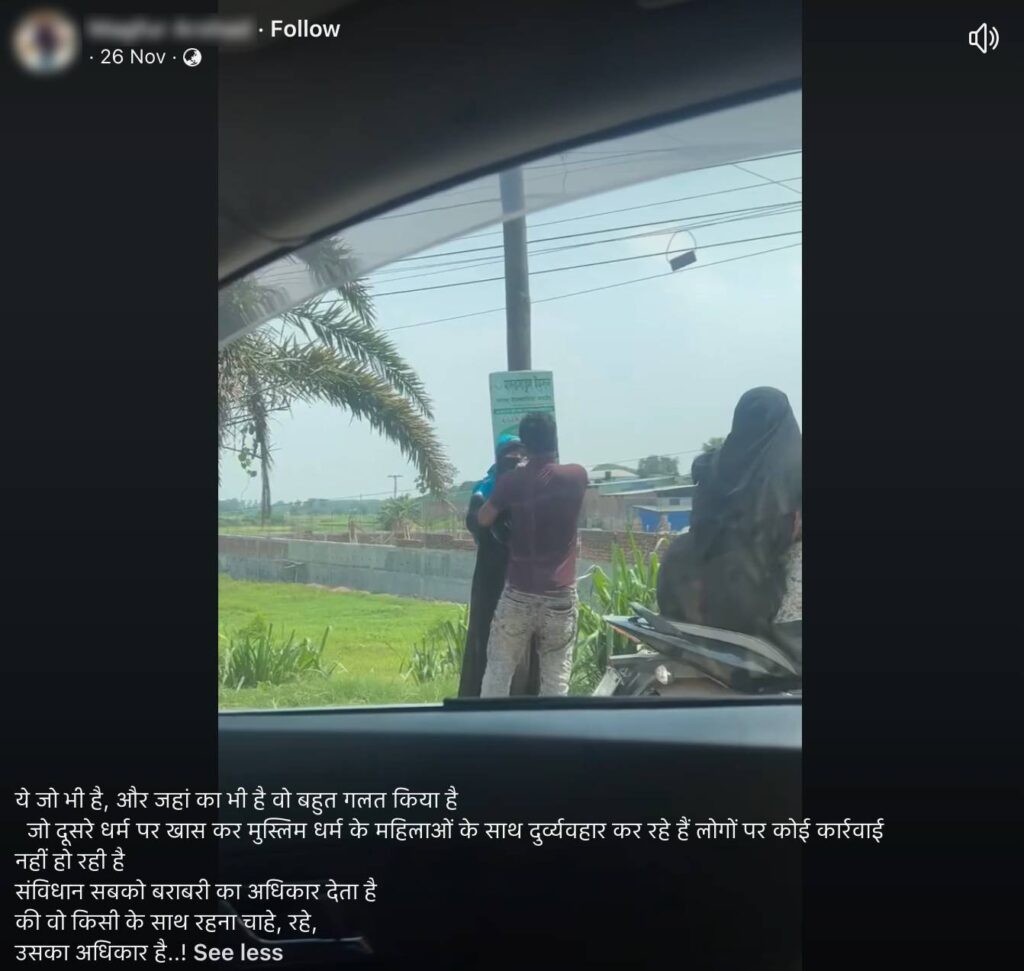
New Delhi, December 4, 2025: A disturbing video clip that rapidly went viral, showing a burqa-clad woman being struck on the head by a man, has been definitively identified as originating in Bangladesh, not India. The footage, which had been circulated on social media with misleading captions suggesting a communal incident in India, has been fact-checked and found to be related to a political demonstration in the Narsingdi district of Bangladesh. The corrected information serves to combat the spread of transnational misinformation.
Misinformation Attempts To Mislead
The video gained significant traction due to its highly volatile and distressing content. It was quickly shared across various platforms, often by accounts attempting to frame the incident as an act of communal violence or assault perpetrated against a Muslim woman in an Indian state. This misattribution of the location and the context was widely condemned by fact-checking organizations and responsible social media users, as such false claims are often used to incite tension and conflict.
It was widely recognized that the circulation of the video was driven purely by the sensational nature of the violence and the deliberate manipulation of its geographical origin to serve a political or divisive narrative.
Also Read: Viral Video Fuels Debate on NRIs’ Hesitation to Return to India
Incident Traced to Bangladesh Violence
A thorough investigation and reverse image search confirmed that the clip was recorded in Narsingdi, Bangladesh, around August 2, 2024. The violence documented was established as having occurred during a period of civil unrest and demonstrations. Specifically, the assault was linked to clashes between supporters of the ruling Awami League and protesters who were demonstrating against the government led by Sheikh Hasina.
The woman seen in the video was reportedly caught in the middle of these political clashes. Her identity and the precise nature of her involvement in the protest were not officially confirmed, but the context clearly shows that the incident was a manifestation of internal political conflict in Bangladesh, rather than a communal attack in India as was being falsely claimed.
Fact-Check Underscores Need for Verification
The successful fact-checking and debunking of the viral claim underscore the persistent challenge posed by cross-border digital misinformation. It was strongly advised that viewers exercise extreme caution before accepting and sharing sensational videos, especially those lacking specific location markers or authoritative sources.
The incident serves as a crucial reminder of how easily emotionally charged footage can be weaponized through mislabeling and how essential it is that the public relies on verified information before contributing to the circulation of unconfirmed and potentially damaging narratives.