

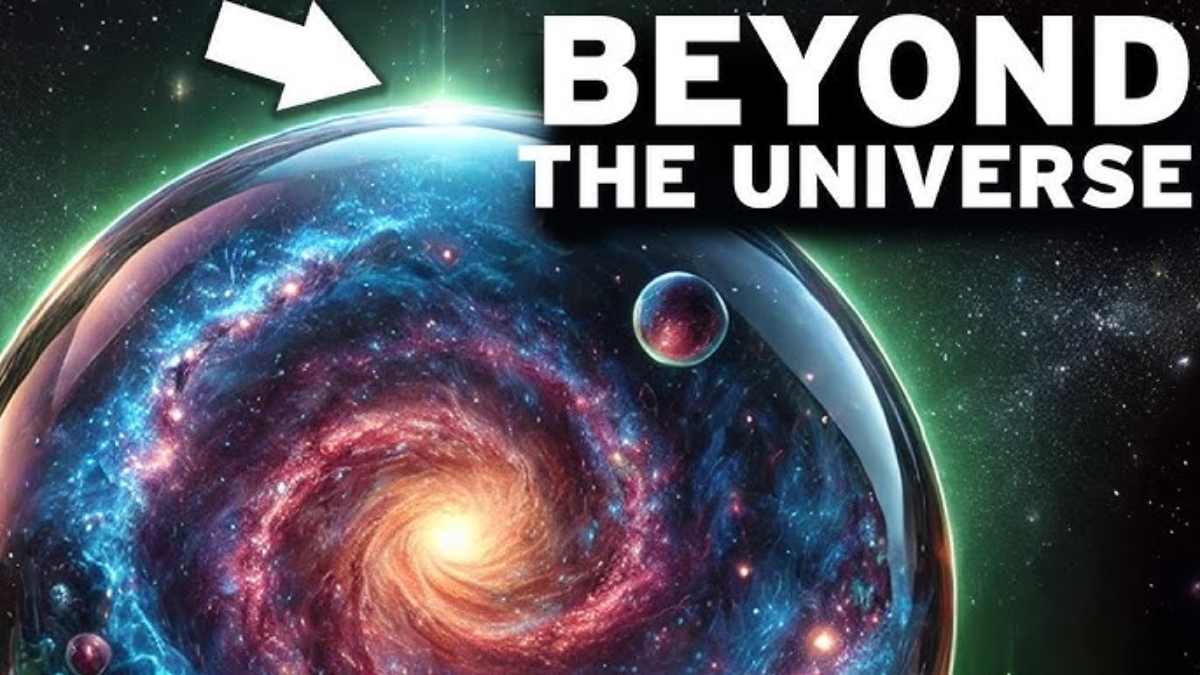
New Delhi, February 10, 2026: From the shimmering dust of distant nebulae to the silent beckoning of supermassive black holes, the universe remains the ultimate frontier of human curiosity. For millennia, we looked at the stars and saw myths; today, we look at them and see our history, our physics, and perhaps our future.
As we venture further into 2026, our understanding of the cosmos is shifting at a pace rarely seen in the history of science.
1. The Living History of the Big Bang
The universe is not just a vast collection of “stuff”; it is a chronological record. Because light takes time to travel, looking at a star 1,000 light-years away means we are seeing it as it existed a millennium ago.
Current cosmological models suggest the universe began approximately 13.8 billion years ago in an event known as the Big Bang. This wasn’t an explosion in space, but an explosion of space. Since that moment, the fabric of the universe has been stretching, a phenomenon known as metric expansion.
Key Cosmic Components:
- Baryonic Matter (5%): Everything we can see—planets, stars, people, and atoms.
- Dark Matter (27%): An invisible “glue” that provides the gravitational pull necessary to keep galaxies from flying apart.
- Dark Energy (68%): A mysterious force acting as a “cosmic repeller,” causing the expansion of the universe to accelerate.
2. The Era of the Great Observatories
We are currently living in a “Golden Age” of astronomy. While the Hubble Space Telescope gave us the “eyes” to see the visible universe, newer instruments are peeling back the curtain on the invisible.
- The Infrared Revolution: By capturing light in the infrared spectrum, modern telescopes can peer through dense clouds of cosmic dust to watch stars being born.
- Gravitational Waves: We are no longer just looking at the universe; we are listening to it. By detecting ripples in spacetime caused by colliding black holes, scientists can “hear” events that produce no light at all.
- Exoplanet Discovery: We have moved beyond asking if there are other worlds to asking which ones might hold life. To date, over 5,000 exoplanets have been confirmed, some sitting in the “Goldilocks Zone” where liquid water could exist.
3. Dark Energy: The Universe’s Greatest Secret
Perhaps the most unsettling discovery in modern physics is that the universe is not just expanding—it is speeding up.
If gravity were the only dominant force, the expansion should eventually slow down. Instead, Dark Energy appears to be pushing galaxies away from each other at ever-increasing velocities. This leads to several theories about the ultimate fate of the cosmos:
- The Big Freeze: The universe continues to expand until stars burn out, and the cosmos becomes a cold, dark, and lonely void.
- The Big Rip: The expansion becomes so violent that it eventually tears apart galaxies, solar systems, and even atoms themselves.
- The Big Crunch: A theoretical reversal where gravity wins, pulling everything back into a singular point of infinite density.
4. Why It Matters
It is easy to feel small when contemplating the light-years between galaxies, but the study of the universe is ultimately a study of ourselves. Every carbon atom in our DNA and every iron atom in our blood was forged in the heart of a dying star. We are, quite literally, “star-stuff.”
Understanding the mechanics of the universe drives innovation here on Earth—from the sensors in your smartphone camera to the advanced medical imaging used in hospitals, many of our greatest technologies began as tools designed to look at the stars.
“The universe is under no obligation to make sense to you.” — Neil deGrasse Tyson
As we continue to launch new missions to the moons of Jupiter and the edges of our solar system, we remain a species of explorers. The more we learn, the more we realize how much remains to be discovered.