
 has issued comprehensive new guidelines)
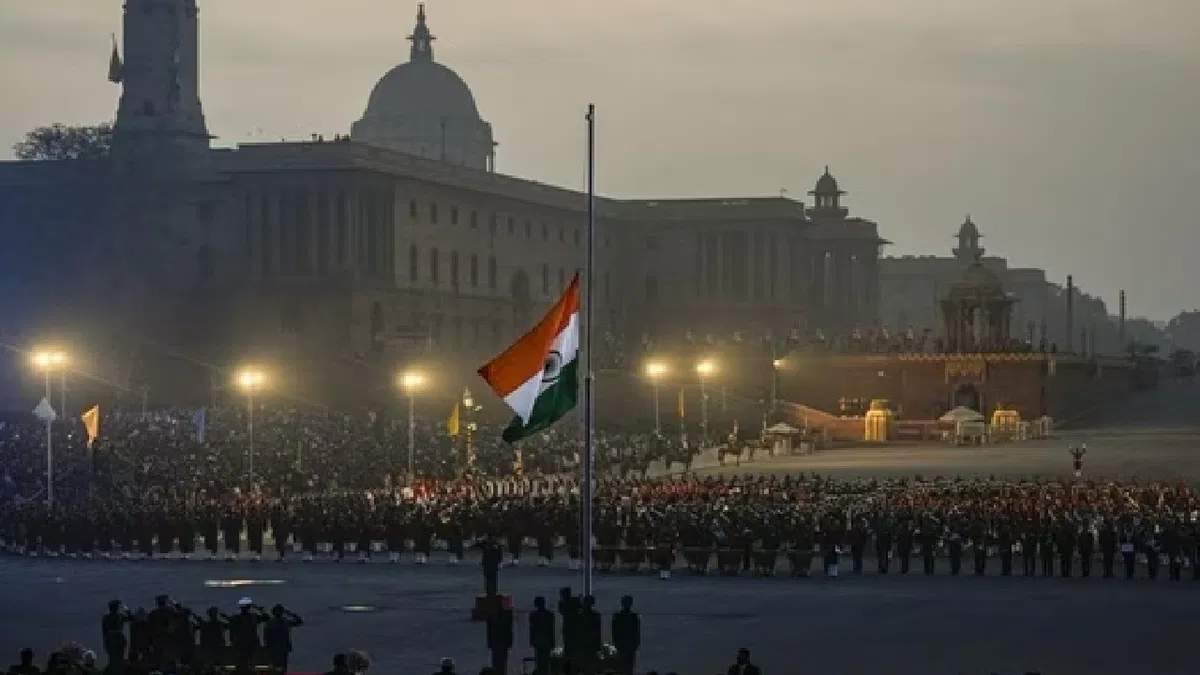
New Delhi, February 11, 2026: In a significant move to formalize national symbols, the Union Ministry of Home Affairs (MHA) has issued comprehensive new guidelines regarding the rendition of Vande Mataram, India’s National Song. The directive, issued in early February 2026, establishes a strict protocol for its use at official events, educational institutions, and state functions.
The move follows the government’s year-long commemoration of the 150th anniversary of the song’s composition, which began on November 7, 2025.
Key Highlights of the New Guidelines
The new order aims to bring the National Song’s protocol on par with the National Anthem, Jana Gana Mana. Here are the primary mandates:
1. The Official Version and Duration
For the first time, the government has defined an “official version” for formal use.
- Full Rendition: The guidelines mandate the playing or singing of a six-stanza version of the song.
- Time Limit: The duration of this official version is set at approximately 190 seconds (3 minutes and 10 seconds).
- Restoration of Verses: This version includes the four stanzas that were historically omitted in 1937, ensuring the song is performed in its entirety as composed by Bankim Chandra Chatterjee.
2. Mandatory Standing and Decorum
Similar to the National Anthem, the MHA has clarified the etiquette expected from the public:
- Standing at Attention: All persons present must stand at attention whenever the National Song is played or sung at official functions.
- Drum Rolls: When played by a band, the song must be preceded by a specific drum roll (7 paces in slow march) to alert the audience to stand.
- Cinema Exemption: In a notable exception, the audience is not required to stand if the song is played as part of a film, newsreel, or documentary, to avoid disruption during screenings.
3. Order of Performance
The guidelines establish a specific sequence when both the National Anthem and the National Song are performed together:
- Vande Mataram First: The National Song must be played or sung before the National Anthem (Jana Gana Mana) at all government and state events.
Occasions for Mandatory Rendition
The government has categorized events where the song is now a requirement:
- Presidential & Gubernatorial Events: Upon the arrival and departure of the President of India or State Governors at formal functions.
- National Addresses: Immediately before and after the President addresses the nation on state media (Akashwani/Doordarshan).
- Flag Ceremonies: During the unfurling of the Tricolour and when the National Flag is brought on parade.
- Investitures: At civilian award ceremonies, including the Padma Awards.
- Educational Institutions: All schools are directed to incorporate the collective singing of Vande Mataram during morning assemblies to foster national pride.
Historical Context and Significance
The decision to mandate all six stanzas is deeply rooted in recent debates over India’s colonial and post-colonial history. Prime Minister Narendra Modi, during the launch of the 150th-anniversary celebrations, noted that the song was a “rallying cry” during the freedom struggle.
“Vande Mataram is not just a song; it is the soul of our resistance and the blueprint of our national identity. Restoring its full form is a tribute to the original vision of our freedom fighters.”
By formalizing these rules, the Ministry of Home Affairs aims to eliminate variations in how the song is performed across different states and departments, ensuring a uniform “ceremonial dignity” nationwide.