

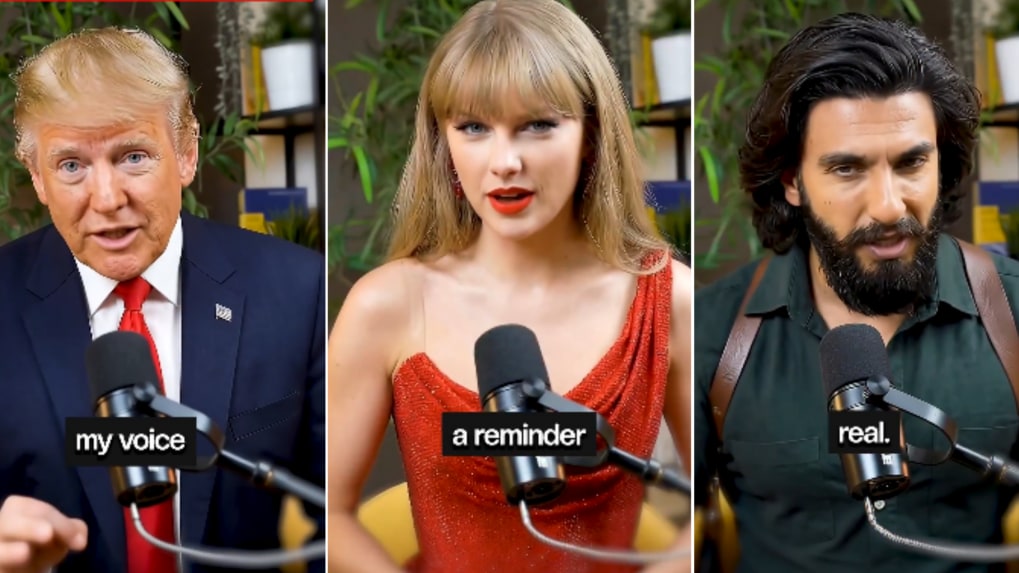
New Delhi, February 11, 2026: A significant wave of alarm and skepticism has been triggered across the digital landscape following the emergence of a startlingly realistic viral video featuring Taylor Swift and Ranveer Singh. In the footage, which gained massive traction on February 11, 2026, the global pop sensation and the Bollywood superstar are observed in an intimate and seemingly candid conversation. It is noted that the video was quickly identified as a sophisticated deepfake created by advanced artificial intelligence. This eerie interaction between two of the world’s most recognizable faces has been widely shared as a primary example of how the boundaries between reality and fabrication have been permanently blurred.
The Mechanics of Synthetic Realism
The specifics of the video’s high-fidelity rendering and vocal synchronization are being meticulously discussed by tech experts and cybersecurity analysts. It is observed in the viral reports that the AI model utilized for the creation of this clip was able to mimic the subtle facial expressions and tonal nuances of both artists with haunting accuracy. It is reported by several digital observers that the seamless blending of their distinct public personas makes the content almost indistinguishable from a genuine encounter to the untrained eye. The visual of these icons interacting in a non-existent reality has provided a grounding narrative for the immense power and danger inherent in unregulated generative AI technology.
Also Read: Shah Rukh Khan’s Ancestral Home in Peshawar Captivates Fans
Social Media Reacts: A Crisis of Credibility
A massive conversation regarding the erosion of trust and the potential for digital manipulation has been ignited by this AI revelation. It is noted that the video was met with an outpouring of concern, with many netizens remarking that “nothing seen on a screen can be trusted at face value anymore.” The rapid spread of the clip is being widely discussed as a stark warning of how easily misinformation can be weaponized against public figures and private citizens alike. Thousands of analytical comments have been left by users who expressed their fear, stating that such videos serve as a disturbing reminder of the psychological impact of living in a “post-truth” digital era.
Impact on Digital Ethics and Regulatory Policy
The impact of this viral event has extended beyond celebrity gossip to influence a broader discussion on the legal and ethical frameworks surrounding AI-generated content. It is frequently mentioned by legal scholars that current protections are insufficient to combat the malicious use of deepfake technology for defamation or fraud. A renewed sense of urgency is being observed among global tech giants and legislative bodies to implement mandatory watermarking and stricter verification protocols for digital media. It is believed that the viral nature of this specific “Swift-Singh Deepfake” will prompt a dialogue on the necessity of digital literacy and the development of robust AI detection tools.
A Stark Reminder of the New Reality
As the footage continues to accumulate millions of views in mid-February 2026, it serves as a powerful and resilient reminder that our visual senses are no longer reliable arbiters of truth. It is believed that the “Taylor Swift and Ranveer Singh AI” story will remain a primary highlight of the month’s most discussed and technologically significant news features. The legacy of this viral event is expected to be a heightened public awareness of the manipulative potential of synthetic media. Until more stringent safeguards are established, this video remains a stark testament to the fact that in the modern age, a lie can travel across the globe before the truth has even been calculated.