

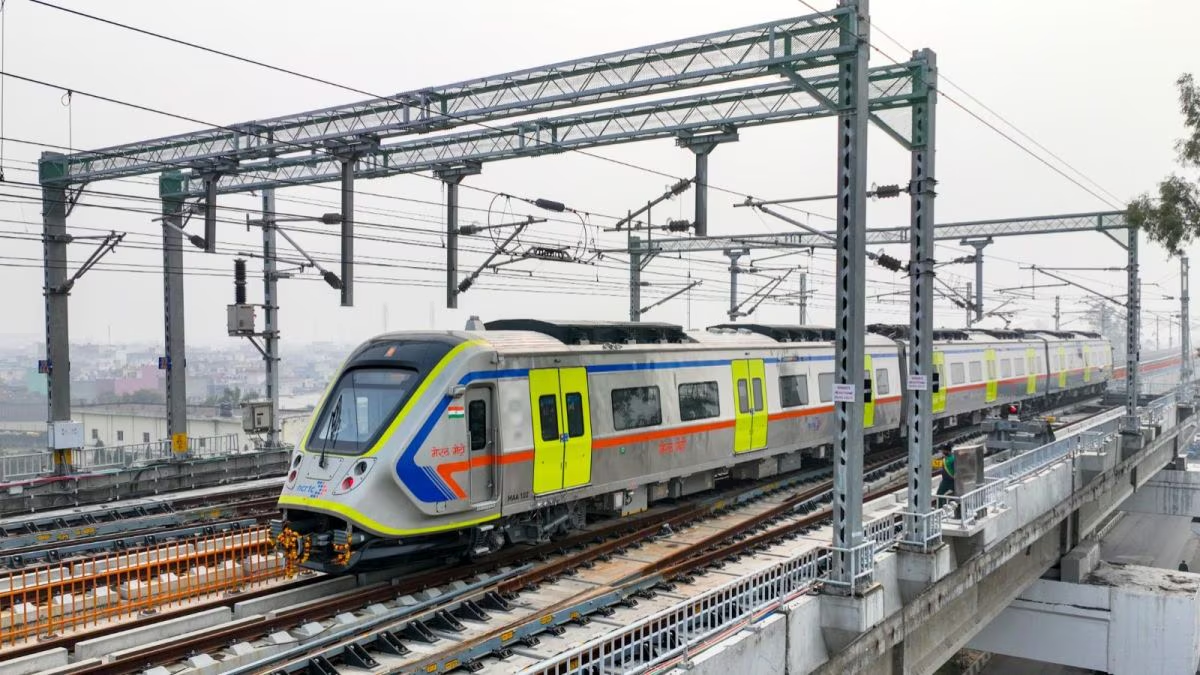
New Delhi, February 21, 2026: In a landmark move for India’s urban infrastructure, the city of Meerut is preparing to welcome the nation’s fastest metro system. With a maximum operational speed of 120 kmph, the upcoming Meerut Metro is set to redefine rapid transit in the country, outpacing the current record-holder, the Delhi Airport Express Line, which operates at 110 kmph.
The project is scheduled for a high-profile inauguration by Prime Minister Narendra Modi on February 22, 2026. This launch will make Meerut the fifth city in Uttar Pradesh to boast a dedicated metro network, following Lucknow, Kanpur, Agra, and Noida.
A First-of-its-Kind Integrated Transit Model
The Meerut Metro is not just unique for its speed but also for its groundbreaking infrastructure. In a first for India, the metro service will share the same tracks and infrastructure as the semi-high-speed Namo Bharat (RRTS) trains.
This “one corridor, two services” model allows the National Capital Region Transport Corporation (NCRTC) to optimize resources while providing seamless connectivity. While the Namo Bharat trains will facilitate long-distance travel between Delhi and Meerut at speeds of up to 160 kmph, the Meerut Metro will serve as a high-speed intra-city lifeline.
Key Features of the Meerut Metro
The new system is designed with a focus on speed, efficiency, and passenger comfort. Below are the technical and service highlights:
- Speed & Efficiency: With a design speed of 135 kmph and an operational speed of 120 kmph, the metro will cover the 21-kilometre corridor from Meerut South to Modipuram in approximately 30 minutes, including stops at all 12 stations.
- Three-Coach Configuration: To cater to urban demand, the metro will operate with three-coach trainsets. These modern, stainless-steel coaches are lightweight and energy-efficient, featuring a regenerative braking system that feeds power back into the grid.
- Capacity & Comfort: Each trainset can accommodate over 700 passengers, with 173 seated. The interiors feature a mix of 2×2 transverse and longitudinal cushioned seating, USB charging ports, and dedicated luggage racks.
- Visual Identity: The trains sport a modern aesthetic with a vibrant color scheme of fluorescent green, blue, and orange, symbolizing the energy of a “New India.”
Stations and Connectivity
The 21-km corridor will feature 12 stations strategically placed to maximize urban reach:
- Meerut South (Interchange with RRTS)
- Partapur
- Rithani
- Shatabdi Nagar (Interchange with RRTS)
- Brahmapuri
- Meerut Central
- Bhaisali
- Begumpul (Interchange with RRTS)
- MES Colony
- Daurli
- Meerut North
- Modipuram (Interchange with RRTS)
Economic and Social Impact
The introduction of the Meerut Metro is expected to provide a significant boost to the local economy by reducing road congestion and cutting down travel time for daily commuters. By integrating with the 82-km Delhi-Meerut RRTS corridor, the system will effectively shrink the distance between the national capital and Meerut, allowing commuters to traverse the entire distance in less than an hour.
Environmental benefits are also a core part of the project. The shift from private vehicles to high-speed electric transit is projected to significantly reduce vehicular CO2 emissions in the region.
As the final trial runs conclude, the city of Meerut stands on the brink of a transport revolution that promises to set a new benchmark for urban mobility across India.