

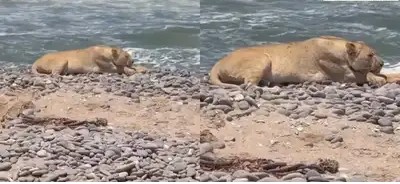
New Delhi, March 13, 2026: A significant wave of awe and digital wonder has been triggered across social media platforms following the emergence of a breathtaking viral video. In the footage, which gained massive traction in mid-March 2026, a majestic lioness is observed wandering along a pristine sandy beach instead of her usual forest habitat. It is noted that the “Queen of the Jungle” was seen pacing calmly as the waves crashed against the shore, creating a visual contrast that is rarely documented in the wild. This extraordinary sight has been widely shared as a primary example of the unexpected behavior of apex predators when their territories meet the coast.
The Mechanics of the Coastal Sightseeing
The specifics of the location and the reasons for the lioness’s seaside excursion are being meticulously discussed by wildlife experts and nature enthusiasts. It is observed in the viral reports that such sightings are occasionally documented in regions where national parks or wildlife sanctuaries border the coastline, such as in parts of Gujarat, India, or certain African coastal regions. It is reported by several digital observers that the lioness appeared to be in search of prey or perhaps simply cooling off from the inland heat. The visual of the predator’s golden coat against the deep blue of the sea has provided a grounding narrative for the incredible adaptability of big cats in diverse landscapes.
Also Read: Rashmika Issues 24-Hour Ultimatum Audio Involving Mother
Social Media Reacts: A Symphony of Awe and Environmental Reflection
A massive conversation regarding the beauty of the natural world and the shifting boundaries of wildlife habitats has been ignited by this digital revelation. It is noted that the video was met with an outpouring of fascination, with many netizens remarking that “nature never ceases to surprise us with its hidden wonders.” The footage is being widely discussed as a serene yet powerful reminder of the raw beauty of the animal kingdom. Thousands of analytical comments have been left by users who expressed their amazement, stating that such videos serve as a stark reminder of the importance of preserving coastal ecosystems that serve as corridors for these magnificent creatures.
Impact on Wildlife Tourism and Conservation Awareness
The impact of this viral event has extended beyond simple entertainment to influence a broader discussion on the importance of wildlife corridors and coastal conservation. It is frequently mentioned by conservationists that the sight of a lioness at the beach highlights the need for protected zones where land meets water. A renewed sense of interest is being observed in “coastal safaris,” with many travelers expressing a desire to witness such rare interactions between terrestrial predators and marine environments. It is believed that the viral nature of this specific “Sherni Ka Video” will prompt a dialogue on the necessity of minimizing human interference in these sensitive border zones to ensure the safety of both humans and animals.
A Stark Reminder of Nature’s Infinite Versatility
As the footage continues to accumulate millions of views in late March 2026, it serves as a powerful and resilient reminder that the world’s ecosystems are more interconnected than they often appear. It is believed that the story of the “Lioness at the Sea” will remain a primary highlight of the month’s most discussed and socially impactful wildlife features. The legacy of this viral event is expected to be a heightened public awareness of the majesty and vulnerability of the natural world. Until the next rare encounter is captured on camera, this video remains a stark testament to the fact that even the most well-known predators still hold secrets that can leave us in total silence.