

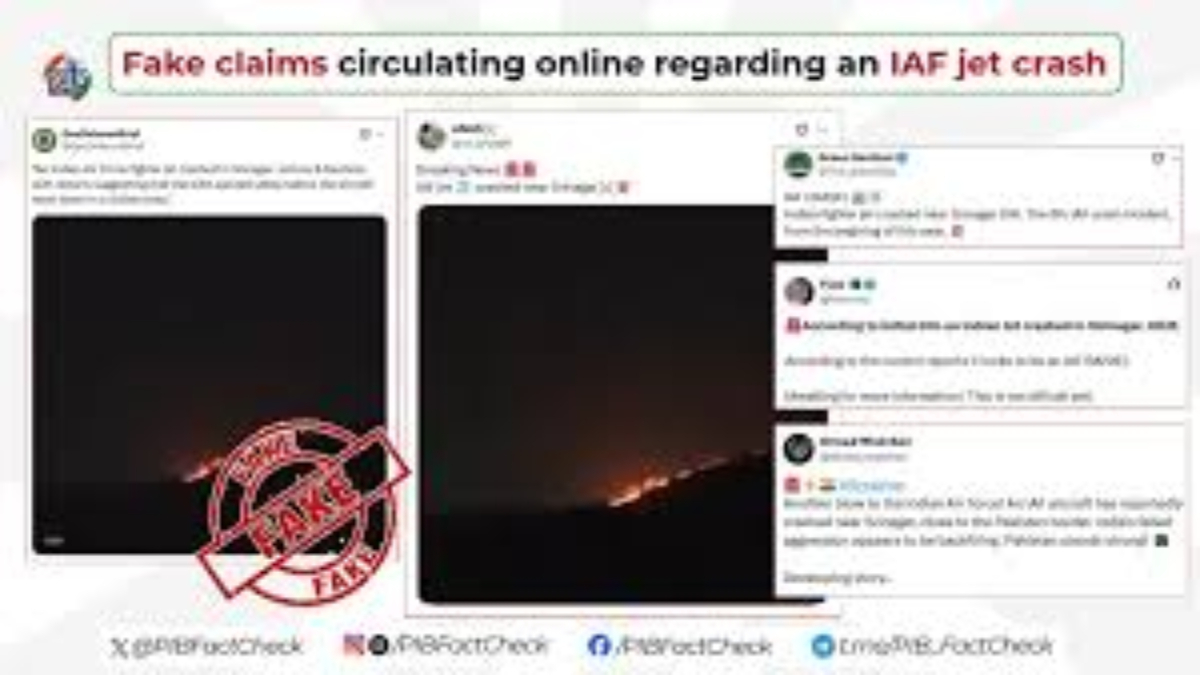
New Delhi, June 15, 2026: In the digital age, a major challenge facing news consumers and defense analysts is the rapid spread of misinformation online. Recently, viral videos across various social media platforms have claimed to depict a tragic Pakistan Air Force (PAF) trainer aircraft crash that resulted in the deaths of its pilots. However, a closer look at the facts reveals a completely different story.
The circulating footage, which has garnered hundreds of thousands of views and triggered outpourings of grief, is entirely misleading. Rather than broadcasting a recent, tragic event, the viral clips are a mix of old aviation accident footage and digitally altered gaming simulations.
Military officials and independent fact-checkers have confirmed that no such recent training crash involving pilot fatalities has occurred within the Pakistan Air Force. This situation highlights how easily high-stress military scenarios can be manipulated to create viral, clickbait news stories.
Fact-Checking the Viral Footage
The power of online misinformation lies in its ability to exploit emotion. When videos surfaced showing an aircraft spiraling out of control, followed by a plume of thick smoke, viewers assumed it was breaking news.
A digital forensic analysis of the footage tells a very different story. Fact-checkers discovered that the main clip being shared was actually taken from an older, entirely separate aviation incident that happened years ago. In other instances, pieces of video were taken from the popular military simulation game ARMA 3. This game is famous for its hyper-realistic graphics, and clips from it are frequently mislabeled as real-world combat or accident footage on platforms like X (formerly Twitter), TikTok, and YouTube.
To make the hoax look more believable, bad actors overlaid the video with dramatic audio and sensational headlines, claiming that a routine training mission had turned fatal. By omitting dates, locations, and official sources, the creators of these videos successfully manipulated the public’s deep respect for military personnel to drive views and engagement.
Why Military Training News Is Vulnerable to Hoaxes
The Pakistan Air Force routinely conducts rigorous training exercises to maintain operational readiness. Because military aviation inherently involves high speeds, complex maneuvers, and advanced hardware, the public understands that it carries risks. This underlying reality makes military operations a frequent target for fake news.
When a genuine training accident occurs, defense ministries typically release official statements through formal channels, such as the Inter-Services Public Relations (ISPR) in Pakistan, to ensure transparency and prevent panic. However, in the absence of any real news, bad actors often create fictional crises.
The table below breaks down the key differences between authentic military press reporting and the red flags commonly found in viral social media hoaxes.
The Danger of Sensationalized Defense Reporting
The spread of fake military news is not just an online nuisance; it has real-world consequences. Falsely claiming that an air force trainer aircraft crashed and killed its pilots causes unnecessary panic and emotional distress for the families of active-duty servicemen and women.
Furthermore, fabricating stories about military losses can be used as a form of digital propaganda. Misleading media can be weaponized to create a false narrative about a nation’s military readiness or the safety of its aviation fleet. In regions like South Asia, where geopolitical tensions can shift quickly, unverified military rumors can easily escalate into broader public panic if they are not corrected immediately.
For digital news platforms and content creators, this serves as a reminder of the critical importance of a “fact-first” approach to reporting. Sharing a story quickly should never take priority over verifying its accuracy.
How to Spot and Verify Aviation News
To avoid falling victim to viral hoaxes, news readers should follow a standard verification process when encountering shocking video clips online.
- Look for Official Confirmation: If a military aircraft crashes, major state and international news agencies will report on it using verified data from defense ministries. If the news only exists on social media, it is highly likely to be fake.
- Conduct a Reverse Image Search: Taking a screenshot of a viral video and running it through a search engine can quickly reveal if the video was stolen from an old news broadcast or a video game walkthrough.
- Check the Comments: On many platforms, vigilant users and fact-checking organizations will post context notes or links to the original video source to debunk the claim.
The viral videos claiming to show a fatal Pakistan Air Force trainer aircraft crash are completely fabricated. The pilots are safe, the footage is recycled, and the story is false. In an ecosystem where digital media can be altered with the click of a button, keeping a skeptical eye and relying on trusted, official sources remains our best defense against misinformation.