

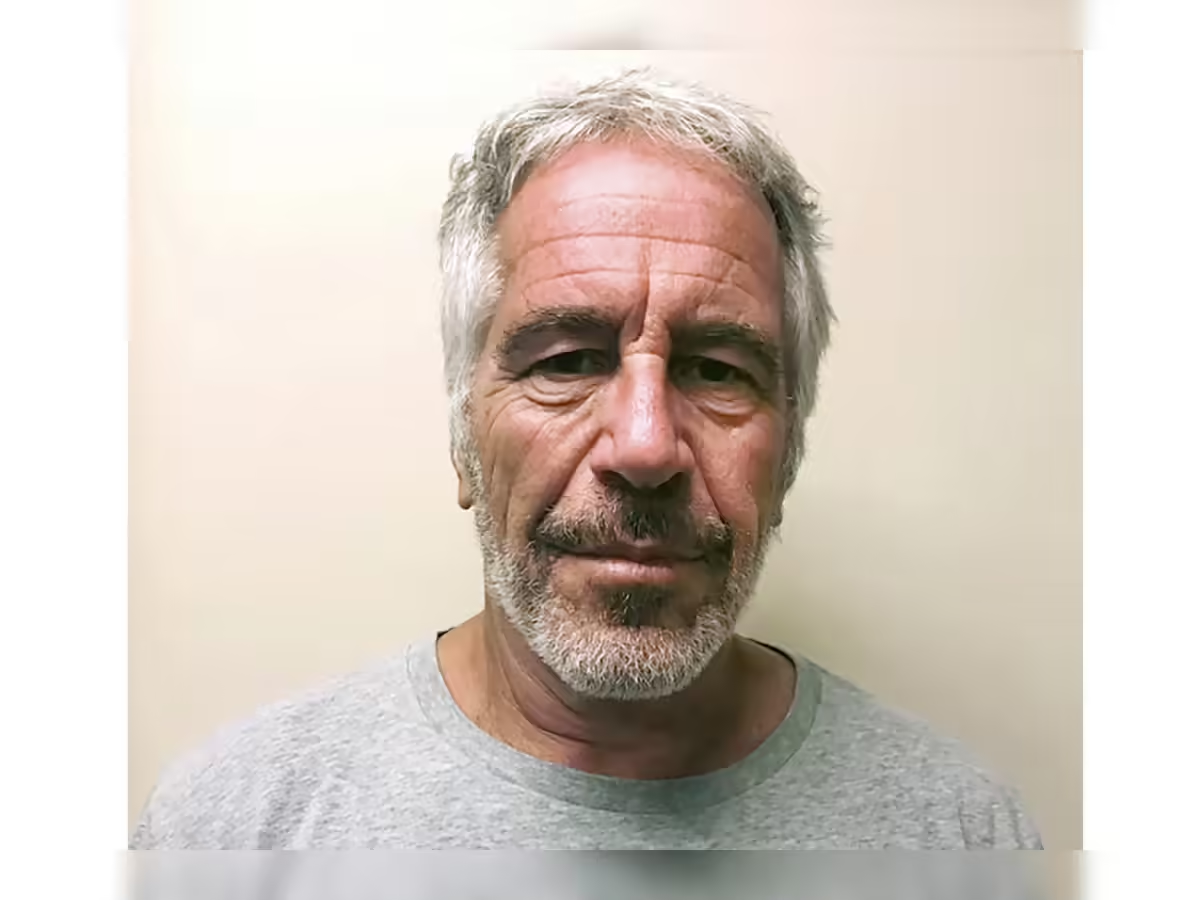
New Delhi, March 14, 2026: A significant wave of skepticism and renewed conspiracy theories has been triggered across social media platforms following the emergence of a blurry viral video. In the footage, which gained massive traction in mid-March 2026, an individual bearing a passing resemblance to the deceased financier Jeffrey Epstein is observed at a private residence in Florida. It is noted that the clip has been widely shared as “proof” that his death in 2019 was faked to allow for a hidden life under witness protection. This startling claim has been circulated as a primary example of how deep-seated public mistrust can fuel the revival of debunked narratives.
The Mechanics of the Viral Misidentification
The specifics of the video’s origin and the identity of the person filmed are being meticulously discussed by digital forensic experts and investigative journalists. It is observed in the viral reports that the footage lacks high-definition clarity, making a definitive identification impossible through visual means alone. It is reported by several digital observers that the individual in the video is likely a lookalike or a private citizen whose privacy has been compromised by the sudden surge of online attention. The visual of the “sighting” has provided a grounding narrative for a new generation of theorists who remain unconvinced by the official medical examiner’s reports from years prior.
Also Read: Viral Video Captures Groom-to-Be’s Clumsy Quest for a “Yes”
The Concrete Truth of Official Records
A massive conversation regarding the finality of the 2019 events has been ignited by this digital revelation, prompting a thorough fact-check of the situation. It is noted that the death of Jeffrey Epstein was officially confirmed by the New York City Medical Examiner’s Office following an autopsy performed in August 2019. The findings were supported by DNA evidence and dental records, which were meticulously verified by federal authorities. It is frequently mentioned by legal experts that no credible evidence has ever been produced to suggest a survival or a covert relocation to Florida or any other jurisdiction.
Impact of Misinformation on Public Discourse
The impact of this viral event has extended beyond simple internet gossip to influence a broader discussion on the proliferation of deepfakes and misinformation in 2026. It is frequently mentioned by media analysts that such videos are often digitally altered or taken entirely out of context to drive engagement on algorithmic platforms. A renewed sense of vigilance is being observed among fact-checking organizations, many of whom are now reportedly using advanced AI detection software to debunk the Florida “sighting” video. It is believed that the viral nature of this specific “Epstein Alive” claim will prompt a dialogue on the necessity of media literacy when consuming sensationalist content.
A Stark Reminder of Legal Finality
As the footage continues to be analyzed in late March 2026, it serves as a powerful and resilient reminder that visual snippets on social media are rarely substitutes for documented legal facts. It is believed that the story of the “Florida Lookalike” will remain a primary highlight of the month’s most discussed and socially polarizing misinformation case studies. The legacy of this viral event is expected to be a heightened public awareness of how easily grief, suspicion, and low-resolution video can be manipulated. Until the digital ecosystem becomes more resistant to such fabrications, this video remains a stark testament to the fact that some ghosts are never truly laid to rest in the eyes of the internet.