

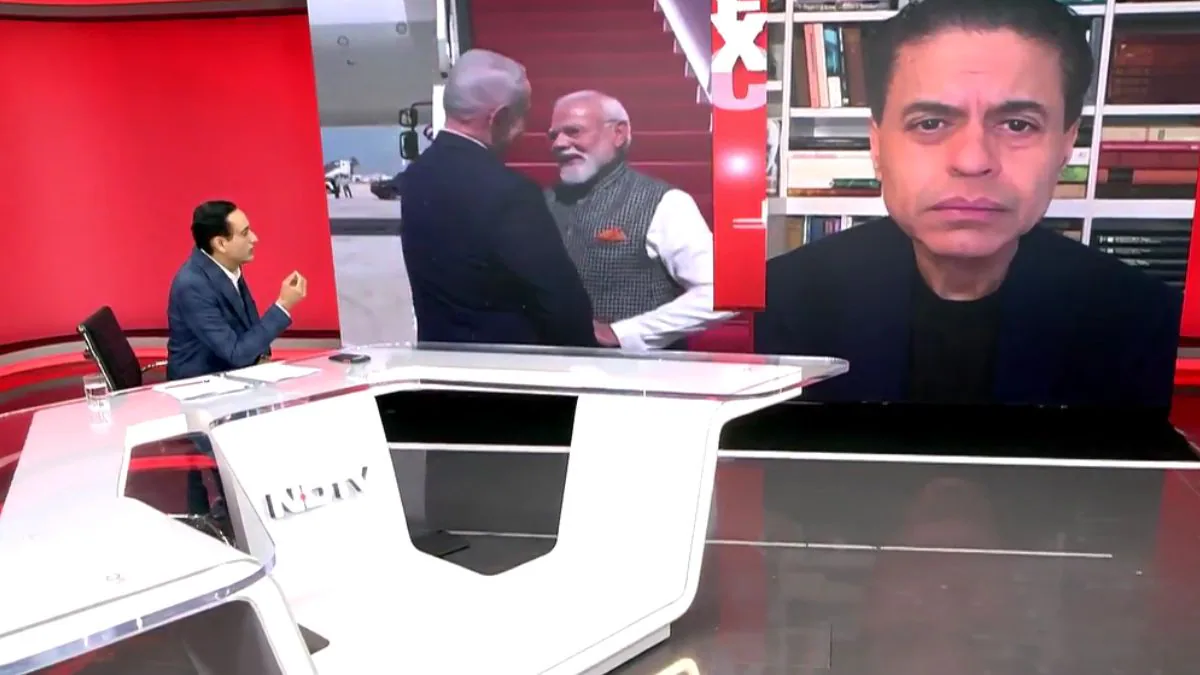
New Delhi, March 17, 2026: In a series of recent analyses, most notably in his March 2026 columns and “GPS” broadcasts, Fareed Zakaria has outlined a sobering reality for the West: while the United States remains entangled in kinetic conflicts in the Middle East and Eastern Europe, China is quietly “taking home” lessons that may define the next century of global power.
For a news audience, Zakaria’s perspective provides a vital look at the “asymmetric” strategy Beijing is employing while watching Washington’s latest military interventions. Here are the two primary lessons Zakaria argues China has learned.
1. The “Imperial Trap” and the Value of Military Abstinence
Zakaria’s first and perhaps most biting observation is that China has learned to view American military intervention not as a sign of strength, but as a strategic “imperial trap.”
While the U.S. has engaged in significant air strikes and regional escalations—most recently involving Iran and the persistence of the war in Ukraine—China has remained conspicuously on the sidelines. Zakaria notes that by avoiding the “quagmire” of direct combat, China is preserving its national wealth and political capital.
- Resource Diversion: Zakaria argues that every dollar the U.S. spends on interceptor missiles and carrier group deployments in the Middle East is a dollar not spent on the domestic foundations of power.
- The Contrast: While Washington is “bogged down,” Beijing is relentlessly investing in the “technologies of tomorrow”:
- Artificial Intelligence
- Quantum Computing
- Green Energy Infrastructure (Solar, Wind, and Batteries)
- Advanced Robotics
The Lesson: China has concluded that the “American century” was built on economic and technological dominance, yet the U.S. is currently squandering that lead by focusing on regional disputes of peripheral importance. Beijing’s takeaway? Let the superpower exhaust itself while you build the future.
2. The Fragility of a “Rules-Based Order” Built on Unreliable Alliances
The second lesson pertains to the shifting nature of global trust. Zakaria highlights that China is watching a profound change in how American allies perceive the United States.
Under the “transactional” foreign policy of the current administration, China has observed that decades of “accumulated trust” are being traded for short-term leverage. Zakaria points out two specific sub-lessons here:
- Allies as “Problems to be Managed”: China sees that many traditional U.S. allies now view Washington as a volatile partner rather than a steady leader. This has allowed China to present itself as a more “predictable” alternative, expanding trade ties across the Global South—including Latin America, Africa, and parts of Asia—where countries are looking to “de-risk” from U.S. volatility.
- The Power of Economic Interdependence: China has learned that military dominance is secondary to being the world’s indispensable supplier. Zakaria notes that China’s control over vital resources—from rare earth minerals to 60% of the world’s computer chips—gives it a “never yield” leverage that no aircraft carrier can match.
The Lesson: Beijing has realized that it does not need to win a war to defeat the U.S. agenda. It only needs to wait for the U.S. to alienate its allies and hollow out its own economic influence through isolationism and “bomb and hope” strategies.
The Bottom Line: A Shift in Global Gravity
Zakaria’s analysis suggests a “profound shift” in the global order. By staying out of the fray, China is not just avoiding casualties; it is essentially “playing by its own rules” while the U.S. continues to play by an outdated 20th-century playbook.
As Zakaria warned in Davos earlier this year, the real danger is not that China will attack the U.S., but that the U.S. will make itself “small” and irrelevant through strategic exhaustion, leaving China as the primary beneficiary of a world that is moving on.