
)
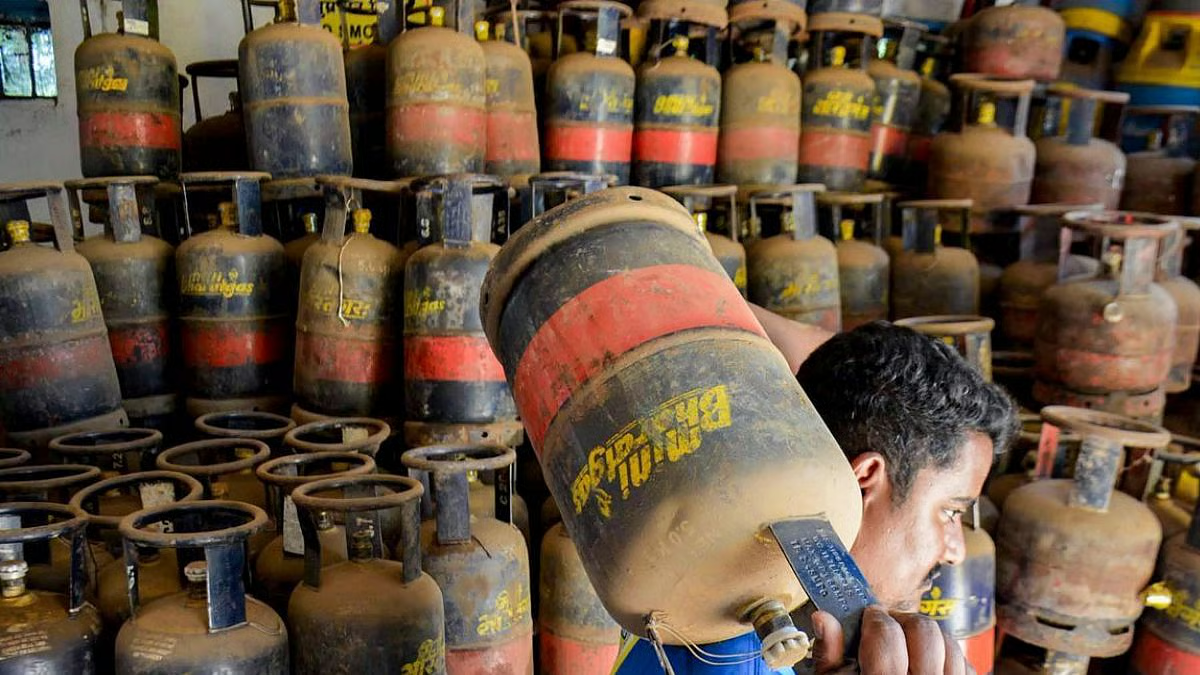
New Delhi, May 2, 2026: In a move that has sent shockwaves across India’s hospitality and small business sectors, Oil Marketing Companies (OMCs) have implemented a massive hike in the price of commercial LPG cylinders. Effective May 1, 2026, the price of a 19-kg commercial LPG cylinder has been increased by ₹993, marking one of the steepest single-day jumps in recent history.
While household domestic LPG prices remain unchanged for the time being, the staggering increase for commercial users—ranging from hotels and restaurants to roadside dhabas and street vendors—has triggered immediate and fierce criticism from political quarters, particularly the Communist Party of India (CPI).
The Price Surge: A Snapshot
Following this latest revision, the cost of a 19-kg commercial cylinder in the national capital, Delhi, has reached a record ₹3,071.50, up from the previous rate of ₹2,078.50. This marks the third consecutive monthly increase, with cumulative hikes over the last three months totaling over ₹1,300 per cylinder.
- Impacted Segments: Restaurants, cafes, hotels, hostels, PG accommodations, and small-scale food vendors.
- Domestic Relief: Prices for 14.2-kg domestic cooking gas cylinders, used by approximately 33 crore households, remain frozen for now.
- Driver: OMCs have attributed the sharp rise to global energy market volatility, specifically citing surging crude oil prices caused by the ongoing conflict in West Asia and disruptions to critical transit routes like the Strait of Hormuz.
CPI and Opposition: “The Election Bill”
The timing of the hike—coming immediately after the conclusion of voting in several state assembly elections—has been a major flashpoint. Opposition leaders are calling the move an “election bill,” accusing the central government of artificially suppressing prices to aid electoral optics and passing the burden onto the public the moment voting concludes.
CPI’s Strong Condemnation
P. Sandosh Kumar, CPI leader in the Rajya Sabha, launched a scathing attack on the government, labeling the situation a “direct consequence of the Prime Minister’s failed foreign policy.”
In an official statement, Mr. Kumar argued that the government’s approach to global energy volatility has been ineffective, leaving the country highly exposed to external shocks. He emphasized that by forcing this massive cost burden onto restaurants, dhabas, and small eateries, the government is essentially guaranteeing that the impact will filter down to the common man through increased food costs and higher living expenses.
“Instead of ensuring stability in fuel supplies and prices, this approach has left the country exposed. The burden is now being dumped on restaurants, dhabas, small eateries, hostels, and small establishments… The immediate fallout will be higher food costs and living expenses, hitting ordinary people the hardest,” Mr. Kumar stated.
Other opposition leaders, including Congress leader Rahul Gandhi, have echoed these sentiments, warning that this is only the “first strike” and that price increases for petrol and diesel may be next.
Why the Sharp Hike?
The government and OMCs maintain that the price revision is a necessary, albeit painful, recalibration based on international benchmarks.
India imports nearly 88% of its crude oil requirements and approximately 90% of its LPG imports, making the domestic market highly sensitive to global geopolitical tensions. With crude oil prices touching four-year highs amid the West Asia conflict, the financial pressure on oil companies to pass on these costs—at least in the non-subsidized commercial segment—has been immense.
OMCs further clarified that despite the global volatility, they have managed to keep petrol, diesel, and domestic LPG prices unchanged to protect the majority of household consumers, noting that commercial LPG accounts for less than 1% of total fuel consumption in the country.
The Road Ahead for Small Businesses
For millions of small business owners, this hike is a severe blow. With the cost of a primary operational input rising by nearly 50% in a single day, many eateries are left with limited options: either absorb the costs at the risk of insolvency or pass the burden to the consumer.
Market analysts warn that this will likely fuel “cost-push inflation” in the food and beverage sector. As restaurants grapple with significantly higher operating expenses, menu prices for street food, canteen meals, and dining out are expected to rise across the country in the coming weeks.
As the political debate intensifies, the government faces increasing pressure to explain its strategy for managing energy-led inflation and to provide relief to the small-scale enterprises that form the backbone of India’s informal economy.