

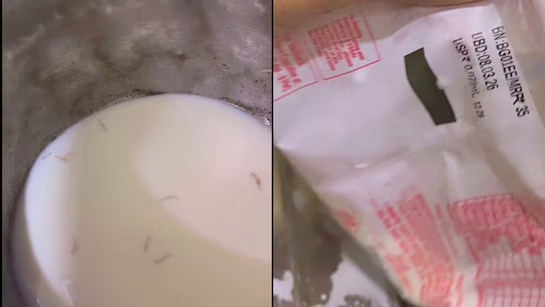
New Delhi, March 18, 2026: A significant wave of consumer concern and digital debate has been triggered across social media platforms following the emergence of a startling video involving a household staple. In the footage, which gained massive traction on March 18, 2026, a woman is observed displaying a saucepan filled with milk that allegedly contains multiple living worms. It is noted that the video was filmed inside a private kitchen, where the complainant pointed to small, moving organisms floating in the liquid. This visual has been widely shared as a primary example of the growing anxiety surrounding food safety and dairy hygiene in urban India.
The Mechanics of Corporate Response
The specifics of the incident and the company’s official stance are being meticulously discussed by food safety experts and dairy giant Amul. It is observed in the viral reports that Amul has formally responded to the claims by emphasizing its rigorous quality control protocols. It is reported by several digital observers that the company has dismissed the video as potentially misleading, stating that all milk undergoes ultra-high-temperature (UHT) processing or pasteurization, which makes the survival of such organisms impossible. The visual of a high-tech manufacturing unit was used by the brand to provide a grounding narrative for its “50+ quality tests” policy.
Also Read: New OTT Releases This Week: 9 Must-Watch Movies & Shows
Social Media Reacts: A Symphony of Skepticism and Support
A massive conversation regarding “digital misinformation” and the “cold chain” has been ignited by this digital revelation. It is noted that the video was met with an outpouring of mixed reactions, with many netizens expressing horror while others questioned the authenticity of the clip. The possibility of the milk being tampered with or poorly stored at the retail level is being widely discussed as a more likely cause for spoilage. Thousands of analytical comments have been left by users who expressed their doubt, stating that such videos serve as a stark reminder of how easily a brand’s reputation can be targeted in the age of viral sensationalism.
Impact on Food Safety Regulations and Consumer Trust
The impact of this viral event has extended beyond a single complaint to influence a broader discussion on the role of the FSSAI in monitoring daily essentials. It is frequently mentioned by industry analysts that “blind tests” and viral lab reports are increasingly putting India’s dairy safety under the scanner. A renewed sense of vigilance is being observed among consumers, many of whom are now reportedly being urged to check for leakages and proper refrigeration before purchase. It is believed that the viral nature of this specific “Worm in Milk Video” will prompt a dialogue on the necessity of independent, impartial investigations into food contamination claims.
A Stark Reminder of Accountability
As the investigation into the video’s veracity continues in late March 2026, it serves as a powerful and resilient reminder that public trust is a fragile commodity. It is believed that the story of the “Amul Milk Controversy” will remain a primary highlight of the month’s most discussed and socially impactful food-interest features. The legacy of this viral event is expected to be a heightened public awareness of the need for transparency from both manufacturers and social media creators. Until a definitive lab report is released to the public, this video remains a stark testament to the fact that in the digital world, seeing isn’t always believing.