

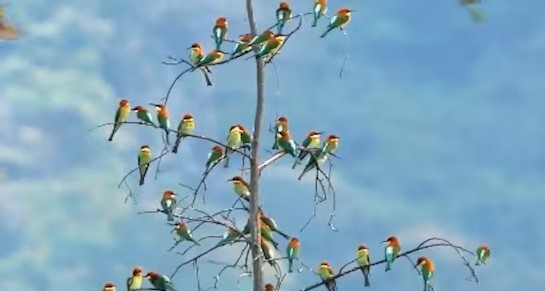
New Delhi, March 19, 2026: A significant wave of digital wonder and environmental appreciation has been triggered across social media platforms following the emergence of a breathtaking wildlife video from Tamil Nadu. In the footage, which gained massive traction on March 18, 2026, thousands of Chestnut-headed Bee-eaters are observed roosting together within the lush canopy of the Anamalai Tiger Reserve. It is noted that the video was initially shared by IAS officer Supriya Sahu, whose documentation of the region’s biodiversity frequently captures the public’s imagination. This startling visual of countless emerald and cinnamon-hued birds has been widely shared as a primary example of the raw, rhythmic beauty found in India’s protected forests.
The Mechanics of a Natural Orchestra
The specifics of the birds’ synchronized behavior and their collective vocalizations are being meticulously discussed by ornithologists and nature enthusiasts. It is observed in the viral reports that the gathering creates a unique acoustic phenomenon, described by many as a “natural orchestra” due to the high-pitched, melodic trilling of the flock. It is reported by several digital observers that the birds were seen settling on the branches in a display of remarkable social unity, likely preparing for communal roosting or seasonal movement. The visual of the trees appearing to “come alive” with fluttering wings and rhythmic calls has provided a grounding narrative for the complex social structures of these avian species.
Also Read: Trump Issues ‘Total Destruction’ Threat to Iran Over Qatar Strike

Social Media Reacts: A Symphony of Awe and Conservation
A massive conversation regarding “the magic of the Western Ghats” and the importance of habitat preservation has been ignited by this digital revelation. It is noted that the video was met with an outpouring of appreciative comments, with many netizens remarking that “nature provides the best music without any instruments.” The Chestnut-headed Bee-eater is being widely discussed for its striking plumage and its role as an insect controller in the ecosystem. Thousands of analytical comments have been left by users who expressed their gratitude, stating that such videos serve as a stark reminder of why regions like Anamalai must remain untouched by rapid industrialization.
Impact on Wildlife Tourism and Digital Literacy
The impact of this viral event has extended beyond simple “animal content” to influence a broader discussion on responsible wildlife photography and digital storytelling. It is frequently mentioned by environmentalists that the use of high-definition smartphone cameras is allowing the general public to witness rare natural events that were once reserved for professional filmmakers. A renewed sense of pride is being observed in the efforts of the Tamil Nadu Forest Department, which has been lauded for maintaining the ecological balance required for such large-scale roosting. It is believed that the viral nature of this specific “Bee-eater Orchestra” will prompt a dialogue on the role of viral media in promoting eco-tourism and wildlife awareness in 2026.
A Stark Reminder of Earth’s Rhythms
As the footage continues to accumulate millions of views in late March 2026, it serves as a powerful and resilient reminder that the world’s most beautiful performances happen far away from the city lights. It is believed that the account of the “Anamalai Symphony” will remain a primary highlight of the month’s most discussed and socially positive environmental features. The legacy of this viral event is expected to be a heightened public awareness of the seasonal migrations and social habits of Indian birds. Until the next great migration begins, this video remains a stark testament to the fact that when nature speaks, the whole world stops to listen.