

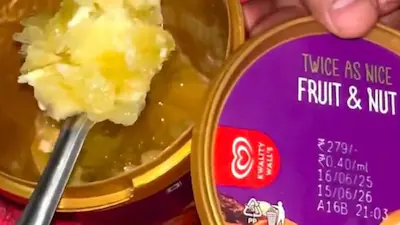
New Delhi, March 24, 2026: A significant wave of consumer alarm and digital debate has been triggered across Rajasthan following the emergence of a startling video involving a popular dessert brand. In the footage, which gained massive traction on March 22, 2026, a woman from Rajasthan was observed opening a recently purchased tub of Kwality Wall’s “Fruit & Nut” frozen dessert. It is noted that upon opening the container, she found a significant amount of a golden, oily liquid floating at the bottom rather than the expected creamy consistency. This startlingly unappetizing visual has been widely shared as a primary example of the “quality gap” in packaged frozen goods.
The Mechanics of the “Oil Tub” Claim
The specifics of the incident and the consumer’s reaction are being meticulously discussed by food safety enthusiasts and concerned parents. It is observed in the viral reports that the woman expressed deep disappointment, stating that the product had a “weird flavor” and was no longer melting in a natural manner. It is reported by several digital observers that the video prompted many social media users to point out the technical distinction between “ice cream” and “frozen dessert.” The visual of the oily residue has provided a grounding narrative for the ongoing public education regarding the use of vegetable fats like palm oil in products labeled as frozen desserts.
Also Read: The Truth Behind Pakistan’s “Spy Alert” After Dhurandhar 2
Company Response: Investigating the Supply Chain
A massive conversation regarding “food safety and storage” has been ignited by the official clarification issued by Kwality Wall’s India. It is noted that a spokesperson for the brand confirmed to media outlets that an internal investigation has been launched to examine all stages of the supply chain. The company is being widely discussed for its explanation that temperature variations during transit or storage—especially during the peak summer heat of March 2026—can lead to “product separation.” Thousands of analytical comments have been left by experts who expressed that if the cold chain is broken, the structural integrity of a frozen dessert can be permanently compromised.
Impact on Labeling and Consumer Awareness
The impact of this viral event has extended beyond a single tub to influence a broader discussion on “Ice Cream vs. Frozen Dessert” labeling in India. It is frequently mentioned by nutritionists that while ice cream is primarily made from milk and dairy fats, frozen desserts are legally allowed to use vegetable oils, provided it is disclosed on the packaging. A renewed sense of scrutiny is being observed toward how clearly these labels are displayed to the average buyer. It is believed that the viral nature of this specific “Rajasthan Oil Video” will prompt a dialogue on the necessity of stricter temperature-controlled protocols from the factory to the consumer’s home.
A Stark Reminder of Cold Chain Integrity
As the investigation continues in late March 2026, it serves as a powerful and resilient reminder that even trusted brands are susceptible to logistical failures. It is believed that the account of the “Oily Dessert Tub” will remain a primary highlight of the month’s most discussed and socially critical consumer-interest features. The legacy of this viral event is expected to be a heightened public awareness of the ingredients and storage requirements of their favorite summer treats. Until the company provides a final report on the “deviation in handling,” this story remains a stark testament to the fact that for sensitive products, the journey to the freezer is just as important as the recipe itself.