

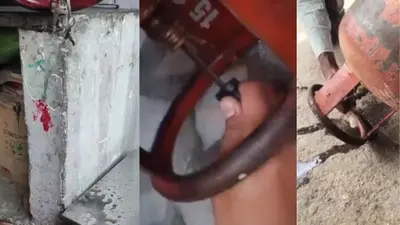
New Delhi, April 1, 2026: A disturbing video revealing a sophisticated “water-filling” scam in domestic LPG cylinders has sent shockwaves across social media platforms on April 1, 2026. The footage depicts a 14.2 kg cooking gas cylinder being emptied, not of flammable gas, but of a steady stream of dirty water. This “truth” behind the weight of the delivery has left millions of consumers terrified, as the sight of a government-sealed bottle containing several liters of liquid instead of fuel highlights a dangerous new level of predatory fraud.
The interaction was observed by a vigilant consumer who became suspicious when the cylinder felt unusually heavy but failed to sustain a flame for more than a few days. In the viral clip, the valve is opened and the cylinder is inverted, showing a large quantity of water gushing out onto the floor. It is reported by experts that this tactic is used by unscrupulous delivery agents or middle-men to replace stolen gas with water to ensure the cylinder passes a weight check upon delivery.
Modus Operandi of the Fraud: How the Weight is Manipulated
The reaction from the digital community has been a mixture of anger and a demand for a nationwide crackdown on gas distribution agencies. It is argued by technical analysts that the weight of the water is calculated to perfectly match the “net weight” of the liquefied petroleum gas, making it impossible for a customer to detect the theft using a standard weighing scale. On platforms like X and Instagram, the footage has been shared with the caption, “Are you also a victim of this scam?”, prompting thousands of users to share their own experiences with rapidly depleting gas supplies.
The impact of the video has prompted a wider discussion about the safety risks involved in such tampering, as the presence of water can cause internal corrosion and valve malfunctions. It is noted by oil company officials that a “sealed” cap is no longer a guarantee of authenticity, as duplicate seals are often used to cover up the theft. The passive role played by consumers—who often trust the delivery agent’s scale—is being reconsidered as calls for more transparent “pressure-check” deliveries become louder.
Also Read: Priyanka Chopra Jonas Performs “Seva” at Golden Temple on Mahavir Jayanti
Safeguarding Your Kitchen: Tips to Detect Cylinder Tampering
Following the viral spread of the scam, several safety measures have been highlighted by consumer protection forums to help citizens identify fraudulent deliveries. It is reported that one of the simplest methods involves checking for a “hissing” sound or a distinct smell of ethyl mercaptan, which may be absent if the gas has been replaced. The passive wait for the gas to run out is being replaced by active pre-delivery checks, including a water-leak test on the valve and a verification of the delivery agent’s credentials through official apps like Maha LPG or Indane.
As of the afternoon of April 1, 2026, the “LPG Water Scam” remains a top trending topic in the consumer awareness category. While the specific agency involved in the video is currently under investigation, the warning has reached every household in the country. For now, the story stands as a digital reminder: a heavy cylinder does not always mean a full one, and a few seconds of vigilance during delivery can prevent both financial loss and a potential kitchen disaster.