
 announced on Wednesday)
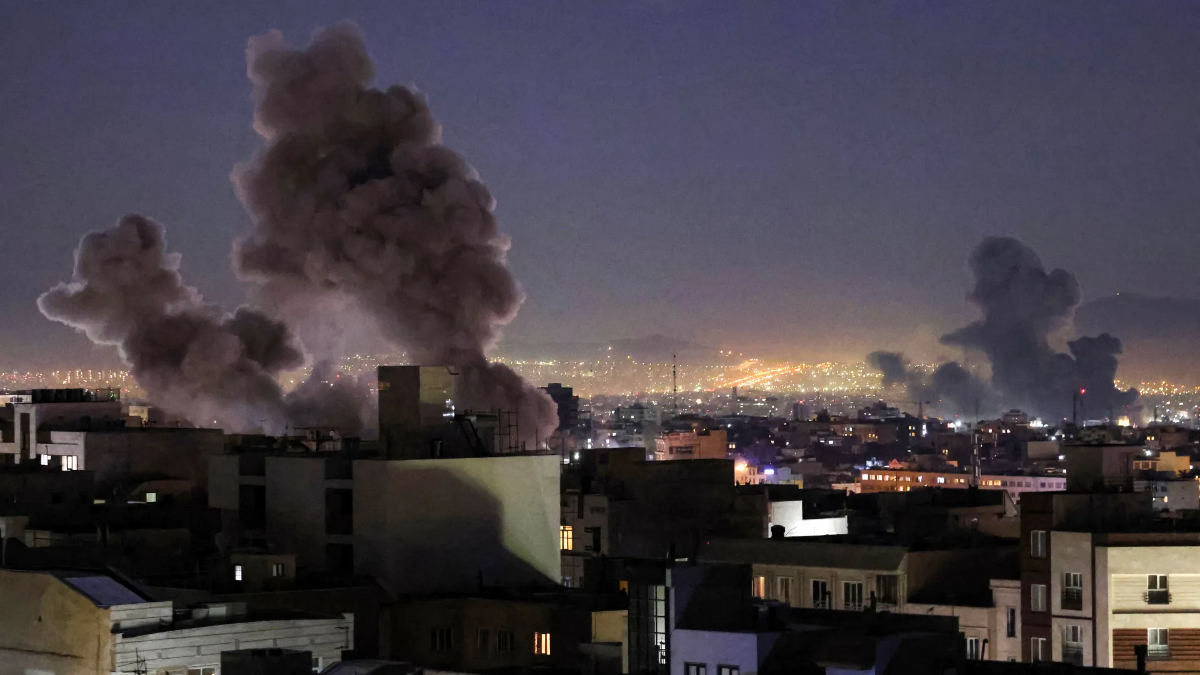
New Delhi, March 25, 2026 — In a major escalation of the ongoing regional conflict, Iran’s Islamic Revolutionary Guard Corps (IRGC) announced on Wednesday that it has launched a coordinated wave of missile and drone strikes targeting Israel and several neighboring Gulf nations.
According to a statement broadcast on Iranian state television (IRIB), the IRGC utilized precision-guided liquid- and solid-fuel missile systems alongside attack drones. The statement claimed that the operation successfully struck “targets in the heart of the occupied territories”—a term frequently used by Tehran to refer to Israel—as well as military bases hosting United States forces in Kuwait, Jordan, and Bahrain.
Regional Impact and Casualties
The strikes have sent shockwaves across the Middle East, with reports of damage emerging from multiple locations:
- Kuwait: Authorities confirmed that a drone strike hit a fuel tank at Kuwait International Airport, sparking a significant fire. While the Directorate General of Civil Aviation reported “limited” structural damage and no immediate casualties, the Kuwaiti Army stated that its air defense systems were actively engaged in intercepting “hostile” threats.
- Israel: Alerts sounded across the country, including in Tel Aviv and Kiryat Shmona. Reports indicate that at least one missile caused injuries and property damage in an upscale neighborhood of Tel Aviv.
- Lebanon: While not a direct target of the IRGC’s latest salvo, Lebanon continues to face the brunt of the broader war. Local health officials reported that Israeli retaliatory strikes on Wednesday killed at least nine people, including several in a Palestinian refugee camp near Sidon.
Diplomatic Uncertainty Amid Military Escalation
This latest offensive comes at a confusing diplomatic juncture. On Tuesday, U.S. President Donald Trump claimed that the United States was making progress in negotiations to end the nearly month-long war. Reports suggest a 15-point ceasefire plan was sent to Tehran via intermediaries, proposing a month-long truce to negotiate a permanent settlement.
However, the IRGC’s aggressive actions on Wednesday appear to contradict these diplomatic overtures. Iranian parliamentary leaders have dismissed reports of a “deal” as misinformation, while the IRGC continues to target U.S. military infrastructure in the region, citing the need to neutralize “American-Zionist” aggression.
Global Consequences: Oil and Food Security
The conflict, which began in late February 2026, has already severely disrupted global markets.
- Energy Crisis: Iran’s closure of the Strait of Hormuz has choked a vital artery for global oil and gas. While crude prices saw a slight dip following news of the potential U.S. peace plan, they remain at historic highs.
- Food Security: The World Trade Organization (WTO) warned on Wednesday that the disruption of fertilizer shipments through the region poses a “double threat” to global food security, potentially leading to widespread scarcity and price hikes.
As of Wednesday afternoon, the Pentagon is reportedly preparing to deploy thousands of additional troops from the 82nd Airborne Division to the Middle East to bolster regional defenses. With the war entering its fourth week, the international community remains on high alert for a potential transition into an even broader total conflict.