

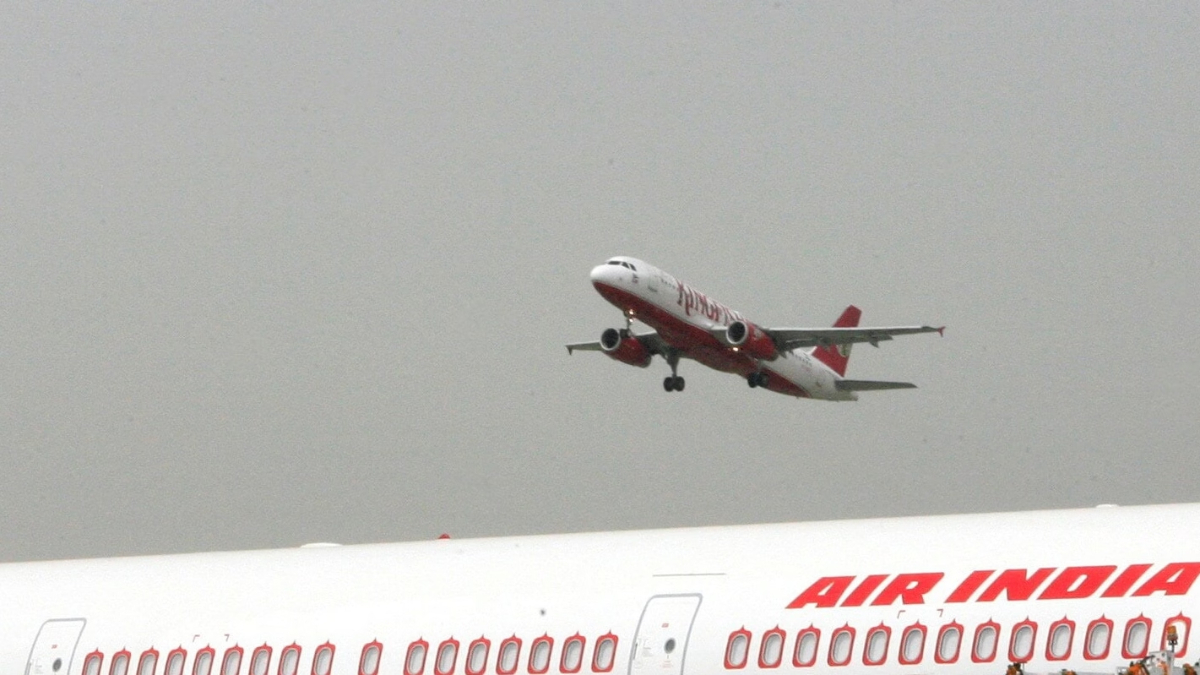
New Delhi, June 25, 2026 — An Air India flight traveling from Delhi to Amritsar briefly crossed into Pakistani airspace on Monday night, June 22, 2026, forcing aviation authorities into swift regulatory action. The Directorate General of Civil Aviation (DGCA) and Air India confirmed that flight AI479, an Airbus A321 aircraft, “marginally infringed” the international border while maneuvering an aborted landing, known as a go-around, due to an emergency closure at Amritsar’s Sri Guru Ramdas Ji International Airport.
While the airspace breach was resolved peacefully within less than two minutes through coordination between Indian and Pakistani air traffic control (ATC), the incident has drawn heavy scrutiny. India’s aviation regulator has grounded the flight crew and suspended an air traffic controller in Amritsar for failing to immediately report the border violation.
A Sudden On-Runway Emergency
The sequence of events began normally on Monday evening when Air India flight AI479 departed Delhi’s Indira Gandhi International Airport around 9:18 PM. The short domestic jump to Amritsar was progressing smoothly until the aircraft prepared for its final landing approach.
Just as the Airbus A321 neared Amritsar, a sudden emergency unfolded on the ground. An airport official reported a bird strike on the runway, forcing air traffic controllers to suspend all landings immediately so emergency teams could inspect the tarmac for debris. With the runway temporarily closed, Amritsar ATC instructed flight AI479 to enter a holding pattern.
The aircraft was initially told to hold over a specific navigation point, but a combination of heavy airspace congestion and radar vectoring instructions altered its trajectory. As multiple flights clustered in the sky waiting for the runway to reopen, the Air India crew was forced to execute a standard go-around procedure—aborting their current approach to circle back into the queue.
Crossing the Border
Amritsar’s international airport sits less than 20 kilometers from the heavily militarized India-Pakistan border, leaving an incredibly narrow margin for error during complex aerial maneuvers. As the aircraft began its go-around, it drifted toward the international boundary near the Attari-Wagah border.
Flight tracking data and regulatory statements revealed that during the radar vectoring process, the aircraft failed to perfectly execute the local ATC directives and crossed the international border. Lahore Air Traffic Control in Pakistan immediately detected the incoming Indian commercial jetliner and issued an alert to the pilots.
Recognizing the deviation, the Air India crew immediately performed a sharp turn to steer the aircraft back into domestic territory. Officials noted that the plane remained inside Pakistani airspace for less than two minutes and traveled roughly a mile past the border. The DGCA emphasized that the breach did not pose an immediate danger, as the event was dynamically coordinated between Indian and Pakistani air traffic controllers to ensure safety margins were maintained.
Diversion and Delayed Arrival
Because air traffic congestion at Amritsar remained critical and the runway safety checks were still underway, the flight crew made the executive decision to abandon the landing attempt entirely. Utilizing their remaining fuel, the pilots turned the Airbus A321 around and headed back to Delhi.
The flight landed safely at its point of origin in the national capital without further incident. Passengers remained on board while the plane was refueled and cleared for a second attempt. Once air traffic eased and the Amritsar runway was declared completely safe, the flight took off from Delhi for a second time, ultimately landing in Amritsar at 2:10 AM on Tuesday, June 23. Air India confirmed that no injuries were reported and passenger safety was never compromised.
Backlash Over Failed Reporting
While the physical flight concluded safely, a severe administrative failure has put both the airline crew and local controllers in the hot seat. Despite the sensitivity of a border-crossing incident, neither the pilots nor the Amritsar air traffic controller immediately flagged the airspace violation to senior regulatory bodies.
Upon discovering the lapse, the DGCA reacted sharply, issuing interim suspensions.
An internal investigation has been launched by Air India to determine whether the drift was caused by human error, misleading radar vectoring commands, or cockpit communication gaps. Investigators will audit the black box data and flight logs to see why the crew deviated from the initial holding instructions.
Geopolitical Context and Precedents
Airspace boundaries between India and Pakistan are historically sensitive. Following major geopolitical escalations in April 2025, Pakistan permanently closed its airspace to all Indian-registered commercial, civilian, and military flights. India responded with an identical ban on Pakistani aircraft, forcing airlines on both sides to take lengthy, expensive detours for international routes.
Despite the ban, accidental border drift due to weather conditions or technical issues does happen occasionally. Just earlier this month, on June 12, a Dubai-bound Fly Jinnah flight departing from Lahore briefly crossed into Indian airspace over Punjab to bypass a massive storm system. In that instance, Indian controllers smoothly guided the Pakistani plane back onto its track without incident.
Aviation experts note that while the air traffic controllers handles these events professionally behind the scenes, strict reporting protocols are vital. The failure of the Air India crew and Amritsar ATC to document Monday‘s incident immediately is what converted a routine operational error into a major regulatory violation.
What Happens Next?
Air India has reiterated its commitment to cooperation, stating that “the safety of passengers and crew remains our top priority” and that they are assisting the DGCA fully. The grounded pilots and the suspended controller will remain barred from operational duties pending the final results of the probe.
The investigation is expected to focus heavily on modernizing regional coordination protocols during airport emergencies to ensure that flights holding near sensitive international borders are given wider safety buffers.