

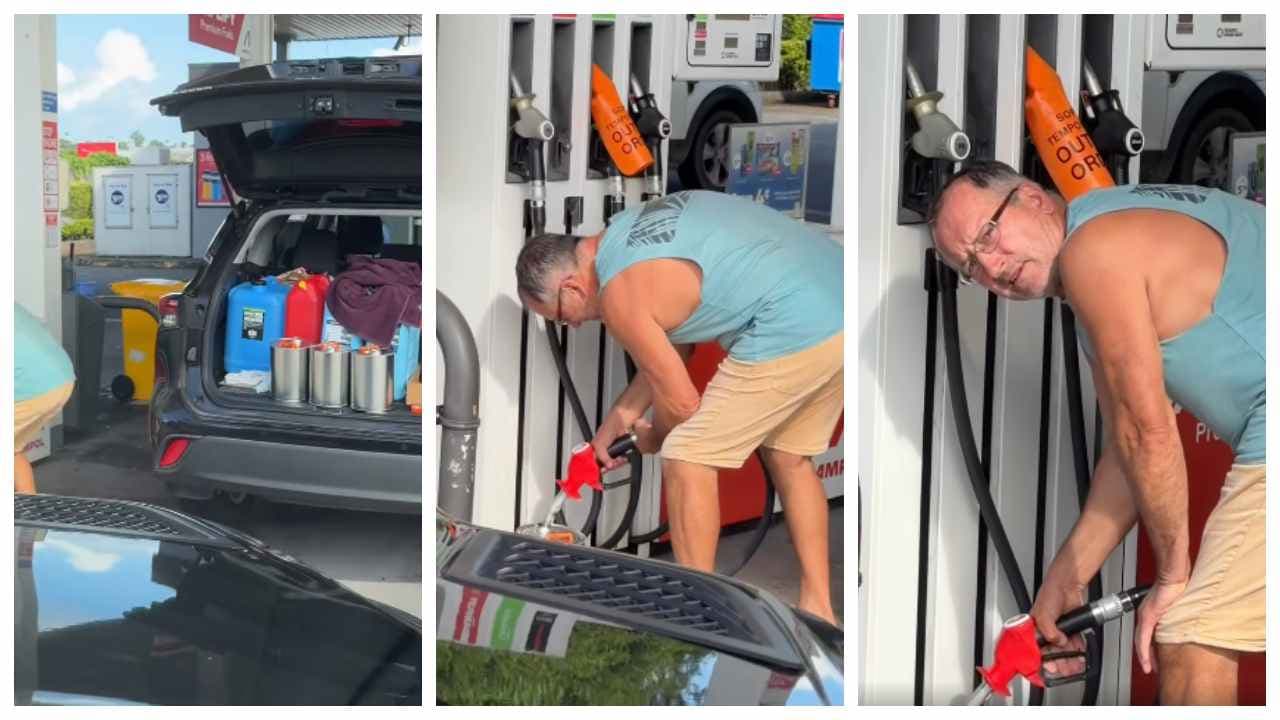
New Delhi, March 28, 2026: A significant wave of digital anger and national concern has been triggered across Australia following the emergence of a startling video from the Gold Coast. In a clip that gained massive traction on March 27 and 28, 2026, a motorist was observed filling a staggering number of containers at a service station in Tweed Heads. It is noted that social media prankster Willem Ungermann, who filmed the encounter, expressed disbelief as the man packed jerry cans, metal canisters, and even water containers into the boot of his car. This startlingly blatant act of stockpiling has been widely shared as a primary example of the “greed” currently straining the nation’s fragile fuel supply.
The Mechanics of the “1,000-Litre” Hoard
The specifics of the panic-buying surge were meticulously documented in separate reports, including a viral 1,000-litre “ute tank” incident near Parramatta that amassed over 1.7 million views. It is reported by several digital observers that as global tensions in West Asia effectively disrupted the Strait of Hormuz, Australian drivers have begun taking extreme measures to secure fuel. It is observed in the viral reports that while some people are hoarding for personal use, others have been accused of “fuel flipping”—draining local pumps to sell the petrol at a higher price in neighboring towns. The visual of empty bowsers and “No Petrol” signs has provided a grounding narrative for the thousands of “un-Australian” comments currently dominating the internet.
Also Read: Varun Dhawan Opens Up About Daughter’s DDH Diagnosis
Government and Experts Call for Calm
A massive conversation regarding “national security” and “social responsibility” has been ignited by the federal government’s response to the crisis. It is frequently mentioned by Energy Minister Chris Bowen that while supply chains are under pressure, there is enough fuel in the country to meet normal demand if people stop stockpiling. Thousands of analytical comments were left by experts who pointed out that Australia has released 20% of its emergency fuel reserves to stabilize the market. However, the act of hoarding is being widely discussed as a sobering reminder that “panic buying” often creates the very shortage that citizens are trying to avoid.
Impact on the 2026 Australian Easter Road Trip
The impact of this viral event has extended beyond the petrol stations to influence a broader discussion on the 2026 “Easter Holiday” travel plans. It is observed by tourism operators that bookings in regional South Australia and Victoria have plummeted by up to 20% as families fear being stranded with empty tanks. A renewed sense of scrutiny is being observed toward fuel standards, as the government has temporarily allowed the sale of “dirtier” export-grade fuel to increase local supply by 100 million litres per month. It is believed that the viral nature of these “hoarding videos” will prompt a dialogue on the necessity of formal fuel rationing if the global oil crisis persists into April.
A Stark Reminder of Supply Chain Fragility
As the footage continues to accumulate millions of views on March 28, 2026, it serves as a powerful and resilient reminder of Australia’s heavy reliance on imported refined fuels. It is believed that the account of the “Tweed Heads Petrol Hoarder” will remain a primary highlight of the month’s most discussed and socially polarizing economic news. The legacy of this viral event is expected to be a heightened public awareness regarding the importance of community-minded consumption during global shocks. Until the tankers from Singapore and Malaysia restore the balance, these videos remain a stark testament to the fact that in a crisis, panic is the fastest-spreading fuel of all.