

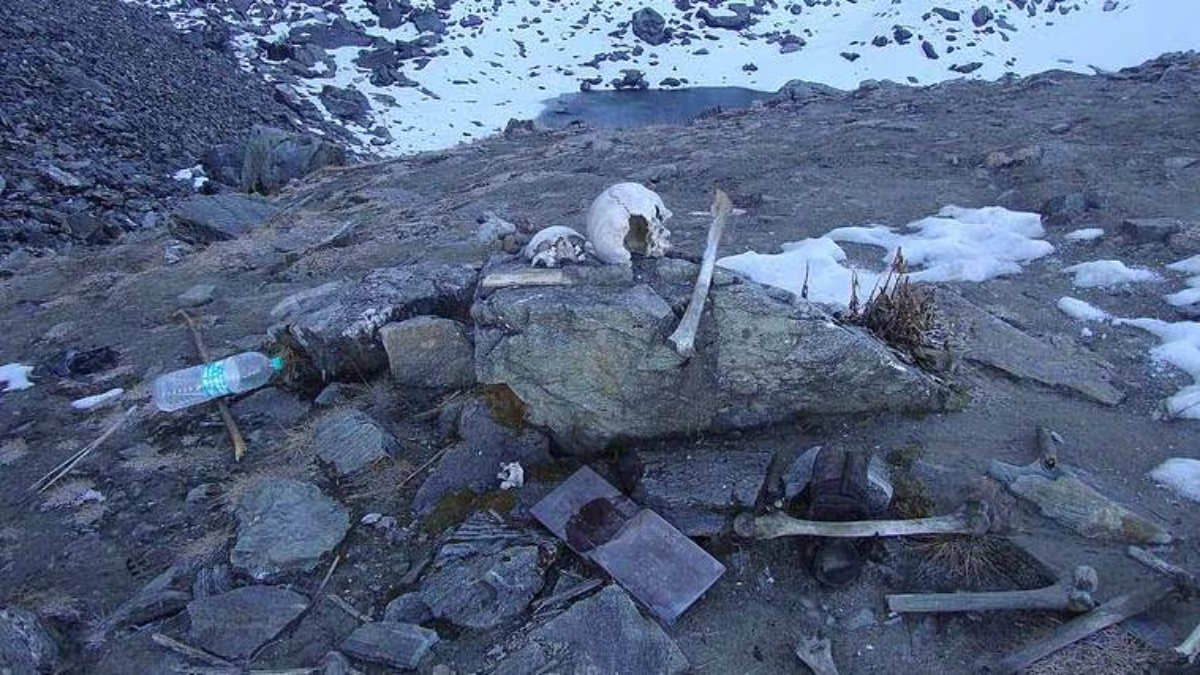
New Delhi, March 28, 2026: High in the Trishul massif of the Uttarakhand Himalayas, tucked away at an altitude of approximately 5,029 meters, lies one of the world’s most enduring archaeological mysteries: Roopkund Lake. Known colloquially as “Skeleton Lake,” this glacial tarn is far more than a macabre curiosity; it is a premier destination for trekkers seeking a blend of raw natural beauty and spine-tingling history.
For the modern adventurer, Roopkund represents the ultimate high-altitude challenge, offering a journey through virgin forests, sprawling alpine meadows, and a final ascent into a landscape that feels frozen in time.
The Enigma Beneath the Ice
The lake gained global notoriety in 1942 when a forest ranger discovered hundreds of human skeletons scattered around its edges and resting beneath its crystal-clear waters. For decades, theories ranged from a lost army of Genghis Khan to a ritual suicide pact.
Recent genomic studies have only deepened the mystery. Scientists discovered that the remains belong to two distinct groups: one of South Asian ancestry and another from the eastern Mediterranean (likely Crete), separated by nearly 1,000 years. How these disparate groups met their end in this remote Himalayan pocket remains a subject of intense debate, though local folklore points to the “Iron Hailstones” sent by the goddess Nanda Devi.
The Trek: From Lush Greenery to Stark Glaciers
The journey to Roopkund is widely considered one of the most beautiful treks in India. It isn’t just about the destination; it’s about the dramatic shift in scenery over the 7-day expedition.
- The Oak Forests of Lohajung: The trek typically begins in the small hamlet of Lohajung, winding through dense forests of oak and rhododendron.
- The Twin Meadows (Bugyals): One of the highlights is crossing Ali Bugyal and Bedni Bugyal. These are among the largest high-altitude meadows in Asia—endless carpets of green that offer a front-row seat to the majestic peaks of Trishul and Nanda Ghunti.
- The Final Ascent: As you climb past the last campsite at Bhagwabasa, the greenery vanishes. You enter a world of rock, snow, and silence. The air thins, and the final push to the lake requires grit and proper acclimatization.
Why It’s a “Hidden Gem” for 2026
While Roopkund has been on the radar of serious mountaineers for years, it remains a “hidden gem” for the broader traveling public due to its demanding nature.
- Sustainable Adventure: With Uttarakhand’s renewed focus on eco-tourism, the trails are better managed, ensuring that the fragile ecosystem remains protected while providing an authentic wilderness experience.
- Unmatched Photography: From the golden hour hitting the Himalayan giants to the eerie, frozen silhouettes of the lake itself, the visual storytelling opportunities are unparalleled.
- Cultural Immersion: The trek is steeped in the legend of the Nanda Devi Raj Jat, a pilgrimage that takes place every 12 years. Travelers get a unique look at the deep spiritual connection the local Kumaoni and Garhwali people have with these mountains.
Tips for the Adventurous Traveler
- Best Time to Visit: May to June (for trekking on snow) or September to October (for clear views and a chance to see the skeletons when the ice melts).
- Physical Fitness: This is a “Moderate to Difficult” trek. Prior cardiovascular training is essential to handle the altitude and steep gradients.
- Gear: Heavy-duty trekking boots, high-quality thermal layers, and UV-protected sunglasses are non-negotiable.
Note: Access to the lake is strictly regulated by local authorities to preserve the site’s historical and environmental integrity. Always travel with a certified local guide.
Roopkund is a place where the line between myth and reality blurs. It challenges your body while feeding your curiosity, making it the definitive bucket-list item for anyone who believes that the best stories are found at the end of the hardest climbs.