
 office in Nashik were seen as a symbol of corporate aspiration.)
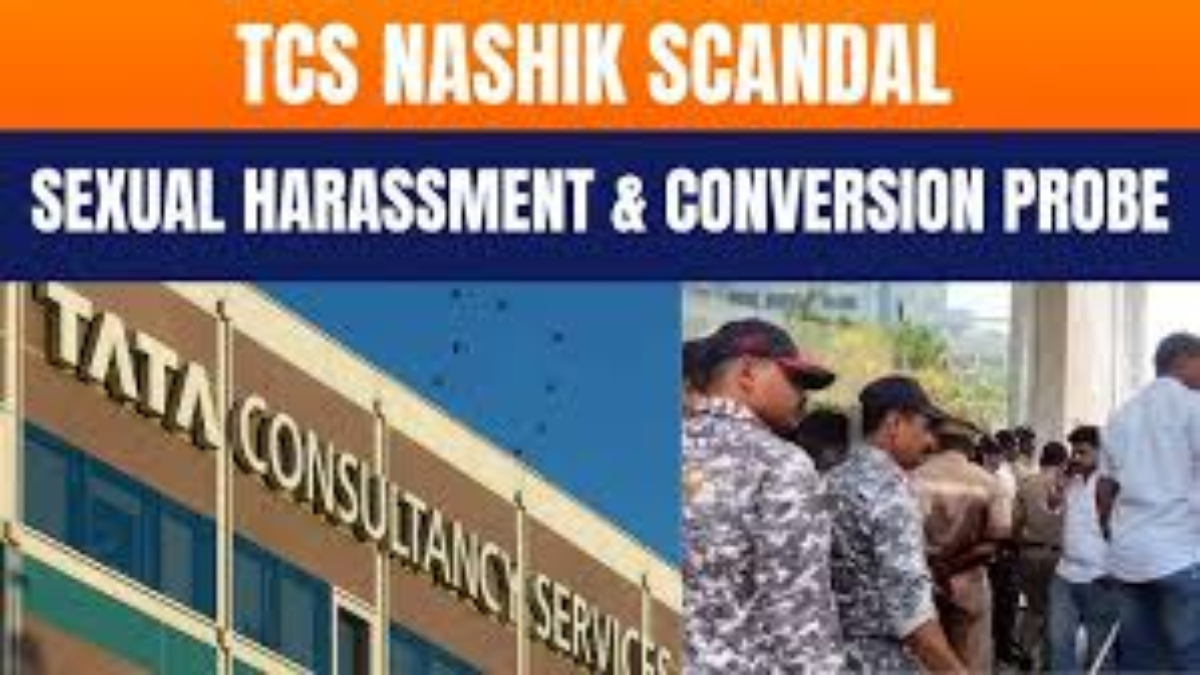
New Delhi, April 15, 2026 – For years, the gleaming glass walls of the Tata Consultancy Services (TCS) office in Nashik were seen as a symbol of corporate aspiration. Today, they stand at the center of one of the most significant workplace misconduct scandals in recent Indian history. What began as a series of hushed complaints has erupted into a full-scale criminal investigation involving nine FIRs, seven arrests, and a staggering breakdown of corporate governance.
At the heart of this storm is a chilling revelation: when victims sought help, they weren’t met with protection. Instead, they were reportedly told to “Let it go.“
The “Let It Go” Culture: When Red Flags Were Ignored
New details emerging from the Special Investigation Team (SIT) probe suggest that the rot at the Nashik branch was not just the result of a few “bad apples,” but a systemic failure of the internal grievance mechanism.
According to investigators and court submissions, a senior manager had repeatedly escalated complaints via email to an Assistant General Manager (AGM), who served on the company’s internal Prevention of Sexual Harassment (POSH) committee. Despite 78 emails and digital records documenting harassment, the response was allegedly dismissive.
The SIT report highlights a disturbing pattern of discouragement. When a complainant directly approached the AGM, the senior official reportedly replied:
“Why do you want to get highlighted? Let it go. Leave it.”
This dismissive attitude, prosecutors argue, didn’t just silence the victims—it emboldened the predators. By normalizing the harassment, the management allegedly allowed an environment of “coercion and exploitation” to flourish for nearly four years, spanning from early 2022 to March 2026.
A Pattern of Exploitation: The Allegations
The scale of the misconduct is vast, involving employees mostly aged between 18 and 25. The allegations, which triggered a covert operation by Nashik police where woman constables went undercover as housekeeping staff, include:
- Sexual Harassment & Assault: Multiple women reported inappropriate touching, sexually explicit remarks, and stalking. One primary FIR involves a colleague who allegedly deceived an employee with promises of marriage to sexually exploit her.
- Religious Coercion: Perhaps the most unique and concerning aspect of the case is the allegation of “religious influence.” Some complainants alleged they were pressured to participate in religious practices against their beliefs, with claims of forced conversion attempts being investigated.
- Professional Retaliation: Victims who resisted advances or attempted to report misconduct were allegedly met with increased workloads, isolation, or threats to their career progression.
The Failure of the POSH Framework
The TCS Nashik row has reignited a national debate on the effectiveness of the POSH Act. While the law mandates that every large organization have an Internal Committee (IC) to address sexual harassment, the Nashik case shows how easily these systems can be subverted from within.
- Conflict of Interest: Investigators found that the arrested AGM had dozens of phone calls with the accused individuals, raising serious questions about her impartiality.
- Normalization of Abuse: In some instances, HR officials reportedly told victims to “stay cool,” suggesting that such behavior was “common in MNCs.”
Nashik District Collector Ayush Prasad has now ordered a parallel review into the company’s compliance with legal requirements, while the Nascent Information Technology Employees Senate (NITES) has approached the Ministry of Labour seeking a comprehensive audit of TCS’s POSH protocols nationwide.
| Key Statistics of the Case (As of April 2026) | |
| Total FIRs Filed | 9 |
| Number of Arrests | 7 (including 1 HR Official and 1 AGM) |
| Timeline of Alleged Abuse | February 2022 – March 2026 |
| Internal Records Seized | 78 Emails and multiple chat logs |
TCS Responds: A House in Turmoil
The scandal has reached the highest levels of the Tata Group. N. Chandrasekaran, Chairman of Tata Sons, described the allegations as “gravely concerning and anguishing.” In an attempt to restore confidence, the company has taken the following steps:
- Immediate Suspensions: All employees named in the FIRs or under investigation have been suspended.
- Leadership Change in Probe: TCS Chief Operating Officer (COO) Aarthi Subramanian has been appointed to lead an internal investigation that aims to identify not just the perpetrators, but also the managers who looked the other way.
- Cooperation with SIT: The company maintains a “zero-tolerance policy” and is reportedly handing over all digital evidence, including CCTV footage and server logs, to the Nashik police.
The Road Ahead: Corporate India’s Wake-up Call
As the SIT continues its probe, the AGM remains in police custody, and the hunt for at least one more absconding suspect continues. However, the legal battle is only one part of the story.
The TCS Nashik row serves as a grim reminder that a “Zero Tolerance Policy” is only as good as the people who enforce it. When the very people tasked with protecting employees—the HR managers and AGM-level executives—advise victims to “let it go,” the policy becomes a hollow promise.
The broader IT industry is now watching closely. If a giant like TCS, known for its “people-first” culture, can have such a significant blind spot, it raises the question: How many other “silent cries” are being ignored in cubicles across the country?
For the victims in Nashik, “letting it go” is no longer an option. They have chosen to speak up, and in doing so, they may have just forced a long-overdue reckoning for corporate India