

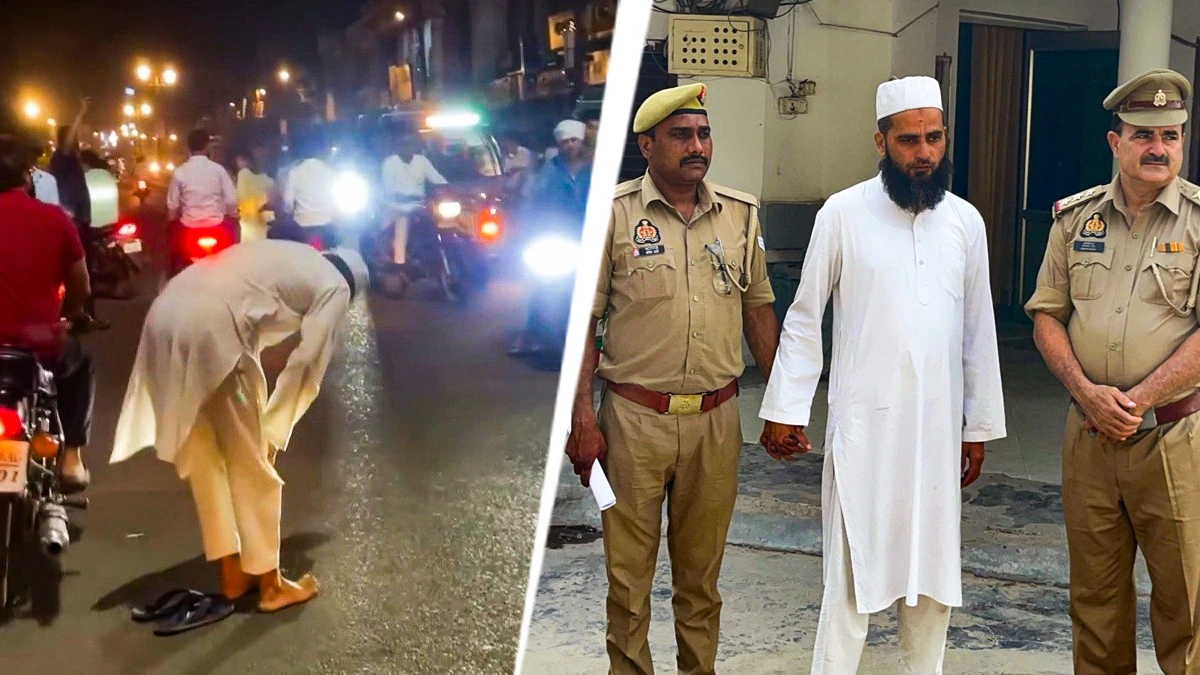
New Delhi, April 20, 2026: A viral video featuring a man offering Namaz in the middle of a high-traffic road in Uttar Pradesh has led to his immediate arrest, sparking a renewed debate over public order and religious expression. The footage, which began circulating on April 15, 2026, depicts the individual kneeling on a prayer mat amidst the flow of vehicles, causing a significant disruption to commuters. The “truth” behind the police intervention centers on the violation of state-mandated guidelines that prohibit religious activities on public roads to ensure the smooth movement of traffic and public safety.
The interaction was observed to have escalated after onlookers began recording the scene, which quickly transitioned from a solitary act of worship to a chaotic traffic snarl. In the viral clip, the man is seen continuing his prayers even as vehicles are forced to swerve or halt around him, creating a high-risk situation for both the worshipper and the public. This “unauthorized” use of a public thoroughfare has been described by authorities as a direct breach of Section 144 and other relevant sections of the Indian Penal Code (IPC).
Law Enforcement Response: Arrest and Medical Verification
The reaction from the Uttar Pradesh Police was swift, with a formal case being registered shortly after the video went viral on the evening of April 19, 2026. It is argued by the investigating officers that the act was not merely a matter of faith but a “calculated disruption” of public peace. However, following the arrest, it is reported that the family of the accused has come forward with claims regarding his mental health. The police have confirmed that while the man has been sent to jail, his medical history is being verified to determine if the act was driven by an underlying condition.
The impact of the incident has prompted a wider discussion about the strict Eid and Friday prayer guidelines issued by authorities in districts like Meerut, Sambhal, and Rampur. It is noted by legal experts that the state government has consistently warned against offering prayers in public spaces that impede movement, urging citizens to use designated mosques or private premises instead. The passive role of the local administration—which had previously issued several peace committee warnings—has now been replaced by active legal enforcement to maintain “law and order” during a sensitive period.
Also Read: Udhampur Bus Tragedy: 15 Dead
Public Order vs. Personal Faith: The Ongoing Debate
Following the viral spread of the arrest video, various social and political groups have weighed in on the ethics of public worship. It is reported that while some defend the act as a personal right, the majority of public sentiment—supported by recent court rulings—favors the “primacy of public space” for its intended purpose. The passive wait for a resolution in such cases is often short, as the UP police have demonstrated a “zero-tolerance” policy toward any activity that could lead to communal tension or traffic hazards.
As of the morning of April 20, 2026, the “Namaz on the Road” video remains a top trending topic in the UP News and Law & Order categories. While the investigation into the man’s mental state continues, the digital record of the arrest serves as a clear warning to others. For now, the story stands as a digital reminder: in a densely populated and diverse society, the exercise of personal faith is often balanced against the collective right to a safe and functional public infrastructure.