

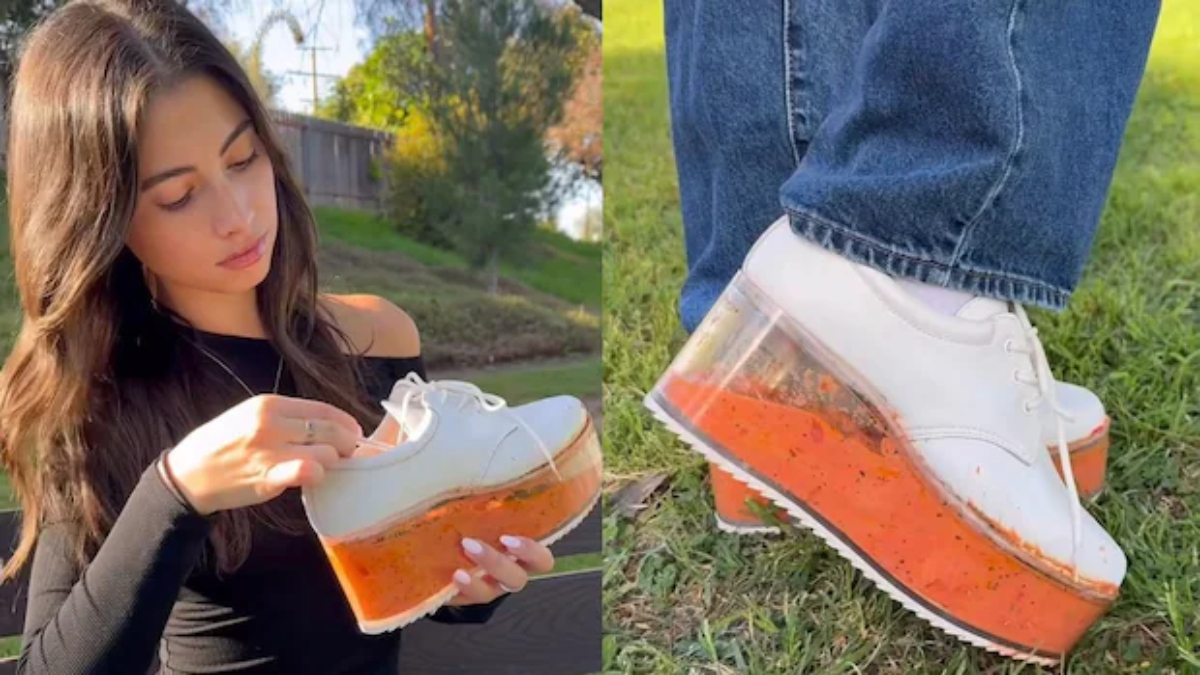
New Delhi, May 12, 2026: In the fast-paced world of social media, the line between creative genius and “cringe” is often razor-thin. However, a recent viral video featuring an influencer turning high-fashion footwear into a bowl of spaghetti has crossed a line for many, igniting a heated debate across Instagram, TikTok, and X (formerly Twitter). Dubbed the “Pasta Shoes” incident, the video has racked up millions of views, but the feedback is far from appetizing.
What was intended to be a quirky, avant-garde display of “food art” has instead become a lightning rod for criticism regarding hygiene, food waste, and the lengths influencers will go for a few seconds of engagement.
The Video That Shook the Feed
The video, which began circulating heavily this week, features a well-known lifestyle influencer known for “aesthetic” DIY content. In the clip, the creator is seen taking a pair of designer-inspired platform shoes—specifically ones with a hollow, transparent base—and filling the soles with freshly cooked, steaming spaghetti drenched in marinara sauce.
The “performance” doesn’t stop there. Once the shoes are fully packed with pasta, the influencer puts them on and begins to walk across a pristine white studio floor. As they step, the sauce squelches against the plastic, and the pasta is compressed under the weight of their feet. To top off the spectacle, the influencer then sits down, removes a fork from their pocket, and proceeds to eat a mouthful of the pasta directly from the shoe’s opening.
“Unsanitary and Unhinged”: The Internet’s Reaction
While the influencer likely expected comments praising their “artistic vision,” the comment sections quickly turned into a digital courtroom. The primary grievance? Hygiene.
Medical professionals and hygiene experts were among the first to weigh in. “Shoes are designed to be on the ground. They collect bacteria, fungi, and debris,” noted one viral comment from a public health blogger. “Even if the shoes were brand new out of the box, the chemicals used in the manufacturing of plastics and synthetic glues are not food-safe. This isn’t just gross; it’s a health hazard.”
The “squelch factor” also triggered a visceral reaction from viewers. Words like “nauseating,” “revolting,” and “stomach-turning” dominated the top-liked responses. Many users pointed out that even in the pursuit of “clout,” there should be boundaries.
The Problem of Food Waste
Beyond the ick-factor, a more serious criticism has emerged: the ethical implications of food waste. In a global climate where food insecurity is a rising concern, using several servings of pasta and sauce as a disposable prop for a 15-second video struck a sour note.
“There are people struggling to put a single meal on the table, and we have influencers literally walking on food for views,” wrote one user on X. The sentiment was echoed by thousands, sparking a broader conversation about the “waste economy” of social media.
In recent years, a trend known as “Rage Baiting”—where creators intentionally do something nonsensical, wasteful, or gross to provoke angry comments—has become a lucrative strategy. Because platforms like TikTok and Instagram reward engagement (even negative engagement), influencers are incentivized to post content that makes people mad. The “Pasta Shoes” video is being cited as a prime example of this “attention-at-all-costs” culture.
A History of “Food Fashion” Fails
This isn’t the first time the internet has recoiled at the intersection of food and footwear. We’ve seen:
- The “Cereal Boots” incident of 2022, where a creator poured milk and Froot Loops into rain boots.
- The “Bread Loaf Slippers,” which involved hollowing out actual baguettes to wear as shoes.
- The “Raw Meat Dress” tributes, which continue to haunt fashion history since Lady Gaga’s 2010 VMA appearance (though Gaga’s was high-concept couture, whereas today’s versions are often seen as cheap imitations for clicks).
The difference now, experts argue, is the lack of “craft.” While high-fashion houses might use food motifs to make a political or social statement, the current wave of influencer content feels more like a hollow attempt to trend.
The Influencer Speaks Out (Sort Of)
Following the backlash, the influencer posted a brief follow-up story on Instagram. Clad in a bathrobe and looking unbothered, they addressed the “haters.”
“Art is supposed to make you feel something,” they said with a shrug. “If you’re disgusted, it worked. It’s about the juxtaposition of the mundane (pasta) and the luxury (shoes). Also, the shoes were sanitized!”
This response did little to quiet the storm. Critics were quick to point out that “sanitizing” a shoe does not make it a bowl, nor does it address the underlying issue of waste.
The Verdict: A Viral Misstep?
As the “Pasta Shoes” video continues to be reposted and parodied, it serves as a fascinating case study in modern digital culture. It highlights a growing rift between creators who prioritize “shock value” and an audience that is becoming increasingly weary of performative waste.
The incident has also prompted calls for platforms to reconsider how they monetize such content. If “Rage Bait” is the most effective way to go viral, we can expect more pasta in shoes, milk in handbags, and steak in sinks.
For now, the consensus remains clear: some things are better left on the plate and off the feet. The “Pasta Shoes” may have trended, but they’ve left a bad taste in everyone’s mouth.