

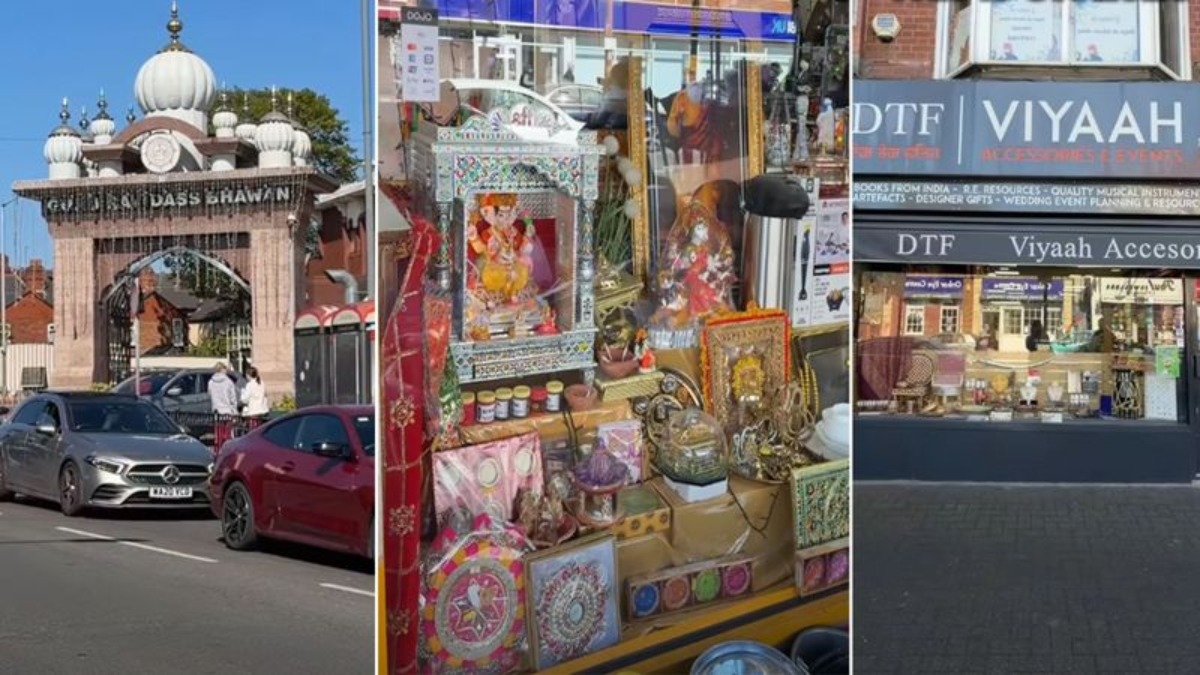
New Delhi, May 13, 2026— Is it a bustling market in Amritsar or a high street in the British Midlands? That is the question millions of social media users are asking this week after a video showcasing a vibrant, Punjabi-dominated neighborhood in the United Kingdom went viral. Dubbed “Punjab 2.0” by the internet, the clip has sparked a massive global conversation about cultural identity, migration, and the “new” face of modern Britain.
The footage, shared by an Indian-origin content creator, has already amassed millions of views across Instagram, X (formerly Twitter), and TikTok. For many, the visuals are so authentic to the Indian state of Punjab that they found it hard to believe the video was filmed thousands of miles away in the UK.
A Slice of Ludhiana in the Heart of Britain
The viral video opens with a disclaimer that immediately caught everyone’s attention: “Believe it or not — this is not Punjab, this is the United Kingdom.”
As the camera pans across the street, the “typical” British aesthetic of red phone booths and grey skies is replaced by a kaleidoscope of Punjabi culture. Key highlights from the video that left viewers stunned include:
- Punjabi Signboards: Shop headers are written prominently in Gurmukhi script, advertising everything from fresh jalebis to traditional bridal lehengas.
- Desi Transport: In a moment that truly shocked viewers, auto-rickshaws (Tuk-Tuks)—a staple of Indian city life but a rarity in the West—were spotted parked along the curb.
- Tributes to Icons: Massive murals and posters of the late Punjabi singer Sidhu Moose Wala adorn building walls, mirroring the street art found across the villages of Mansa and Bathinda.
- A Sensory Overload: The background audio captures the familiar hum of Punjabi music blaring from speakers, while the streets are lined with desi grocery stores and sweet shops (mishri-khanna).
Interestingly, the creator clarified that this wasn’t Southall—the famous “Little India” of London—hinting that “Mini Punjabs” are thriving in other UK hubs like Birmingham, Leicester, or Smethwick.
“Reverse Colonization” and the Internet’s Wit
As with any viral sensation, the comments section became a breeding ground for humor and debate. The term “Reverse Colonization” trended as users jokingly remarked that the British Empire’s influence has come full circle.
“You can take a Punjabi out of Punjab, but you can’t take Punjab out of a Punjabi. They’ve literally copy-pasted the whole city!” one viral comment read.
Other users chimed in with witty observations:
- “At this point, Punjabis don’t migrate; they just duplicate the city and move in.”
- “Britishers wanted to see the world, now the world has come to them. Fair trade?”
- “I showed this to my grandmother in Jalandhar, and she asked why I was filming the local market instead of studying!”
Beyond the Memes: A Deep-Rooted History
While the video is being treated as a “discovery” by some, many were quick to point out that these vibrant communities aren’t new. They are the result of decades of hard work and entrepreneurship by the Punjabi diaspora.
The large-scale migration of Punjabis to the UK began in the 1950s and 60s, as many arrived to help rebuild post-war Britain. Over the generations, these families have transformed quiet English high streets into thriving economic hubs. These neighborhoods aren’t just “tourist spots”; they are essential parts of the British economy where immigrant-run businesses pay taxes, provide employment, and keep local traditions alive.
Why the Fascination?
The reason “Punjab 2.0” has struck such a chord is the unfiltered authenticity it captures. In a world of polished, globalized shopping malls, these streets offer a raw, nostalgic connection to home for millions of NRIs (Non-Resident Indians).
For the British public, it represents the successful—though sometimes debated—evolution of multiculturalism. For Indians back home, it’s a moment of pride to see their language and culture standing tall on foreign soil.
The Verdict
Whether you call it a cultural enclave or “Punjab 2.0,” the viral video highlights a simple truth: the borders of culture are much more fluid than the borders on a map. As the UK continues to evolve, these streets remain a testament to the enduring spirit of the Punjabi community—always ready to make a “home away from home,” complete with parathas, Punjabi music, and yes, even an auto-rickshaw.