

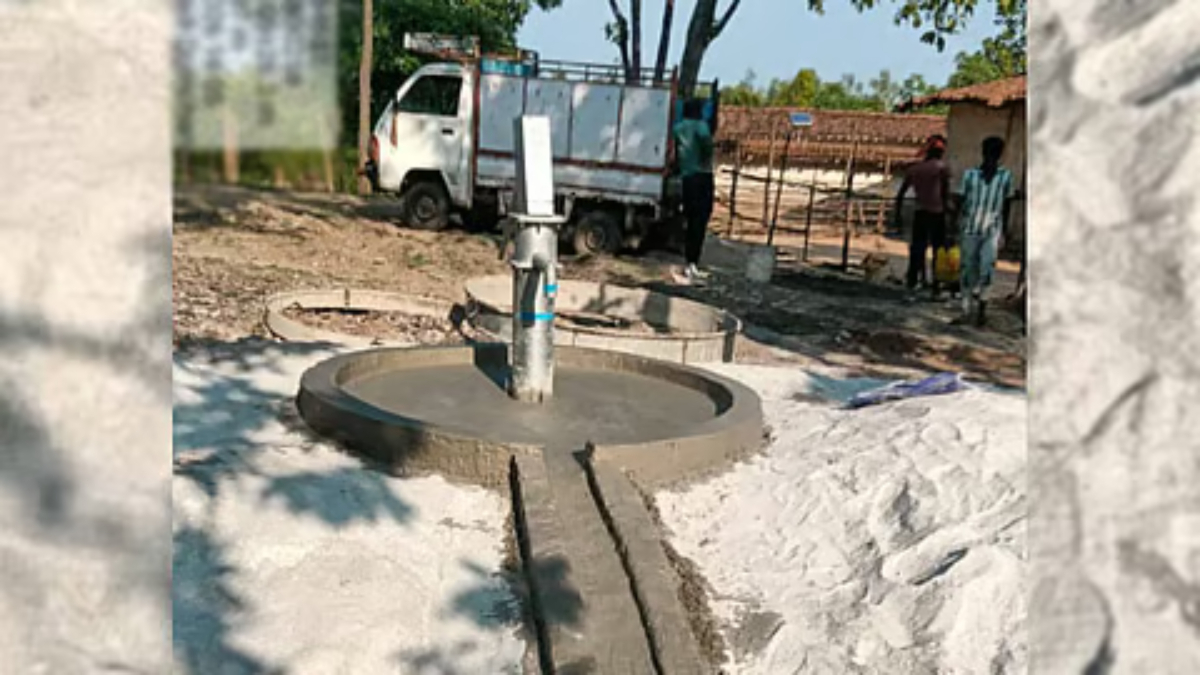
New Delhi, May 13, 2026: In a significant victory for rural advocacy and digital transparency, a remote tribal hamlet in Jharkhand has finally received its first functional tubewell. This development comes just days after a harrowing video surfaced online, showing residents—including young children—collecting muddy, contaminated water from a shallow pit for drinking and cooking.
The transformation of this small village serves as a poignant reminder of the infrastructure gaps that still exist in India’s hinterlands and the power of social media in holding local administrations accountable.
The Catalyst: A Viral Cry for Help
The story began when a local social worker uploaded a 45-second clip to social media platforms. The footage depicted a scene of desperation: women from the tribal community were seen kneeling beside a small, stagnant hole in the ground, painstakingly scooping out yellowish water with small bowls. The “well” was little more than a natural depression in the earth that collected runoff and groundwater, often shared with local livestock.
Within 48 hours, the video garnered hundreds of thousands of views and was shared by prominent activists and journalists. The hashtag #WaterForJharkhand began to trend, catching the attention of the state’s high-ranking officials and the District Collector.
Prior to the viral video, the villagers had reportedly submitted several petitions to local panchayat leaders over the last three years, citing frequent outbreaks of waterborne diseases like cholera and dysentery. However, their pleas had largely fallen on deaf ears until the digital spotlight was turned on the village.
Rapid Mobilization and Installation
Following the public outcry, the district administration swung into action. A team of engineers from the Drinking Water and Sanitation Department (DWSD) was dispatched to the hamlet to survey the land and identify a suitable spot for a deep-bore tubewell.
“We received orders to prioritize this village immediately,” said a senior site engineer. “The geological survey was conducted within hours, and the drilling rig reached the village by the following morning. Our primary goal was to ensure the water source was deep enough to provide clean, filtered water that remains available even during the peak of the summer heat.”
By the third day, the drilling was complete. A manual hand pump was installed, and for the first time in the hamlet’s history, clear, potable water flowed freely. The administration has also promised to install a solar-powered water tank system in the coming months to provide a more sustainable, long-term solution for the growing population.
Life Before the Tubewell: A Daily Struggle
To understand the impact of this new resource, one must look at the grueling reality the villagers faced for decades. In many tribal areas of Jharkhand, water scarcity is not just a seasonal issue but a permanent state of being.
For the women of this hamlet, the day began at 4:00 AM. They would trek nearly two kilometers to the nearest stream, which often ran dry by March. When the stream failed, the “jharna” (the shallow pit seen in the video) became their only option.
“We used to spend four to five hours every day just fetching enough water to survive,” said Sumati Devi, a resident of the village. “The water from the pit made our children sick. We knew it was dirty, but what choice did we have? Now, the pump is right in the middle of our homes. It feels like a burden has been lifted from our shoulders.”
Medical professionals in the region noted that the lack of clean water was the primary driver of malnutrition and stunted growth in the village’s children. With the new tubewell, the risk of parasite infections and chronic diarrhea is expected to plummet.
The Broader Context of Rural Water Access
While the success in this specific hamlet is a cause for celebration, it highlights a broader systemic challenge. Jharkhand, despite being rich in mineral resources and receiving substantial rainfall during the monsoon, often struggles with groundwater management and rural distribution.
The Government of India’s Jal Jeevan Mission, which aims to provide functional household tap connections to every rural home by 2024, has made significant strides across the country. However, “last-mile” connectivity remains a hurdle in hilly and forested terrains where tribal communities often reside.
Experts suggest that while tubewells are an excellent immediate fix, the long-term solution involves:
- Rainwater Harvesting: Encouraging villages to build check dams to recharge the groundwater table.
- Solar-Powered Pumps: Reducing the physical labor of manual pumping and ensuring water can be piped directly to homes.
- Community Management: Training villagers to maintain the pumps to ensure they don’t fall into disrepair—a common issue with rural infrastructure projects.
The Power of “Citizen Journalism”
This incident has also sparked a conversation about the role of technology in rural development. In the past, the grievances of remote villages would rarely reach the ears of those in power in Ranchi or Delhi. Today, a smartphone and a basic internet connection can act as a bridge between the marginalized and the government.
The district administration has now announced a new digital “Grievance Redressal Cell” where villagers can upload photos and videos of infrastructure failures. This move aims to be proactive rather than waiting for a crisis to go viral.
A New Chapter for the Hamlet
As the sun set over the village on the day of the tubewell’s inauguration, the atmosphere was one of a festival. Children played under the cool spray of the pump, and families filled their steel pitchers with pride.
The village elders expressed hope that this is just the beginning. With water now available, they are looking toward the government for better roads and a primary health center.
“Water is life,” the village headman remarked. “Now that we have life, we can start thinking about the future. We want our children to go to school instead of spending their mornings at a mud pit. Today, for the first time, our village feels like it belongs to the rest of the world.”
Conclusion
The story of this Jharkhand hamlet is a bittersweet reminder of the work that remains. While the viral video was the catalyst for change, it shouldn’t require a public embarrassment for basic human rights like clean water to be fulfilled. However, it also proves that when the community, the media, and the government align, progress can happen at a lightning-fast pace.
For now, the people of this small hamlet can finally drink a glass of water without fear—a simple act that marks the beginning of a healthier, more dignified era for their community.