

New Delhi, May 16, 2026 — In a major development that threatens to disrupt daily urban logistics, food delivery, and ride-hailing services across India, the Gig & Platform Service Workers Union (GIPSWU) has called for a temporary nationwide shutdown of all app-based services. The five-hour token strike, scheduled from 12:00 PM to 5:00 PM, comes as a direct response to a sudden and steep hike in fuel prices, leaving millions of gig workers struggling to maintain their livelihoods.
The union has urged delivery personnel, commercial drivers, and logistics workers associated with tech giants like Swiggy, Zomato, Blinkit, Zepto, Dunzo, Ola, Uber, and Rapido to log off from their respective applications. The move is intended to send a clear message to both the central government and digital platform aggregators: the current compensation model is entirely unsustainable under the weight of soaring fuel expenses.
The Spark: A Steep Rise in Fuel and Living Costs
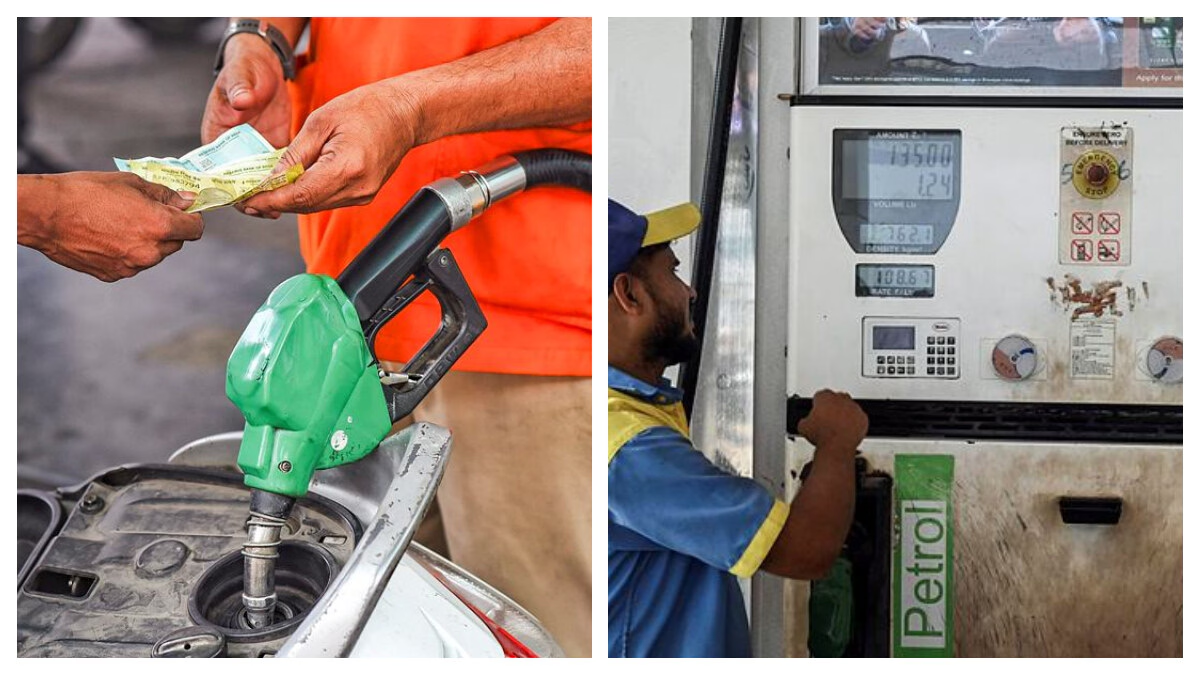
The immediate trigger for the protest was the sudden revision of fuel rates by state-owned oil marketing companies (OMCs), which raised the prices of petrol and diesel by approximately ₹3 per litre across the country. Additionally, Compressed Natural Gas (CNG) prices saw a hike of ₹2 per kg. This represents the first major nationwide fuel price surge in nearly four years, breaking a prolonged period of relative price stability.
Following the revision, fuel prices in key metro cities reached alarming highs:
- Delhi: Petrol climbed to nearly ₹97.77 per litre, while diesel rose to ₹90.67 per litre.
- Bengaluru: Petrol prices jumped to ₹106.17 per litre, with diesel reaching ₹94.10 per litre.
- Hyderabad: Petrol surged past the ₹110 mark to land at ₹110.80 per litre, while diesel reached ₹98.90 per litre.
Energy experts attribute this sudden domestic price hike to severe disruptions in global energy markets. The ongoing military escalation in West Asia has resulted in a strict maritime chokehold on the vital Strait of Hormuz, halting a massive chunk of global oil supplies. Consequently, international crude oil prices—which sat below $75 per barrel earlier this year—surged past $120 before stabilizing in the volatile $100–$105 range. While Indian OMCs absorbed the shock for months, the financial pressure finally trickled down to the domestic consumer.
A “Direct Blow” to Livelihoods
For India’s estimated 1.2 crore gig and platform workers, fuel is not just a personal expense; it is their primary raw material. Because these independent contractors typically use their own motorcycles, scooters, or cars, they bear 100% of the operational expenses, including fuel, routine maintenance, and vehicle insurance.
GIPSWU President Seema Singh termed the price hike a “direct blow” to an already vulnerable workforce. “Delivery workers for Swiggy, Zomato, Blinkit, and others simply cannot bear this additional weight,” Singh stated. “They are being squeezed from both ends. On one hand, global conflicts are driving up their daily costs at the pump, and on the other, commercial platform algorithms refuse to adjust compensation to reflect the ground reality.”
Compounding the crisis is the timing. Large swathes of India are currently grappling with extreme summer heatwaves. Gig workers are logging 10 to 14 hours a day on the roads in punishing weather conditions, only to see their hard-earned daily profits evaporated by fuel costs before they can take any money home to their families.
Mohammed, a ride-hailing cab driver in Hyderabad, echoed the union’s distress. “Every single time fuel prices increase, our out-of-pocket expenses go up immediately. But customer fares and the base payouts we receive from the apps remain completely stagnant. After handing over the app’s steep commission and filling up the tank, we have next to nothing left. Some days, we can barely afford to buy lunch while on shift.”
The Union’s Demands: A Call for Structural Reform
The GIPSWU has made it clear that the five-hour shutdown is a peaceful, symbolic gesture meant to highlight a deeper structural crisis within the gig economy. The union has formally submitted memorandums to the Government of India, the Ministry of Labour and Employment, and major digital platforms demanding immediate intervention.
The union’s core demands include:
- Mandatory Minimum Service Rate: The union is urging the government and digital platforms to enforce a minimum service rate of ₹20 per kilometre for all transport and delivery gig workers to buffer against fluctuating fuel dynamics.
- Dynamic Fuel Indexing: A demand that platform aggregators implement an automated compensation model where per-kilometre payouts scale dynamically alongside changing fuel prices.
- Government Advisories: The union has requested the Centre to issue strict advisory measures preventing app companies from passing the entire financial burden of rising fuel and logistics costs onto the workers.
Nirmal Gorana, the National Coordinator for GIPSWU, emphasized how disproportionately women gig workers and last-mile delivery personnel are affected. “Vehicle maintenance and fuel costs have soared over the last year, while base payouts have shrunk or remained frozen. If digital platform companies refuse to adjust payments proportionally, we will witness a mass exodus of workers from this sector, which will ultimately break urban commerce entirely.”
Cascading Impact on the Broader Economy
The crisis extending from the fuel hike isn’t limited to app-based workers. Market analysts warn that the ₹3 per litre surge will trigger a cascading inflationary effect across multiple consumer sectors.
With logistics and transport costs immediately moving upward, wholesale traders and transporters are already cautioning that the prices of daily essentials, fast-moving consumer goods (FMCG), fresh fruits, and vegetables are bound to rise in the coming days. Small restaurants and roadside eateries, already reeling from a recent hike in commercial LPG cylinder prices (which surged past ₹2,100), are facing reduced profit margins, further hurting the food-delivery ecosystem.
What Lies Ahead?
As the 12:00 PM to 5:00 PM strike window approaches, citizens in major metropolitan areas are expected to face notable delays, order cancellations, and a severe shortage of available rides.
While tech platforms have historically resisted adjusting their core pricing algorithms to maintain low consumer costs and competitive market advantages, the sheer scale of the GIPSWU’s collective action might force a shift. The five-hour temporary shutdown stands as a crucial litmus test for India’s booming gig economy, shining a harsh spotlight on the fine line between tech-driven convenience and the basic economic survival of the people who power it.