

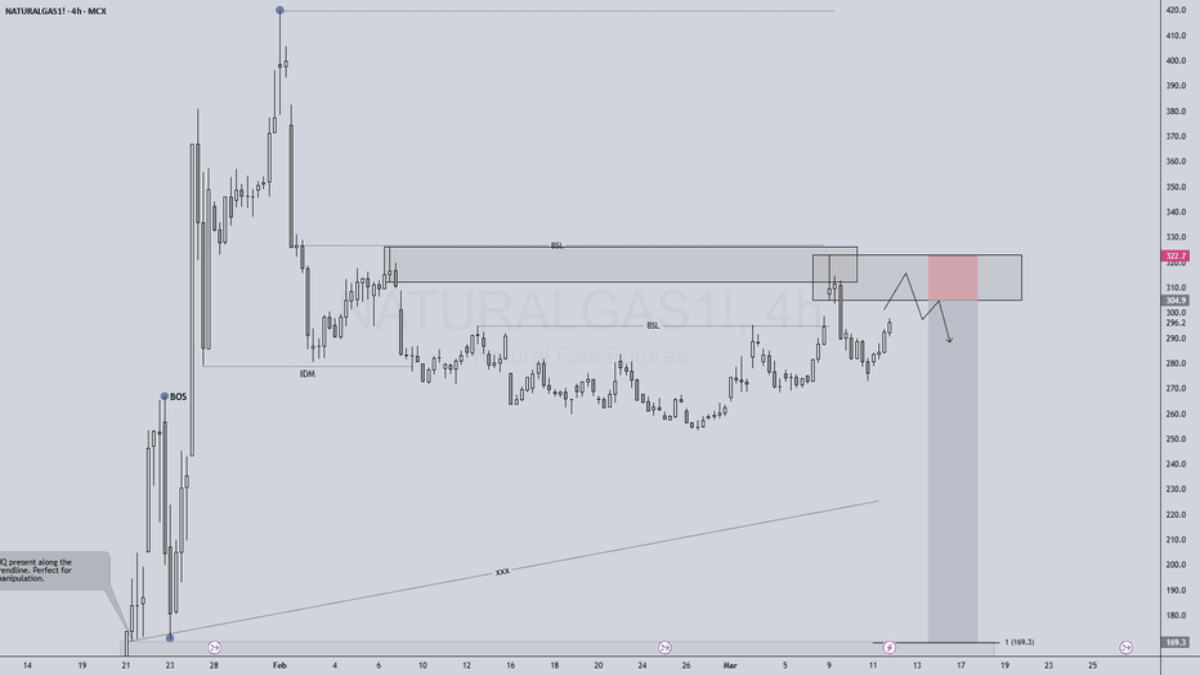
New Delhi, May 18, 2026: The energy markets are heating up as we move further into May 2026. After a period of consolidation and sideways movement, MCX Natural Gas (NG) futures have staged a significant breakout, signaling a shift in sentiment from cautious to decidedly bullish. For traders and investors watching the Multi Commodity Exchange (MCX), the message from both technical charts and fundamental data is clear: the path of least resistance is now higher.
As of May 18, 2026, Natural Gas futures are trading near the ₹294.10 level, up over 3.5% in a single session. This surge isn’t just a flash in the pan; it is backed by a “perfect storm” of global supply constraints, rising summer demand, and a technical breakout that has caught the attention of institutional desks.
The Technical Breakout: Bulls Take the Reins
From a technical perspective, Natural Gas has spent the last few weeks carving out a bottom. The most significant development recently has been the breakout above the bearish trend line that had capped gains since the start of the year.
- Moving Averages: The price is now comfortably trading above the 20-day and 50-day Exponential Moving Averages (DEMA), which are currently pegged around the ₹266–₹271 zone. These levels, which previously acted as resistance, have now flipped into a strong support “floor.”
- Long Buildup: Market data shows a notable rise in Open Interest (OI) alongside rising prices. In the world of futures trading, this is a classic sign of “Long Buildup”—new money is entering the market to bet on higher prices rather than just short-sellers covering their positions.
- Momentum Indicators: The Relative Strength Index (RSI) is hovering above 60 on daily timeframes, suggesting strong upward momentum without yet entering “overbought” territory.
The Target: With the current momentum, the immediate target for bulls is the ₹298.50 – ₹300 resistance zone. A daily close above ₹300 could open the floodgates for a rally toward ₹325 in the short to medium term.
Fundamental Catalyst #1: The “Super El Niño” and Scorching Heat
Weather is the ultimate driver of natural gas prices, and 2026 is shaping up to be an outlier. Meteorological agencies, including India’s IMD and the US-based NOAA, are warning of a “Super El Niño” event.
In India, this translates to delayed monsoon progress and higher-than-average temperatures across the northern and western belts. As the mercury climbs, the demand for electricity to power air conditioning skyrockets. Since natural gas is a primary fuel for “peaker” power plants (plants that ramp up quickly during high demand), the domestic and global cooling demand is providing a massive floor for prices.
Fundamental Catalyst #2: Global Supply Friction and Geopolitics
While local demand is high, the MCX price is heavily influenced by the NYMEX (New York Mercantile Exchange) and global LNG trends. Several factors are tightening the global taps:
- US Production Slowdown: Daily natural gas production in the US has recently hit a 15-week low. Lower output from major basins like the Permian and Haynesville means there is less surplus gas to be injected into storage.
- Maintenance Season: Key LNG export facilities, including Freeport LNG, are undergoing scheduled maintenance. This reduces the immediate flow of gas, creating localized “crunches” in the spot market.
- Middle East Tensions: Ongoing geopolitical friction in the Persian Gulf continues to add a “risk premium” to energy prices. Any threat to shipments through the Strait of Hormuz immediately sends ripples through the gas market.
Storage Data: The “Cushion” is Thinning
The latest Energy Information Administration (EIA) reports show that while storage levels are still within the five-year average, the rate of injection is slowing. Traders are closely watching these weekly builds. If the summer heat persists and storage injections remain below expectations, the market will start pricing in a “supply deficit” for the upcoming winter, which could lead to a massive price spike.
Trading Strategy: Why “Buy on Dips”?
In a bullish market, chasing the “green candles” (buying at the peak of a rally) can be risky due to high volatility. The most professional approach in the current environment is a “Buy on Dips” strategy.
- Support Levels: If the price retraces, look for entries near the ₹277 – ₹284 range. A deeper correction toward the ₹265 mark (near the 50-DEMA) should be viewed as a high-conviction buying opportunity.
- Stop Loss: For short-term traders, a strict stop loss below ₹263 (Daily SAR level) is recommended to protect capital against sudden trend reversals.
- Profit Taking: Partial profits should be booked near the ₹300 psychological level, with the remainder held for a potential move toward ₹315 – ₹320.
The Bottom Line
Natural Gas is no longer the “forgotten commodity.” With technicals turning green, a “Super El Niño” driving cooling demand, and global production showing signs of fatigue, the stage is set for a bullish run.
While volatility is the hallmark of the energy sector, the current setup favors the buyers. Stay disciplined, keep an eye on the weekly EIA storage reports, and use the “dips” to build your positions. The road to ₹300 seems well-paved; the only question is how much higher it can go.