
, the country's leading automobile manufacturer, has officially commenced commercial production)
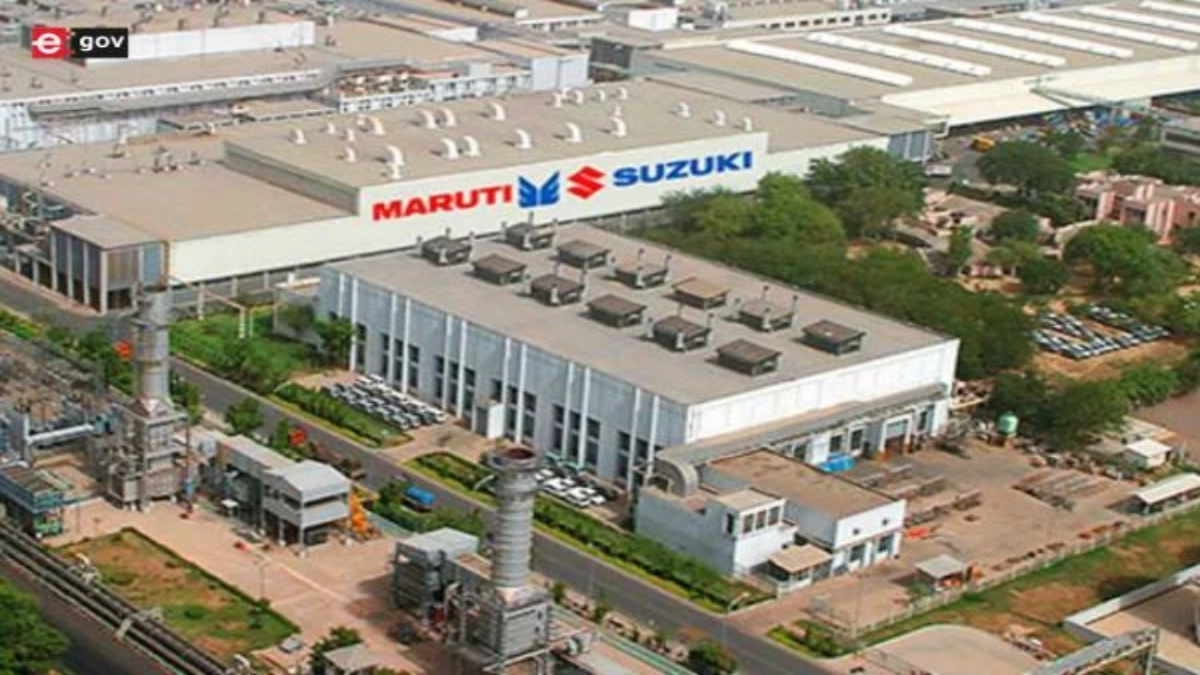
May 18, 2026 – Maruti Suzuki India Limited (MSIL), the country’s leading automobile manufacturer, has officially commenced commercial production at the second plant of its massive manufacturing facility in Kharkhoda, Haryana. This milestone marks a significant step in the company’s aggressive expansion strategy to meet the burgeoning demand in the domestic market and solidify India’s position as a global export hub.
The newly operational unit has an annual production capacity of 2.5 lakh units. With this addition, the total installed capacity at the Kharkhoda site has doubled to 5 lakh units per annum, following the successful rollout of the first plant in February 2025.
Strengthening the Manufacturing Backbone
The Kharkhoda facility, located in the Sonipat district of Haryana, is destined to become a crown jewel in Suzuki Motor Corporation’s global operations. Spread across a sprawling 900-acre site at IMT Kharkhoda, the facility offers world-class infrastructure and strategic logistics advantages, being situated near the Kundli-Manesar-Palwal (KMP) Expressway.
With this latest expansion, Maruti Suzuki’s overall annual production capacity across its four major manufacturing hubs has reached an impressive 26.5 lakh units. This network includes:
- Gurugram & Manesar (Haryana): The traditional strongholds of Maruti production.
- Hansalpur (Gujarat): A high-tech facility supporting both domestic and export needs.
- Kharkhoda (Haryana): The newest and most rapidly expanding site.
Meeting the SUV Demand
The Kharkhoda plants are currently focused on producing some of the brand’s most popular models. High-demand vehicles like the Maruti Suzuki Brezza (compact SUV) and the Grand Vitara (mid-size SUV) are being rolled out from this facility.
By increasing capacity at Kharkhoda, Maruti Suzuki aims to significantly reduce waiting periods for these popular models, which have seen a massive surge in interest as Indian consumers increasingly shift toward the SUV and Utility Vehicle (UV) segments.
A Vision for 40 Lakh Units
The commencement of production at the second Kharkhoda plant is part of a much larger roadmap. Maruti Suzuki has previously outlined its “Maruti 3.0” strategy, aiming to double its total annual production capacity to 40 lakh units by 2030-31.
The company’s Board has already approved the construction of a third plant at the Kharkhoda site, involving an investment of approximately ₹7,410 crores. Once the Kharkhoda facility is fully developed with all its planned units, it is expected to have a total capacity of 10 lakh vehicles annually, making it one of the largest single-location car manufacturing hubs in the world.
Impact on the Economy and Local Development
The foundation stone for this facility was laid by Prime Minister Narendra Modi in August 2022. Since then, the project has been a catalyst for regional growth. The expansion is expected to:
- Generate Employment: Thousands of direct and indirect jobs are being created in the Sonipat and Delhi-NCR region.
- Boost Ancillary Industries: The massive scale of production attracts a vast network of component suppliers and service providers to set up shop nearby.
- Enhance Exports: With Suzuki’s focus on making India a primary export base for global markets, the Kharkhoda plant will play a pivotal role in shipping “Made in India” cars to Africa, Latin America, and Southeast Asia.
Record-Breaking Momentum
This announcement comes on the heels of a record-breaking Fiscal Year 2025-26, where Maruti Suzuki achieved its highest-ever annual production of 23.4 lakh units. Popular models like the Swift, Dzire, Baleno, and Ertiga led the charts, each crossing the 2 lakh production mark during the year.
The company is also moving toward greener technology. While currently focused on Internal Combustion Engine (ICE) and Hybrid models at Kharkhoda, Maruti Suzuki is also preparing for its electric vehicle (EV) journey, with plans for a fifth manufacturing facility in Gujarat specifically designed to support the transition to sustainable mobility.
Conclusion
The operationalization of the second plant at Kharkhoda is more than just a capacity hike; it is a testament to the resilience and growth of the Indian automotive sector. As Maruti Suzuki continues to scale its operations, it reinforces its 40-year-old legacy of “putting India on wheels” while evolving to meet the modern aspirations of a new generation of car buyers.
With high-tech automation, a focus on efficiency, and a strategic location, the Kharkhoda facility is set to drive the next decade of growth for India’s favorite carmaker.