

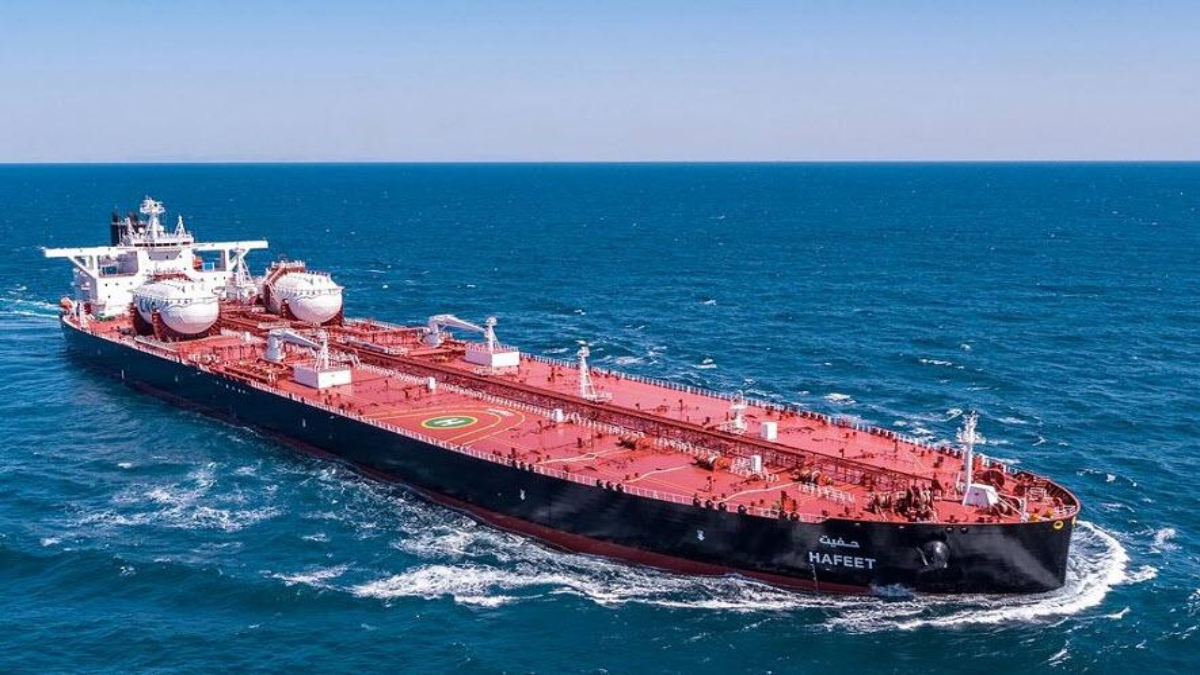
New Delhi, May 25, 2026: — As the military conflict involving the U.S., Israel, and Iran continues to choke off traditional trade routes, the United Arab Emirates’ state-owned energy giant, Abu Dhabi National Oil Co. (ADNOC), has resorted to “dark shipping” tactics to quietly slip vital supplies of oil, liquefied natural gas (LNG), and fuel out of the Persian Gulf.
Breaking the Blockade via Ghost Transits
For months, the Strait of Hormuz—which typically handles nearly 20% of the world’s LNG and a fifth of global oil supplies—has been under a de facto blockade. Iran has consolidated strict control over the chokepoint, establishing maritime checkpoints, vetting vessels, and deploying drone strikes against unauthorized traffic.
To bypass these threats, ADNOC Logistics & Services has been utilizing high-stakes stealth maneuvers. Tankers are systematically turning off their Automatic Identification System (AIS) transponders—essentially “going dark”—to slip past the Iranian-controlled oversight zones undetected.
Satellite imagery and data from energy intelligence firms like Kpler reveal a consistent pattern: empty ADNOC tankers idle near the eastern entrance of the Strait, cut their tracking signals, and disappear for weeks. During these blackouts, they dock at facilities like Das Island to load up on super-chilled fuel and crude before slipping back through the dangerous chokepoint. The vessels only re-establish their GPS tracking once they have safely reached the open waters of the Indian Ocean.
A Fragile Lifeline for Global Markets
While these successful ghost runs offer a sliver of relief for Asian economies, they represent only a tiny fraction of pre-conflict trade volumes. Historically, roughly three LNG carriers transited Hormuz every day; currently, flows are at a near-standstill. The acute supply crunch has forced countries like India to ration natural gas to domestic industries and buy highly volatile, expensive shipments on the open spot market.
Faced with a prolonged crisis, the UAE is trying to permanently break its dependence on the chokepoint. The nation has aggressively fast-tracked construction on the West-East Pipeline, a massive alternative infrastructure project designed to double the UAE’s overland export capacity to the port of Fujairah on the Gulf of Oman, bypassing the volatile Strait entirely. Until that pipeline is operational, global energy markets remain highly dependent on ADNOC’s fleet playing a high-stakes game of hide-and-seek in the dark.