

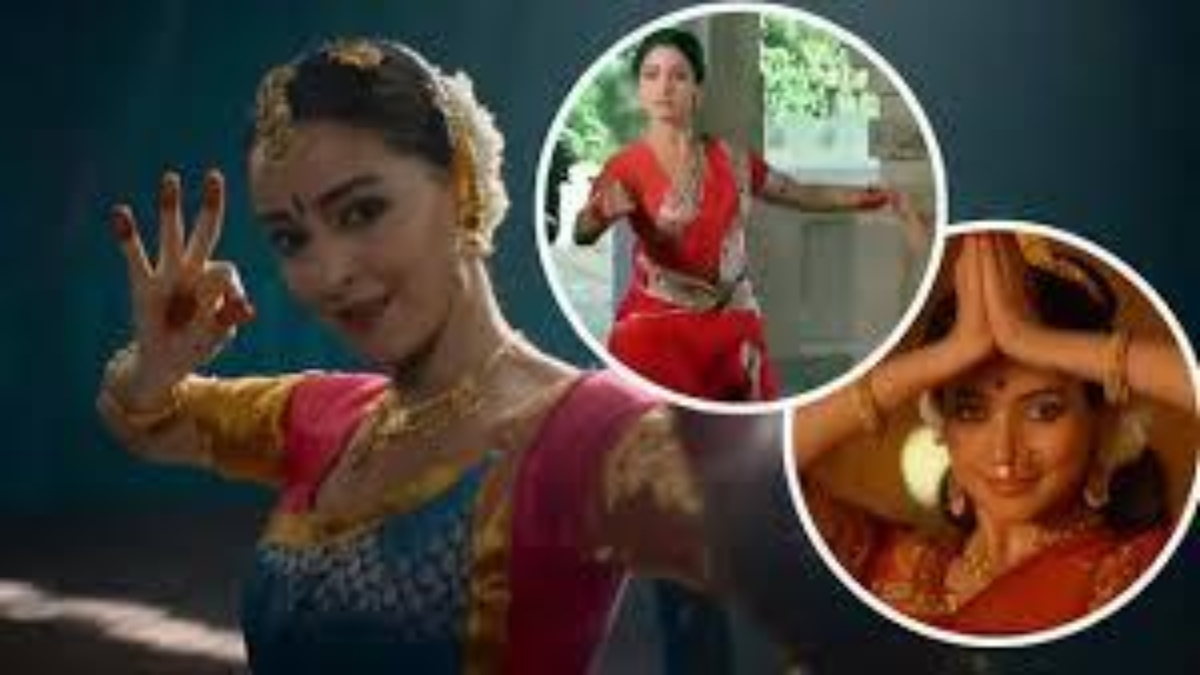
New Delhi, May 25, 2026: Bollywood actor Ananya Panday has found herself at the center of a massive social media storm following the release of her latest romantic drama, Chand Mera Dil. Directed by Vivek Soni and produced under Karan Johar’s Dharma Productions, the film hit theaters on May 22, 2026. While the movie opened to mixed reviews and modest box office collections, a specific dance sequence from the film has gone viral across platforms like X (formerly Twitter), Instagram, and Reddit, igniting a fierce debate between classical dance purists and the film’s creative team.
In the controversial scene, Ananya’s character, Chandni, who is portrayed as the daughter of a classical dancer, takes to the stage during a college event. Instead of a traditional recital, she performs a high-energy fusion routine that blends classical Bharatanatyam mudras and steps with modern hip-hop, locking, and contemporary movements. While her on-screen co-star Lakshya (playing Aarav) is shown watching her completely mesmerized, the real-world audience on the internet has reacted with overwhelming criticism, sparking a wave of memes, sharp commentary, and serious disapproval from professional dancers.
The backlash intensified significantly when renowned classical dancer and Sangeet Natak Akademi Award recipient Anita R. Ratnam weighed in on the viral clip. Reviewing the performance on social media, Ratnam did not hold back her disappointment, describing the routine as a complete misinterpretation of the sacred art form. She noted that watching the clip felt like Bharatanatyam was being held hostage by a catastrophic misunderstanding of its actual essence. She added that between the flailing arms and random camera angles, the true soul of the dance quietly packed its bags and exited the scene.
Ratnam further explained that Bharatanatyam is an ancient art form deeply rooted in rigorous technique, physical control, strict geometry, musicality, and profound emotional depth. In contrast, she felt the movie’s sequence treated the classical style with the chaotic energy of a casual wedding sangeet. For her, the tragedy was not merely that the performance was executed poorly, but rather the immense confidence with which the choreography bulldozed through centuries of training, dedication, and artistic sophistication. She concluded by calling the routine a product of “algorithmic panic” and joked that even Lord Nataraja would be suffering watching it.
Other classical dancers and prominent figures quickly joined the chorus of criticism. Classical dancer Krithika Sivaswamy expressed frustration over the film industry’s recurring insensitivity toward traditional Indian arts, pointing out the audacity of putting such half-baked routines on the silver screen. Political figures also entered the discussion, with Congress spokesperson Dr. Shama Mohamed, who trained in the dance form from a young age, stating that the actress had completely ruined her favorite dance style. She emphasized that classical Indian dance requires years of dedicated practice and cannot simply be manufactured overnight for a Bollywood feature.
Compounding the online frustration was the specific staging of the scene. Many netizens took strong offense to the presence of a Lord Nataraja idol placed directly in the background while the modern fusion dance took place. Viewers argued that using a sacred symbol of classical dance while executing contemporary hip-hop moves and rigid, disjointed steps felt deeply disrespectful to the culture. Commenters flooded the internet with witty one-liners, with some joking that Bharatanatyam had survived thousands of years of invasions and historical shifts, only to meet its match in 2026. The clip has rapidly transformed into a viral meme fest, with users labeling the stiff movements “robotic” and creating countless GIFs and WhatsApp stickers out of the footage.
As the criticism mounted, classical dance enthusiasts began sharing throw-back videos of acclaimed on-screen performances to demonstrate how classical dance should be handled in cinema. Clips of the late legendary actress Sridevi performing a flawless temple dance in the 1984 film Jaag Utha Insan, as well as modern-day actress Sai Pallavi’s graceful classical routines, began trending as points of comparison. Netizens used these examples to highlight the stark contrast in grace, facial expressions, and posture between trained performers and Bollywood’s contemporary presentations.
However, amidst the sea of negative reviews, the creative team behind Chand Mera Dil has stepped up to defend the actress and contextualize the creative choices made for the film. Ananya R. Kurup, the assistant choreographer credited with teaching and putting together the dance routine, shared a heartwarming behind-the-scenes post on Instagram to support the young actor. Posting a picture alongside Ananya Panday, the choreographer praised her dedication and work ethic, stating that it was a wonderful experience teaching her the foundations of the dance form. Defending the final output against online critics, Kurup explicitly stated that the actor had absolutely “nailed it” on screen. Panday acknowledged the support by responding to the post with heart emojis.
Film defenders and a section of cinema-goers have also urged the internet to look at the larger context of the scene before participating in the outrage. They point out that the narrative explicitly frames the sequence as a casual college festival performance rather than a formal, traditional classical recital. The character is intentionally blending her mother’s classical background with her own Gen-Z, contemporary identity to impress her peers. Film analysts have noted that context-free trolling on social media often misinterprets theatrical choices, as fusion choreography has long been a staple of Bollywood cinema to bridge traditional and modern storytelling.
Despite the defense from the film’s crew, film critics have largely agreed with the audience’s sentiment regarding the execution. Reviews suggest that while Ananya Panday looks visually stunning in her traditional attire, the actual choreography hangs awkwardly between two separate worlds. It lacks the sharp precision and emotional maturity required for classical Bharatanatyam, yet remains too restricted to genuinely succeed as an energetic contemporary hip-hop routine.
As Chand Mera Dil continues its run in theaters, the ongoing digital debate highlights a growing friction between Bollywood’s desire to modernize cinematic content and the public’s demand for authentic representation of India’s cultural heritage. Whether this viral controversy will ultimately hurt the movie’s box office longevity or inadvertently drive more curious viewers to the theaters remains to be seen.