
 serves as a prominent case study in Indian corporate law,)
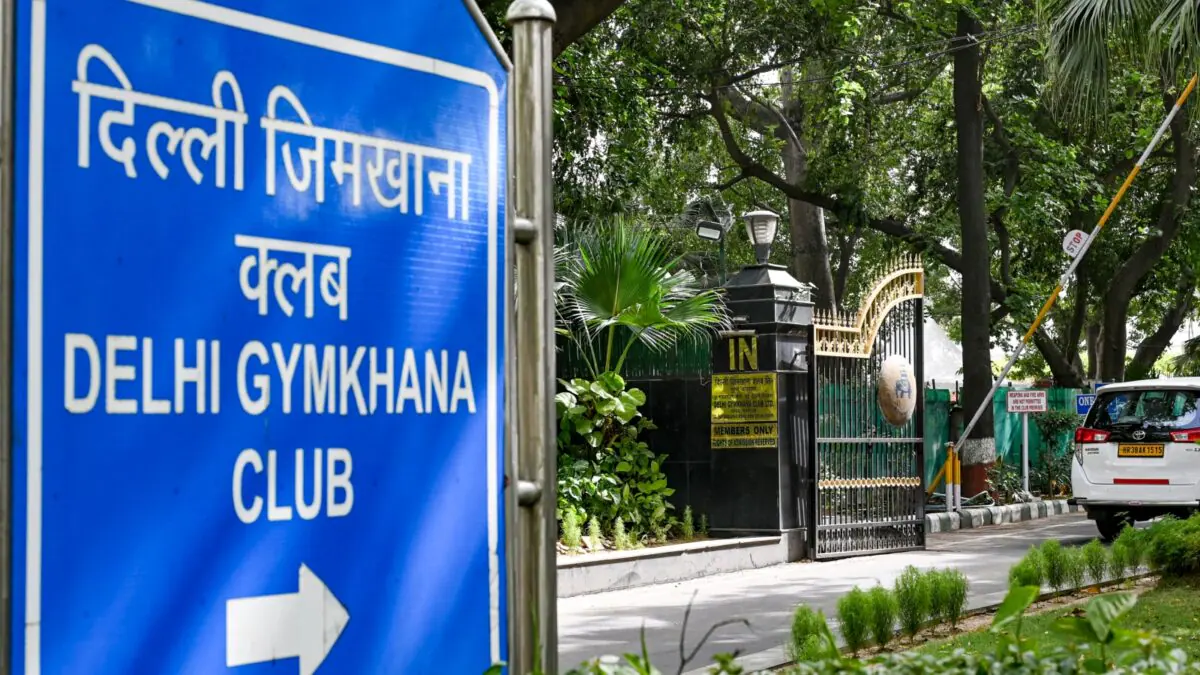
New Delhi, May 26, 2026: The ongoing institutional and legal evolution of the Delhi Gymkhana Club (DGC) serves as a prominent case study in Indian corporate law, specifically regarding the application of the Companies Act, 2013, to non-profit entities. For several years, discussions surrounding the club focused on institutional friction and governance structure, moving away from romanticized narratives of it being a secretive power hub. Instead, the actual developments center on corporate governance, public interest, and regulatory intervention. In 2022, following extended litigation regarding allegations of financial irregularities and nepotism in membership allocations, the National Company Law Appellate Tribunal (NCLAT) affirmed the Ministry of Corporate Affairs’ (MCA) intervention. This resulted in the appointment of a government-nominated Board of Directors to restore financial transparency and structural parity.
This shift highlighted the legal principle that private clubs registered under Section 8 of the Companies Act (or its predecessor, Section 25 of the 1956 Act) are fully subject to statutory oversight. By late 2024 and continuing into 2026, the primary focus transitioned toward rehabilitating the club’s administrative systems, addressing long-standing membership backlogs, and stabilizing its finances under an independent oversight mechanism. This progression emphasizes the legal authority of tribunals like the National Company Law Tribunal (NCLT) to intervene in non-profit operations when governance patterns are deemed prejudicial to the public interest.
1. What was the core legal basis for the government’s intervention in the club’s management?
The primary legal basis for the Ministry of Corporate Affairs’ intervention was Section 241(2) and Section 242 of the Companies Act, 2013. These provisions empower the Central Government to apply to the NCLT if it believes that the affairs of a company are being conducted in a manner prejudicial to the public interest.
Because the Delhi Gymkhana Club is registered as a Section 8 non-profit company, the government argued that its systemic mismanagement directly impacted public interest. Specifically, the regulatory authorities cited structural issues, including:
- The misutilization of extensive, subsidized land leased from the state.
- The collection of material registration fees from tens of thousands of applicants who faced decades-long waiting periods without transparent processing.
- Nepotistic patterns in membership distribution that favored select groups while systematically sidelining general public applicants.
2. How did the courts view the defense that a private social club is immune to public interest interventions?
The NCLAT explicitly rejected the defense that the club’s private, recreational status shielded it from state oversight. The tribunal clarified that any entity operating under a corporate license granted by the state—especially one enjoying public land concessions—cannot claim total immunity from the standards of public interest.
The judiciary observed that collecting substantial funds from the public under the premise of potential membership, without realistic timelines or clear criteria, constitutes an unfair trade practice under corporate governance frameworks. Consequently, the courts ruled that “public interest” is not limited to state security or macroeconomic matters; it also encompasses institutional transparency, fair play, and adherence to statutory obligations by high-profile organizations.
3. What structural changes were implemented by the government-nominated board?
Following the judicial directives, the government-appointed administrator and subsequent nominated board initiated several structural reforms aimed at institutional recovery:
The board overhauled the accounting architecture to eliminate non-transparent financial write-offs and established rigorous audit trails. To handle the membership bottleneck, they structured a objective, chronological framework to process applications on a first-in, first-out basis, limiting arbitrary executive discretions. Furthermore, the club’s internal by-laws were amended to ensure that resource utilization aligned strictly with fiscal accountability rather than legacy privileges.
4. How did this case redefine the legal interpretation of Section 8 companies in India?
The Delhi Gymkhana Club case set a major legal precedent regarding the regulation of Section 8 companies, confirming that non-profit, recreational, or philanthropic entities are held to the same corporate governance standards as commercial corporations. The rulings clarified that a company’s lack of a profit motive does not exempt its management from accountability.
This case effectively closed previous legal loopholes that allowed private elite associations to operate as insular trusts, firmly placing them under standard corporate regulatory oversight.
5. What is the current operational status of the club as of 2026?
By 2026, the Delhi Gymkhana Club has largely transitioned into a post-litigation normalization phase. While the government-nominated oversight mechanism remains active to prevent a relapse into old management habits, operational focus has shifted to day-to-day administrative efficiency and upgrading facilities.
The massive application backlog is being addressed via automated, digital queues to ensure verified compliance with the NCLAT’s anti-nepotism guidelines. Rather than acting as a center for political or legal conflict, the institution now functions strictly as a regularized social and athletic club, operating under standardized corporate compliance practices.