

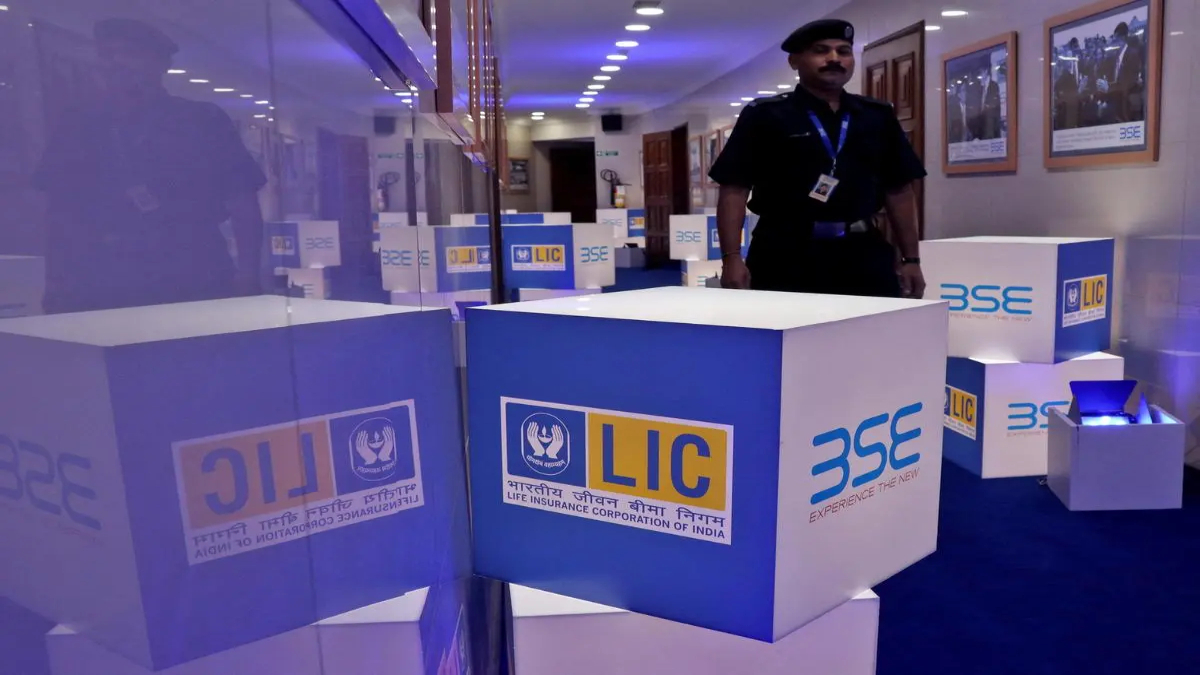
New Delhi, May 27, 2026: The Government of India is gearing up for a major financial move in the upcoming month. According to reliable sources close to the development, the Centre is preparing to sell a portion of its stake in the state-run insurance giant, Life Insurance Corporation of India (LIC). This strategic stake sale is expected to raise up to ₹10,000 crore (approximately $1 billion), making it one of the most significant domestic equity deals in recent times. The formal marketing and processing for the transaction are slated to begin in late June or early July, marking a crucial step forward in the government’s asset monetisation and disinvestment agenda for the current financial year.
The proposed transaction will involve the disinvestment of around 1.5% to 2% of the government’s equity in the insurance behemoth. At present, the President of India holds a dominant 96.5% stake in the company. Financial experts indicate that the transaction will likely be executed via an Offer for Sale (OFS) or structured block deals on the stock exchanges. By opting for the OFS route over a massive Follow-on Public Offer (FPO), the government aims to complete the process swiftly while minimizing heavy market volatility. To manage this high-profile transaction, the Department of Investment and Public Asset Management (DIPAM), under the Ministry of Finance, has reportedly roped in top-tier global and domestic investment banks, including Goldman Sachs Group Inc., Motilal Oswal Investment Advisors Ltd., BNP Paribas SA, and IIFL Capital Services Ltd.
Meeting Regulatory Guidelines and Boosting Liquidity
A primary driving force behind this sudden move is the regulatory timeline set by the market regulator, the Securities and Exchange Board of India (SEBI). Under SEBI’s Minimum Public Shareholding (MPS) norms, all listed public companies must have at least a 25% public float to ensure fair valuation and healthy market liquidity. Because of LIC’s massive size, the government was initially granted extended regulatory relief. However, the Centre must gradually scale down its holding to ensure compliant trading. This upcoming share sale will effectively bump LIC’s free-float market liquidity from the current 3.5% up to around 5%. In the long run, this increase in public availability is highly beneficial. A larger public float ensures that the stock qualifies for a higher weightage in major global and domestic equity indices, which ultimately attracts massive passive capital inflows from Foreign Portfolio Investors (FPIs) and large domestic institutions.
This move comes exactly four years after LIC’s historic debut on the stock exchanges. Back in May 2022, the government broke records by selling a 3.5% stake in the company through India’s largest-ever Initial Public Offering (IPO), which successfully fetched around ₹21,000 crore for the national exchequer. While that landmark issue priced shares at ₹949 each, the stock has experienced its fair share of market cycles since listing.
Market Reaction and Stock Performance
News of the upcoming supply of fresh shares triggered an immediate reaction on Dalal Street. During today’s trading session, shares of LIC faced considerable selling pressure, tumbling by over 4% to hit an intraday low of ₹818.85 on the National Stock Exchange (NSE). The stock eventually stabilized slightly to trade near the ₹830 mark, tracking a total market capitalization of over ₹5.23 lakh crore. Market analysts explain that such a dip is a standard and temporary reaction to any large-scale equity dilution. When the market expects a massive block of shares to become available, the stock price naturally moves closer to the anticipated “floor price” of the upcoming sale.
However, long-term investors remain highly optimistic about the underlying strength of the insurer. LIC recently reported robust financial health, showcased by a steady 4% growth in its Value of New Business (VNB) margins, signaling better operational efficiency and an improved product mix. Furthermore, the state-run insurer recently crossed a monumental milestone by surpassing ₹10 lakh crore in debt Assets Under Management (AUM), firmly cementing its legacy as the undisputed titan of the domestic institutional investment landscape.
A Concurrently Timed Bonus Issue
Adding a layer of excitement for everyday retail investors, this stake sale announcement coincides with an important corporate action already approved by the insurance company’s board. LIC is currently processing its first-ever 1:1 bonus share issue. The board has fixed this Friday, May 29, 2026, as the official record date to determine eligible shareholders. Under this scheme, current investors will receive one free fully paid-up equity share for every single share they hold in their portfolio. These newly credited bonus shares are scheduled to be formally allotted to eligible accounts on Monday, June 1, 2026. This bonus distribution will effectively double the share count for existing retail holders, adjusting the face value and making the stock significantly more affordable and liquid for small-scale retail traders just before the government launches its mega ₹10,000 crore offering.
Strategic Goals of the Disinvestment Drive
Beyond regulatory compliance, the ₹10,000 crore proceeds will play a vital role in balancing the union budget. The capital raised from this June transaction will serve as a foundational building block for the Centre’s ambitious FY27 disinvestment and asset monetisation target. To meet its annual macroeconomic objectives, the government is reportedly looking at phased stake sales across multiple high-performing public sector enterprises (PSUs) later this year, with market eyes fixed on entities like Coal India, Indian Overseas Bank, and the Indian Railway Finance Corporation (IRFC).
The upcoming LIC offering will be one of the few large-scale equity events in the domestic market next month, arriving at a time when global markets are navigating geopolitical tensions in the Middle East. Despite brief external headwinds and short-term price adjustments, financial experts believe that the gradual reduction of the government’s dominant stake paves the way for a more mature, transparent, and institutionally backed trading environment for India’s largest insurance provider. Retail and institutional buyers alike will be closely tracking DIPAM’s official announcements regarding the exact dates and the discount pricing for the sale in the coming weeks.