

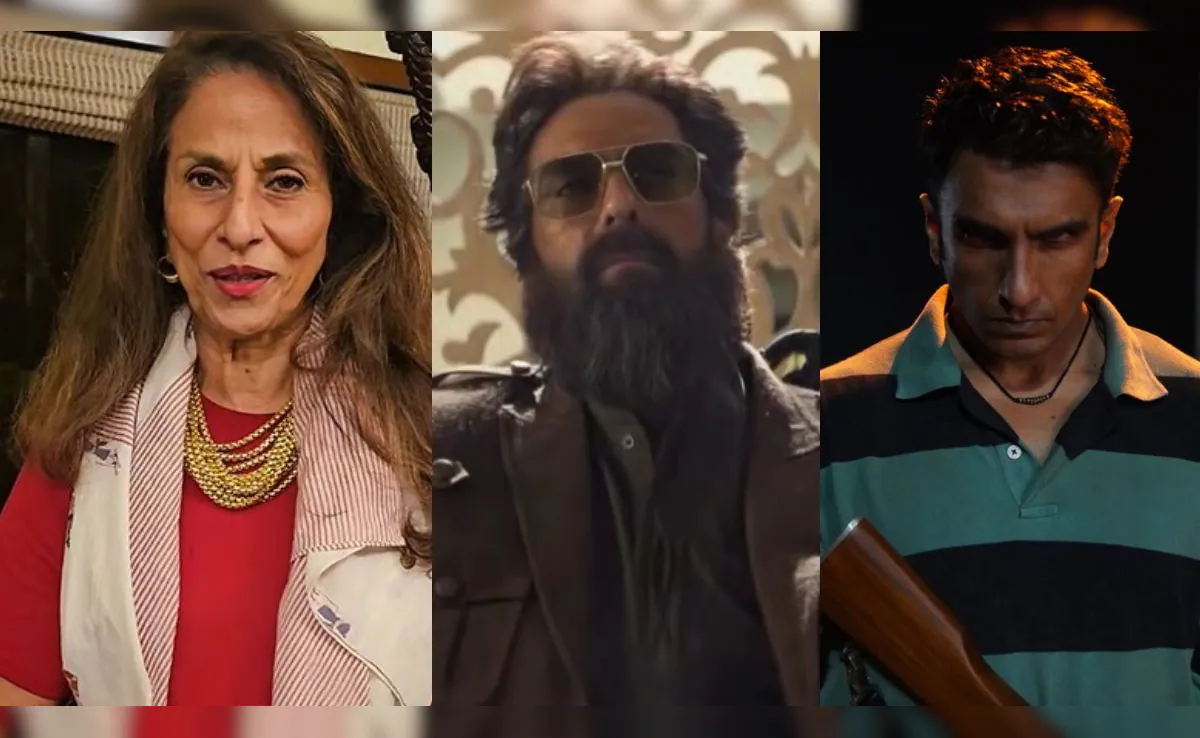
The ongoing battle between Bollywood superstar Ranveer Singh and the industry’s apex workers’ body has escalated into a full-blown war of egos and industry politics. Veteran author and columnist Shobhaa De has weighed in on the controversy with characteristic biting wit. Reacting to the non-cooperation directive issued against the actor by the Federation of Western India Cine Employees (FWICE), De took to social media to deliver a sharp critique. She compared the unfolding drama to the infamous elite disputes of the nation’s capital, declaring that “Ranveer Singh is like the Delhi Gymkhana of Bollywood.”
The dispute traces back to Ranveer’s abrupt, high-profile exit from Farhan Akhtar’s highly anticipated franchise film Don 3. This departure reportedly left Excel Entertainment facing heavy financial liabilities and unresolved contractual commitments. When the FWICE stepped in to demand answers, the situation dissolved into a territorial standoff. Far from viewing the federation’s resulting “ban” as a standard regulatory move, Shobhaa De has framed the entire saga as a textbook display of institutional bullying, power-tripping, and manufactured outrage that threatens the livelihoods of everyday film workers.
The Anatomy of a Power Struggle: What is the “Delhi Gymkhana” Analogy?
To understand De’s comparison, one must look at the culture of exclusive institutions. The Delhi Gymkhana Club is historically synonymous with old-money elitism, strict gatekeeping, and internal bureaucratic feuds aimed at keeping out perceived outsiders while preserving arbitrary authority. By calling Ranveer Singh the “Delhi Gymkhana of Bollywood,” De is highlighting a larger, systemic pattern of authority, exclusion, and punishment within the entertainment business.
She pointed out that while there might be a sense of overprivilege on one side, the reaction from the governing body is less about justice and more about a desperate bid to assert dominance over a massive, self-made superstar. However, while she linked the two controversies in terms of their underlying psychology, she drew a sharp contrast in how the targets have responded. De praised Ranveer for maintaining a dignified silence, letting his massive fanbase fight his battles for him, while mocking the institutional side of the Delhi Gymkhana row as being full of “stuffed old shirts sitting and sipping their gin and tonics, keeping the rest of the world out.”
Shobhaa De Questions FWICE’s Legitimacy and Authority
A major focal point of De’s critique was the sudden prominence assumed by the FWICE in what should fundamentally be a private corporate dispute. According to reports from within the industry, after Excel Entertainment raised concerns, FWICE Chief Advisor Ashoke Pandit reached out to Ranveer Singh to hear his side of the story. The actor allegedly responded via email, stating that the workers’ body did not hold jurisdiction over his specific contractual matters.
This defiance seemingly triggered the federation’s aggressive non-cooperation directive—a move De thoroughly panned. Check out her breakdown of the situation below:
- A Lack of Institutional Weight: De openly questioned the authority of the council, stating, “Who is FWICE? I don’t think they’re all that important, but suddenly they have assumed the kind of importance to say, ‘Oh, we won’t allow this man, this superstar, the most successful actor in India, to get to the studios.'”
- A Danger to Daily Wage Earners: De argued that by halting work or trying to isolate a top-tier star, the federation is actively alienating the very people it is sworn to protect—the ground-level crew, lighting technicians, and daily wage workers who lose employment whenever a massive production stalls.
- The Legal Alternative: The columnist insisted that a fallout between Farhan Akhtar, Excel Entertainment, and Ranveer Singh is a corporate disagreement. The logical solution would be to hire lawyers or settle the damages in a court of law, rather than involving a trade federation to enforce an industry-wide blockade.
The Creative Fallout: A “Conspiracy” Against Success?
The timing of this industry-wide standoff has also raised eyebrows. Ranveer Singh is currently riding a massive wave of professional momentum, particularly driven by the immense anticipation surrounding his upcoming action film, Dhurandhar, directed by Aditya Dhar. De suggested that the aggressive campaign against Ranveer feels less like a routine labor dispute and more like a calculated takedown.
Describing the situation as inherently “ugly,” De remarked that Ranveer is an iconic, phenomenal movie star whose stupendous success should be celebrated. Instead, she hinted at a darker undertone to the ongoing drama, suggesting the sudden, aggressive escalation feels almost like a conspiracy designed to hurt not just Ranveer, but the director, producer, and entire creative team attached to Dhurandhar.
The entertainment industry remains heavily divided on the matter. Prominent filmmakers like Sanjay Gupta and Kunal Kohli have also spoken out against the harsh treatment of the actor, warning the fraternity not to judge or penalize a creative professional over a single project’s creative differences. As the non-cooperation directive looms, the question shifts from who will star in Don 3 to a much larger concern: who truly holds the keys to the kingdom in modern Bollywood?