
)
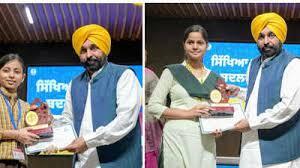
June 3, 2026: In a resounding validation of the ongoing public education overhaul in the state, the results of the 2026 Joint Entrance Examination (JEE) Advanced have brought historic news for Punjab. Breaking all past records, 59 students from Punjab government schools have successfully qualified for the country’s most elite engineering entrance examination. This marks a spectacular 34% surge from the previous year, where 44 government school students managed to clear the formidable barrier.
The continuous growth underscores a seismic shift in Punjab’s academic landscape, demonstrating that children from rural fields and humble backgrounds are no longer trailing behind their private-school peers when it comes to national-level competitive examinations.
Dismantling the Elite Coaching Monopoly
For decades, cracking the JEE Advanced and securing a seat at an Indian Institute of Technology (IIT) was widely perceived as a luxury reserved for families who could afford expensive, air-conditioned corporate coaching hubs charging lakhs of rupees annually. State Education Minister S. Harjot Singh Bains directly addressed this stereotype while celebrating the latest results.
The ongoing initiative, famously dubbed the “Punjab Sikhya Kranti“ (Punjab Education Revolution), focuses on rebuilding infrastructure, modernizing curriculum delivery, and setting up highly specialized academic mentoring directly within the public sector framework.
Behind the Numbers: The Performance Map
A closer look at the district-wise performance reveals that academic talent is thoroughly distributed across the state, rather than being concentrated purely in major urban capitals.
The stellar performance of Patiala and Sangrur points toward highly effective regional execution of specialized government programs, ensuring that remote and agricultural blocks get identical access to high-tier academic resources.
The Secret Ingredient: PACE and Schools of Eminence
This structural triumph rests heavily on two flagship government interventions: the establishment of the Schools of Eminence and the institutionalization of the PACE (Punjab Academic Coaching for Excellence) program.
Launched to completely rethink senior secondary education, the Schools of Eminence identify high-potential students in government schools and provide them with top-tier science and mathematics learning tracks. Through the PACE initiative, these students receive comprehensive, zero-cost competitive exam training. The program bridges the socio-economic divide by integrating:
- High-quality live online broadcasts and interactive video modules.
- Routine mock testing setups designed strictly around current JEE patterns.
- Intensive, fully funded residential bootcamps where students undergo weeks of rigorous, round-the-clock preparation under seasoned subject matter experts.
By eliminating out-of-pocket costs for books, digital modules, and elite guidance, the state has effectively balanced the playing field.
Stories of Unshakable Grit
Beyond the raw data and percentages lie deeply inspiring human stories of perseverance against crushing poverty and unexpected hardships.
Take Priya Bhardwaj, a dedicated student of the School of Eminence in Bhagpur Sataur, Hoshiarpur. Having tragically lost her father, Priya was raised single-handedly by her mother, who works tirelessly at a private company with minimal pay. Battling heavy financial strain and severe personal loss, Priya leveraged her school’s free coaching to clear the JEE Advanced, bringing her one step closer to her lifelong dream of becoming an engineer.
Similarly, Prabhjot Singh from the School of Eminence in Mullanpur (SAS Nagar) refused to let economic barriers dictate his future. His father earns a volatile living as a daily wage laborer. Despite living in a household where managing daily essentials can be a struggle, Prabhjot spent his nights mastering complex physics and calculus concepts, utilizing the specialized study circles organized by the school education department.
In Fatehgarh Sahib’s School of Eminence in Amloh, Harsh Madhav emerged as another beacon of inspiration. Entirely dependent on the state-sponsored free coaching frameworks, Harsh systematically targeted his weak spots during the residential camps and now sets his eyes firmly on a seat at IIT Bombay.
Looking Forward: A Model for the Nation
The continuous year-on-year jump from 44 to 59 qualifiers sends a powerful signal to public education administrators across India. It proves that when public schools move past basic literacy and actively invest in specialized, high-tier competitive coaching, they can successfully foster top-tier national talent.
The Punjab Education Department plans to build significantly upon this momentum, intending to widen the reach of the PACE framework to cover a larger volume of students starting in the early high school years. For the families of these 59 triumphant students, this success means much more than clearing a challenging exam; it represents a definitive, life-changing ladder out of generational financial hardships, fueled entirely by the power of free, quality public education.