

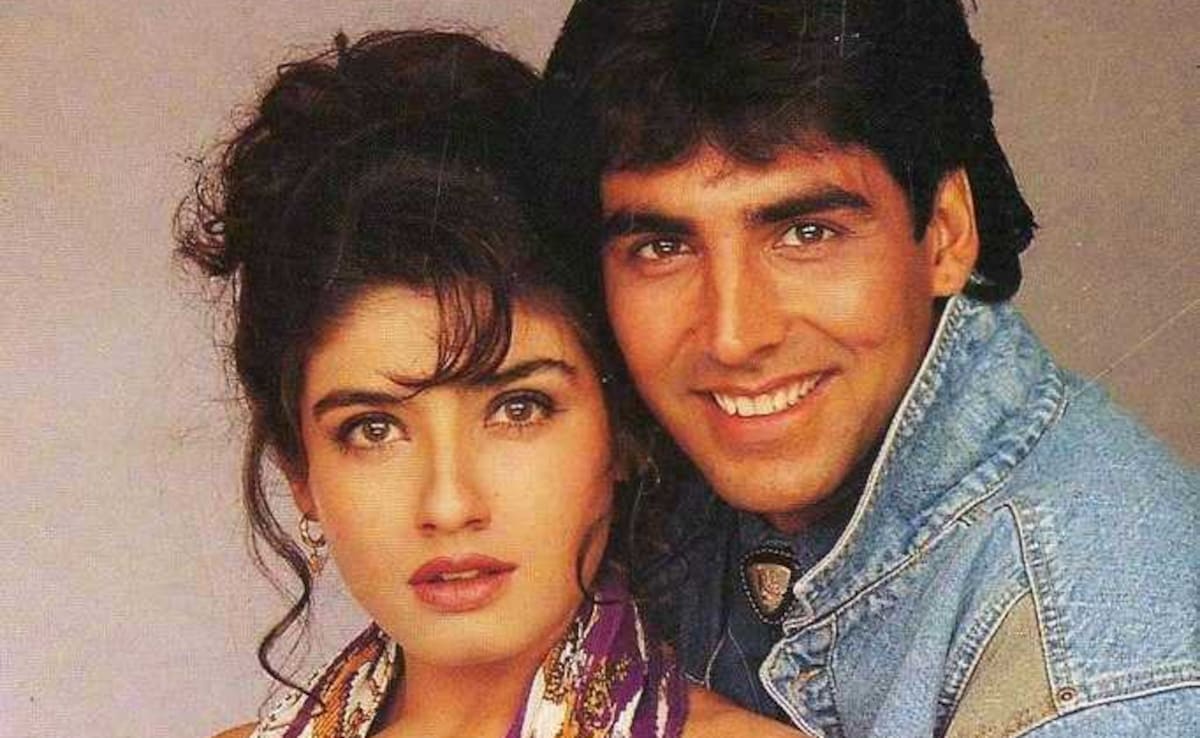
New Delhi, June 11, 2026: The dynamics of Bollywood have always been a fascinating blend of changing cinematic trends, complex personal histories, and evolving public sensibilities. Recently, an old comment by action star Akshay Kumar regarding his iconic 90s co-star Raveena Tandon went viral, sparking a wide-ranging conversation across social media platforms. Akshay’s remark—“Pehle heroine thi, ab heroine ki maa hai” (First she was a heroine, now she plays a heroine’s mother)—has thrown a sharp spotlight on the glaring contrast between how male and female actors age in the Hindi film industry, and how audiences perceive these generational shifts.
The comment itself traces back to a promotional event where Akshay was asked about his experience of reuniting with Raveena for their multi-starrer comedy Welcome to the Jungle. While delivered with his signature, off-the-cuff humor, the phrase captured something far deeper than a simple joke. It highlighted a long-standing double standard in Bollywood: while male superstars from the 1990s routinely continue to play romantic leads opposite women half their age, their female contemporaries are often systematically transitioned into maternal or supporting roles.
A History of Fireworks and Changing Roles
To understand the weight behind the words, one has to look back at the explosive chemistry Akshay Kumar and Raveena Tandon shared in the 1990s. They were one of cinema’s most defining pairs, delivering blockbusters like Mohra (1994) and Khiladiyon Ka Khiladi (1996). Songs like “Tu Cheez Badi Hai Mast Mast” and “Tip Tip Barsa Paani” became permanent fixtures in pop culture history. Beyond their sizzling on-screen presence, the duo shared a highly publicized real-life romance and engagement that eventually ended, leading them down completely separate personal and professional paths for over two decades.
Their casting in Welcome to the Jungle marked a historic reunion that fans had anticipated for nearly twenty-five years. However, the nature of their reunion emphasizes the very shift Akshay joked about. In the upcoming film, their roles are drastically reconfigured from the romantic pairings of their youth, reflecting the industry’s rigidity when it comes to casting veteran actresses.
The Evolution of the 90s Leading Lady
Despite the humorous tone of Akshay’s comment, the reality of Raveena Tandon’s career trajectory tells a completely different, much more empowering story. Raveena has not simply transitioned into playing “the heroine’s mother”; she has actively reinvented herself as a powerhouse performer on her own terms.
Rather than fading into the background of mainstream commercial cinema, Raveena chose to adapt and conquer new media. Her transition to digital streaming platforms showcased a depth of acting that standard 90s commercial roles rarely allowed.
- Aranyak (2021): She made a striking OTT debut as Kasturi Dogra, a fierce, flawed, and deeply dedicated cop navigating small-town politics and a brutal murder investigation.
- K.G.F: Chapter 2 (2022): She commanded the screen as Ramika Sen, a powerful and unyielding Prime Minister, proving that her screen presence remained unmatched.
- Karmma Calling (2024): She stepped into the shoes of an ultra-glamorous, cold, and calculating high-society matriarch, earning immense praise for her nuanced performance.
Through these projects, Raveena proved that while the traditional definition of a “commercial Bollywood heroine” might have a strict shelf life, the longevity of a true artist does not.
Shifting Audience Expectations
The resurfacing of Akshay’s comment comes at a time when modern moviegoers are increasingly critical of ageism and the male gaze in cinema. Contemporary audiences are no longer satisfied with watching aging male actors paired with significantly younger actresses while senior female actors are sidelined.
There is a growing demand for multi-dimensional narratives where women over forty are central characters with independent agency, rather than narrative plot devices used to complement a male protagonist’s journey. Film critics note that the industry is gradually being forced to acknowledge this shift, as streaming platforms continue to greenlight female-led projects that achieve massive commercial success.
Ultimately, Akshay Kumar’s comment reflects an older, traditional Bollywood mindset—one where a woman’s value on screen was directly tied to her youth and her proximity to the leading man. However, the modern response to his statement shows how much the landscape has evolved. Raveena Tandon’s ongoing success is living proof that a modern actress doesn’t have to settle for being just “the mother.” She can be the anchor, the hero, and the driving force of the story.