

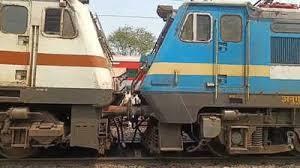
New Delhi, June 11, 2026: A potentially catastrophic railway accident was narrowly avoided on Thursday morning near the busy Bhubaneswar Railway Station in Odisha. In an incident that triggered widespread panic among railway personnel and nearby residents, two empty train rakes ended up on the exact same track, moving directly toward one another.
The tense situation unfolded on the critical track stretch near the Jharpada overbridge. Fortunately, due to timely intervention, sharp signaling awareness, and immediate coordination by alert ground staff, both trains were brought to a halt just in time, averting a major collision.
The Sequence of Events: How the Incident Unfolded
According to preliminary reports from railway officials and technical teams at the site, the incident took place during regular operational hours on Thursday morning. An empty passenger train rake had just departed from Bhubaneswar Railway Station, heading toward the Mancheswar coach maintenance depot for scheduled upkeep. Concurrently, another empty train rake was moving in the opposite direction, travelling from the Mancheswar depot back toward the main Bhubaneswar station.
As the two massive iron structures neared the Jharpada bridge area, monitoring systems and ground personnel realized that both rakes had been routed onto Track Number 2. Moving at slow speeds typical of shunting and local depot transfers, the operators managed to apply the emergency brakes, bringing the trains to a standstill a short distance from each other.
Because both train rakes were completely empty at the time of the incident, there were no passengers on board, and absolutely no casualties or injuries have been reported.
Official Response from East Coast Railway (ECoR)
Following the scare, senior railway officials, technical experts, and safety teams rushed to the Jharpada bridge area to secure the rolling stock, inspect the tracks, and assess the structural positioning of the trains.
The East Coast Railway (ECoR) later issued a clarifying statement to address the growing public concern and viral videos of the incident. According to ECoR, the situation occurred during a “slow-speed shunting movement” intended to transition the empty rakes for routine maintenance activities.
The railway administration confirmed that since the incident occurred on a secondary line specifically utilized for shunting and coaching depot transfers, the primary tracks remained clear. As a result, express trains and local passenger schedules running through the main Bhubaneswar division suffered zero delays or cancellations.
Safety Concerns and High-Level Inquiry Ordered
While the prompt braking prevented a disaster, the incident has raised severe questions regarding signaling infrastructure, track-allocation protocols, and human error. Given Odisha’s recent history with devastating rail accidents—most notably the tragic triple-train collision in Balasore—any event involving overlapping tracks triggers massive anxiety among commuters and experts alike.
Independent railway analysts are questioning how two trains traveling in completely opposite directions were simultaneously cleared to enter the exact same section of Track Number 2. Early indications point toward a potential track-changing error or a communication breakdown between the station control room and the shunting operators.
To determine the exact sequence of events, the Ministry of Railways has ordered a comprehensive, high-level technical inquiry into the lapse. A dedicated safety committee will examine:
- The Electronic Interlocking System: Technical logs will be reviewed to check if a digital glitch incorrectly signaled that the track segment was unoccupied.
- Point-Switching Operations: Investigators will inspect the physical track points near the Jharpada bridge to see if a mechanical failure caused a wrong route alignment.
- Human Protocols: Communication logs between the station masters, cabin crew, and shunting drivers will be audited to identify any deviations from standard operating procedures (SOPs).
Railway authorities have firmly stated that strict disciplinary action will be taken against any employees or technical managers found guilty of negligence once the final investigation report is submitted.
The Role of Technology in Preventing Rail Collisions
This near-miss underscores the critical importance of modern collision-avoidance technology across the Indian Railways network. Across the country, the government has been progressively deploying Kavach—an indigenously developed Automatic Train Protection (ATP) system.
Kavach is explicitly engineered to prevent accidents by automatically applying brakes if the system detects another train on the same track, or if a driver passes a signal at danger (SPAD). It also manages train speeds in dense fog or challenging terrain.
While full network-wide implementation of Kavach is still actively underway across various zones, incidents like the one at Bhubaneswar emphasize why accelerating the rollout of automated safety nets is vital. Relying solely on manual oversight and traditional shunting protocols leaves a margin for error that modern rail systems simply cannot afford.
Current Site Status and Restoration
By Thursday afternoon, technical teams successfully managed to safely push back and separate the two stranded train rakes, clearing Track Number 2 for technical testing. The rolling stock has been moved to the yard for structural integrity checks to guarantee no damage was sustained during the emergency braking sequence.
Local authorities and railway police cleared the crowds that had gathered near the Jharpada overbridge after videos of the face-to-face trains began circulating widely on social media platforms. The East Coast Railway has urged the public not to succumb to panic or spread unverified rumors, reiterating that the main lines are operating at 100% capacity with rigorous safety checks strictly enforced.
Further updates regarding the specific findings of the signaling probe are expected to be made public by the Commissioner of Railway Safety (CRS) in the coming days.