

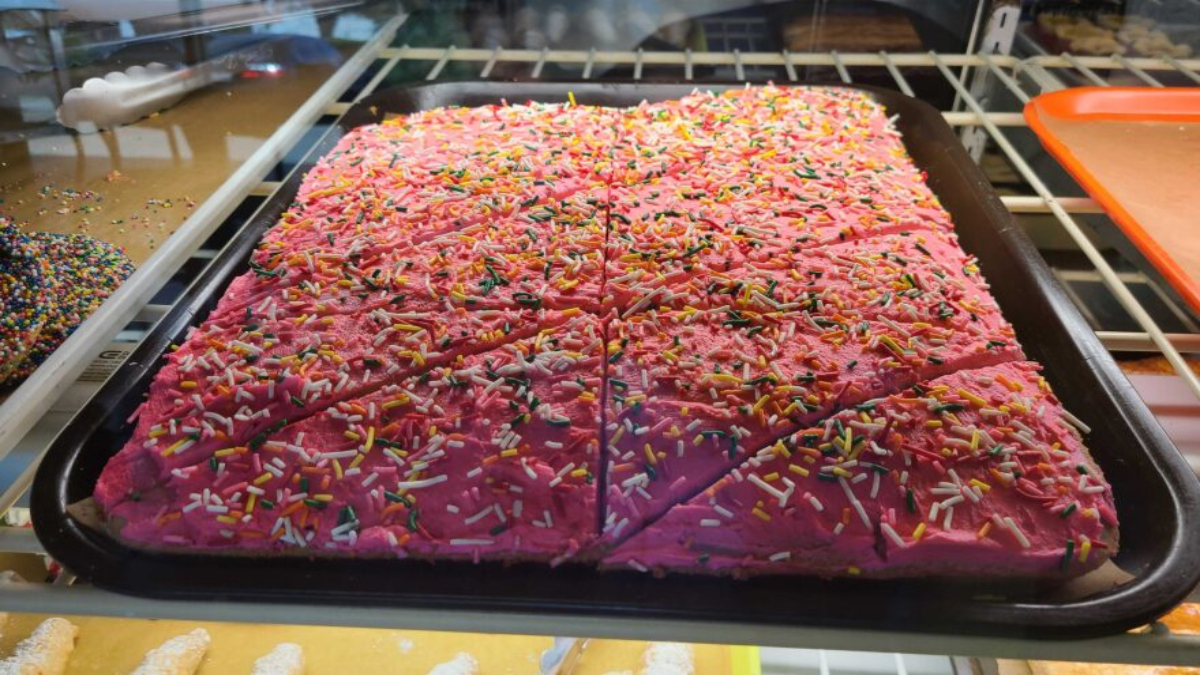
New Delhi, June 12, 2026: If you have spent any time scrolling through food trends on social media recently, you have likely run across a bright, eye-catching dessert known as the “dot cake” or “pink cake.” Boasting a vibrant, neon-pink glaze and a heavy shower of rainbow nonpareil sprinkles, this aesthetically pleasing treat has drawn massive lines at trendy pop-ups and racked up millions of views online. Influencers present it as the latest innovation in the baking world, capturing the hearts—and feeds—of sweet tooths everywhere.
However, if you mention this viral phenomenon to a Texan, or anyone who grew up in a Mexican-American household, you will likely get a knowing smile followed by a gentle correction. To them, this isn’t a groundbreaking social media invention. It is cortadillo, a beloved, century-old staple of the traditional Mexican panadería (bakery) that has been quietly anchoring community bakery cases for generations.
What is Cortadillo?
Cortadillo (often referred to simply as “pink cake” along the Texas-Mexico border) is a traditional type of pan dulce (sweet bread). The word cortadillo translates roughly to “cut cake” or “sliced bread,” referencing how it is typically baked as a large sheet cake and sliced into clean, uniform squares or rectangles before serving.
The anatomy of an authentic cortadillo is beautifully straightforward:
- The Base: A moist, dense, and fluffy yellow sponge cake. Unlike airy American birthday cakes, a traditional cortadillo has a slightly tighter crumb structure, sitting comfortably between a snack cake and a subtle pound cake. It is lightly sweetened and frequently infused with a hint of vanilla, orange zest, or lemon zest.
- The Icing: A smooth, sweet glaze tinted a signature, unmistakable hot pink. While some modern variations top it with a thick buttercream, the traditional panadería style features a simpler powdered-sugar-and-milk icing that sets with a slightly firm, delicate crust.
- The Crown: A generous dusting of tiny, multi-colored round sprinkles (nonpareils). These provide a sharp visual contrast to the pink backdrop and add a satisfying, nostalgic crunch to every bite.
For decades, buying cortadillo has been a comforting ritual. Families walk into a panadería, grab a silver tray and a pair of metal tongs, and select a square of pink cake alongside conchas, empanadas, and cuernitos to enjoy with a hot morning cafecito (coffee) or a cold glass of milk.
The Social Media Rediscovery
The recent internet frenzy surrounding the “dot cake” highlights a recurring phenomenon in food culture: the culinary rediscovery. On platforms like TikTok and Instagram, the dessert has been repackaged for a new generation. Some modern vendors have added slight twists—serving the cake layers in a cup or adding a thin layer of white frosting or strawberry jam in the middle—but the core visual identity remains identical to the classic Mexican pastry.
As the “dot cake” began trending, Texas locals and members of the Latino community quickly took to social media to preserve the dessert’s history. Far from being a new fad, cortadillo dates back more than a century, carrying deep cultural roots that trace from European baking techniques brought to Mexico during the colonial era, which then evolved into regional Mexican culinary traditions.
Food historians and cultural commentators point out that while social media is a fantastic tool for introducing diverse foods to a broader audience, it can sometimes obscure the origins of traditional dishes. The viral rise of the dot cake has sparked a lively conversation about giving credit where credit is due, reminding foodies that the colorful treat they are lining up for in metropolitan hotspots has a rich, deep history rooted in working-class immigrant neighborhoods.
Also Read:‘San Juan’ AI Song Goes Viral
Where to Taste the Real Deal
If the viral trend has left you craving a slice of this colorful dessert, culinary experts and Texas locals agree: skip the trendy pop-ups and head straight to an authentic neighborhood panadería. Not only will you experience the authentic texture and flavor profile, but you will also be supporting institutions that have kept communities sweet for decades.
If you find yourself in the Lone Star State, several legendary spots offer a masterclass in traditional cortadillo.
Ultimately, whether you call it dot cake, pink cake, pastel de niños, or cortadillo, this vibrant dessert remains a joyful masterpiece of simple baking. Its transition from a humble panadería tray to a global social media sensation is a testament to its timeless, universal appeal. But as you take that first sweet, crunchy bite, remember that you are participating in a delicious tradition kept alive by generations of bakers long before the first smartphone ever logged onto a social media app.