

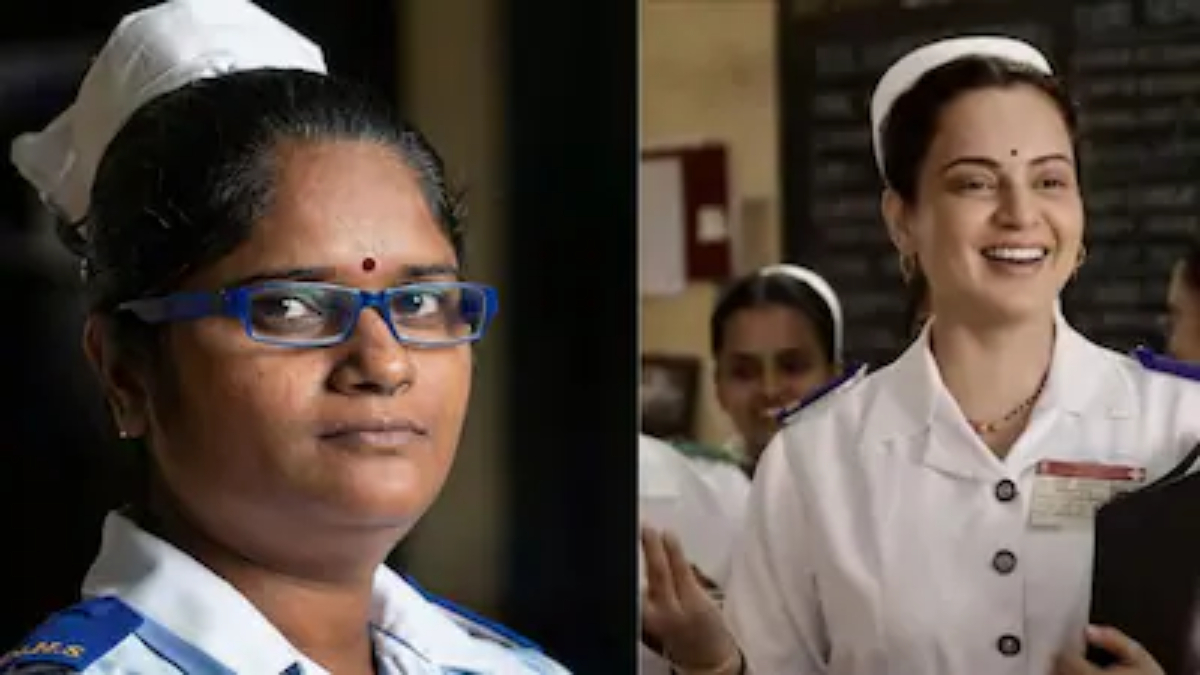
New Delhi, June 12, 2026: The horrific Mumbai terror attacks on November 26, 2008, remain an intensely painful memory in India’s history. While public memory often gravitates toward the heavy combat zones like the Taj Mahal Palace Hotel or Chhatrapati Shivaji Terminus (CST), some of the most extraordinary acts of heroism took place silently inside hospital walls.
With the release of the cinematic drama Bharat Bhhagya Viddhaata, a bright light is finally shining on the medical staff at Cama & Albless Hospital. At the absolute heart of this gripping narrative is Nurse Anjali Kulthe—a real-life braveheart who risked her life to protect 20 pregnant women as bullets and hand grenades shattered the night. Portrayed by actor-politician Kangana Ranaut, Anjali’s story is a profound reminder of the unseen caregivers who stood as shields between innocent citizens and armed terrorists.
A Routine Shift Turns into a Nightmare
On that fateful Wednesday evening, Anjali Kulthe reported for her standard 12-hour night shift at Cama Hospital, a specialized municipal facility catering primarily to women and children. The atmosphere inside the antenatal ward was peaceful, populated by 20 expectant mothers, many of whom were dealing with high-risk pregnancies or were in the final, exhausting stages of labor.
The calm was shattered when deafening gunfire and explosions erupted nearby. Peering out of a window, Anjali was horrified to see two heavily armed men—later identified as Ajmal Kasab and Abu Ismail—storming through the hospital gates. Having just finished their bloody rampage at the neighboring CST railway station, the terrorists had moved to the hospital, shooting down the unarmed security guards at the entrance. A sanctuary built exclusively for bringing new life into the world had suddenly transformed into a war zone.
Tactical Clear-Headedness Under Heavy Fire
As panic swept through the hospital and patients began to scream in terror, Anjali’s professional instincts completely overrode her fear. Realizing that the heavy double doors of the maternity ward were their only immediate defense, she ran to lock them securely.
She then instructed all 20 frightened women to immediately switch off their mobile phones. She knew that an ill-timed ringtone or the sudden glow of a screen could give away their location. Working quickly alongside her colleagues, she quietly shifted the expectant mothers out of their vulnerable hospital beds and crowded them into a small, windowless pantry hidden deep inside the ward.
Delivering Life in the Face of Death
The danger grew even more acute as the attackers moved through the upper floors of the building, tossing hand grenades and firing randomly into corridors. Inside the cramped pantry, the psychological stress took a physical toll: one of the high-risk patients, who was already battling severe hypertension, went into active labor. The immense stress of the gunfire was rapidly putting both the mother and her unborn baby in mortal danger.
Waiting out the siege in the pantry was no longer an option, but getting the patient to a proper delivery room required navigating dark stairs exposed to active gunfire. Refusing to let fear dictate the outcome, Anjali took the terrified woman by the hand. She guided her step-by-step up the dark staircase, keeping their bodies tightly pressed against the wall to avoid stray bullets.
With explosions literally shaking the walls of the facility, they successfully reached the delivery ward. Anjali handed the patient over to the on-duty doctors and assisted in the delivery. Against all odds, a healthy baby girl was safely brought into the world. In memory of the terrifying sounds that surrounded her birth, the child was later affectionately nicknamed “Goli” (Bullet) by the staff. Rather than staying in the relative safety of the delivery wing, Anjali immediately navigated the dangerous corridors back to the pantry to comfort and guard the remaining 19 women. By the time security forces finally cleared the building the next morning, every single mother under her care had survived completely unharmed.
Also Read: TVF Appoints Pooja Maitra as Head of Branded Content
Standing Up to Terror in the Aftermath
Anjali Kulthe’s contribution to her nation did not end when the siege was lifted. Weeks after the tragedy, she was called upon by law enforcement to step forward as a vital material witness. She was asked to enter Arthur Road Jail to formally identify Ajmal Kasab, the lone attacker captured alive by Mumbai police.
Despite intense anxiety from her family, who feared retaliation and begged her not to get involved, Anjali insisted on fulfilling her civic duty. She walked into the identification parade and calmly pointed out Kasab. She later recounted how chilling it was to see a mass murderer show absolutely no remorse for his actions. She eventually testified against him in court, securing a crucial link in the legal chain that led to his conviction.
The Cinematic Legacy: Changing Perspectives on Nursing
The film’s title, Bharat Bhhagya Viddhaata (translating to “Dispenser of India’s Destiny”), was inspired by a philosophy popularized by Prime Minister Narendra Modi, who used the term to honor the essential, everyday laborers and grassroots workers who quietly build and protect the nation. During the film’s promotional tour, Kangana Ranaut emphasized that the movie is a tribute to the thousands of underappreciated healthcare professionals across India.
Ranaut passionately advocated for a cultural shift in how nurses are viewed, pointing out that they are often overworked, underpaid, and subjected to unfair societal stereotypes despite handling the most grueling and intimate responsibilities in healthcare. “While medical training can be taught, bravery cannot,” Ranaut stated, highlighting that the integrity shown by the Cama Hospital staff came entirely from a deep devotion to humanity.
Ultimately, Anjali Kulthe’s enduring legacy proves that heroes do not always wear military armor—sometimes, they wear a simple white nursing uniform. Her courage reminds us that even in humanity’s darkest hours, compassion and duty can triumph over terror.