
)
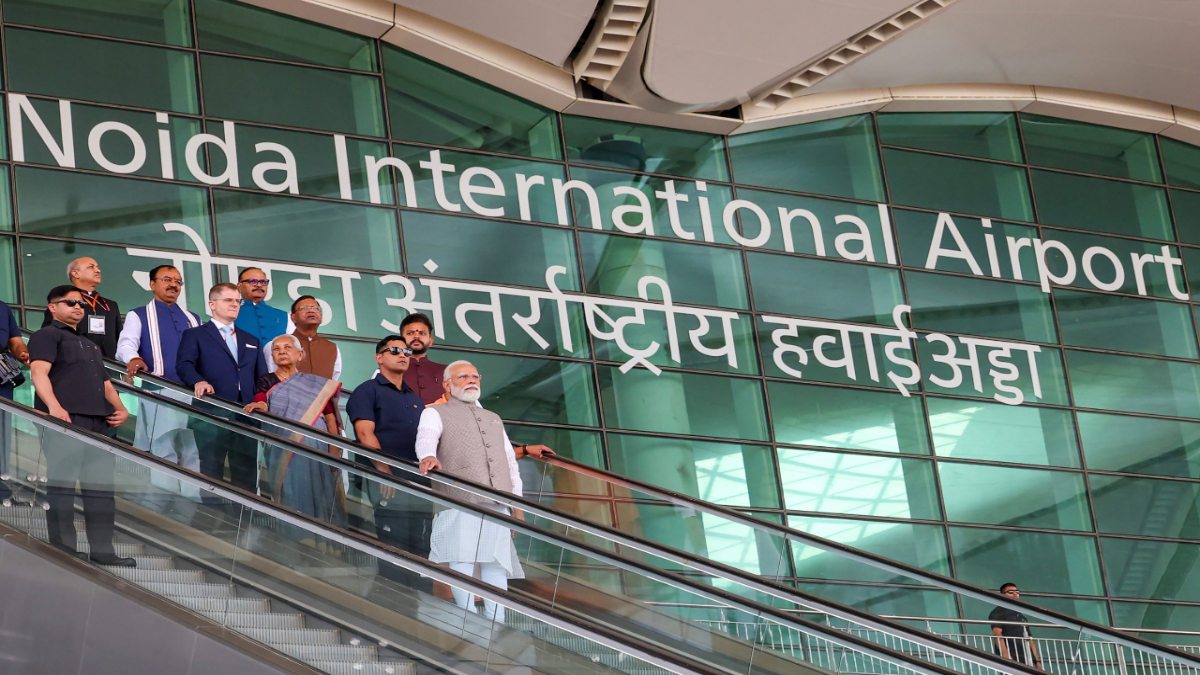
June 15, 2026 — India’s aviation sector reached a historic milestone on June 15, 2026, as the highly anticipated Noida International Airport (NIA) in Jewar officially commenced commercial passenger operations. The sky over western Uttar Pradesh welcomed its first scheduled commercial service when an IndiGo flight arriving from Lucknow touched down on the brand-new runway. The arrival was greeted with a traditional water cannon salute, marking the birth of India’s newest aviation gateway and the second international airport serving the National Capital Region (NCR).
The launch event was inaugurated by Union Civil Aviation Minister Kinjarapu Rammohan Naidu, alongside senior state officials and representatives from the Yamuna Expressway Industrial Development Authority (YEIDA). Developed under a Public-Private Partnership (PPP) model, the Rs 11,200 crore first phase of the greenfield project is designed to drastically ease congestion at Delhi’s Indira Gandhi International Airport while serving as a massive economic catalyst for northern India.
The First Flight: A Touching Tribute to Local Farmers
The operational debut of Noida International Airport was defined not just by technical success, but by a powerful gesture of gratitude. IndiGo flight 6E-2278 departed from Chaudhary Charan Singh International Airport in Lucknow at 7:12 AM and made a smooth landing at Jewar at 7:58 AM.
Shortly after, at 8:19 AM, the aircraft prepared for its inaugural outbound flight back to the state capital. Onboard this historic departure was a special delegation of approximately 170 local farmers, including 20 women, from the Jewar region. These individuals had voluntarily contributed their ancestral lands to make the mega-infrastructure project possible.
Led by local MLA Dhirendra Singh, the farmers flew to Lucknow to meet with Uttar Pradesh Chief Minister Yogi Adityanath. Ahead of their departure, Civil Aviation Minister Ram Mohan Naidu spent time interacting with the families inside the terminal.
Phased Expansion: Scaled for Global Dominance
The opening of Phase 1 is only the beginning of what is projected to become one of the largest airports in the world. Currently operating with a single 3,900-meter runway capable of handling giant wide-body aircraft, the airport features state-of-the-art Instrument Landing System (ILS) technology, allowing for seamless operations during heavy winter fog and low-visibility conditions.
Initially, Noida International Airport is equipped to handle nearly 12 million (1.2 crore) passengers annually. However, as demand scales, the airport infrastructure will expand across four meticulously planned phases.
Expanding the Flight Network
IndiGo, acting as the primary launch carrier for the airport, has outlined an aggressive strategy to connect Jewar with major economic and tourist destinations across India. Following the morning flights between Lucknow and Jewar, the aircraft transitioned into the airport’s first regular trunk route, flying onwards to Bengaluru.
In the coming weeks and months, air connectivity will progressively scale up. IndiGo has confirmed plans to launch direct flights from Noida International Airport to more than 16 domestic destinations. Travelers can look forward to direct routes connecting Jewar to:
- Southern Hubs: Bengaluru and Hyderabad
- Northern & Leisure Destinations: Srinagar, Amritsar, Chandigarh, and Pantnagar
- Western Regions: Jaipur and other key cities.
As terminal capabilities hit their stride, international carriers are expected to announce slot allocations, positioning the airport as a primary connection point for global travel into Noida, Greater Noida, Agra, and Mathura.
An Economic Engine for Western Uttar Pradesh
Beyond providing relief to over-saturated transit networks, Noida International Airport is positioned as a multi-modal logistics powerhouse. Its location along the Yamuna Expressway ensures rapid connectivity to Delhi, Haryana, Rajasthan, and Uttarakhand.
The Uttar Pradesh government estimates that the airport ecosystem will generate over 100,000 direct and indirect jobs in the coming years. Major investments are already flooding into the surrounding regions, targeting sectors such as:
- Logistics and Warehousing: Establishing massive cargo hubs to move electronics and manufactured goods out of the state’s industrial corridors.
- Hospitality and Tourism: Proximity to the Taj Mahal in Agra and the religious circuits of Mathura and Vrindavan is expected to trigger a boom in luxury hotels and international tour management.
- Real Estate and Corporate Tech Parks: Properties along the Yamuna Expressway are seeing an unprecedented surge in demand as multinational corporations seek office spaces near a world-class transit hub.
A Decade of Aviation Growth
The launch of the Jewar-based airport highlights the rapid pace of infrastructure building across India over the past decade. During his inaugural address, Civil Aviation Minister Naidu pointed out that India’s operational airports have more than doubled from 74 in 2014 to 165 today, backed by an infrastructure investment exceeding Rs 1.4 lakh crore.
Noida International Airport stands as a shining example of this modernization. With its ecofriendly, net-zero carbon emission design philosophy, seamless digital passenger processing, and deep community roots, the airport represents a bold step forward for Indian aviation. For millions of residents in western Uttar Pradesh and the NCR, world-class air travel has officially arrived right at their doorstep.