
 has officially)
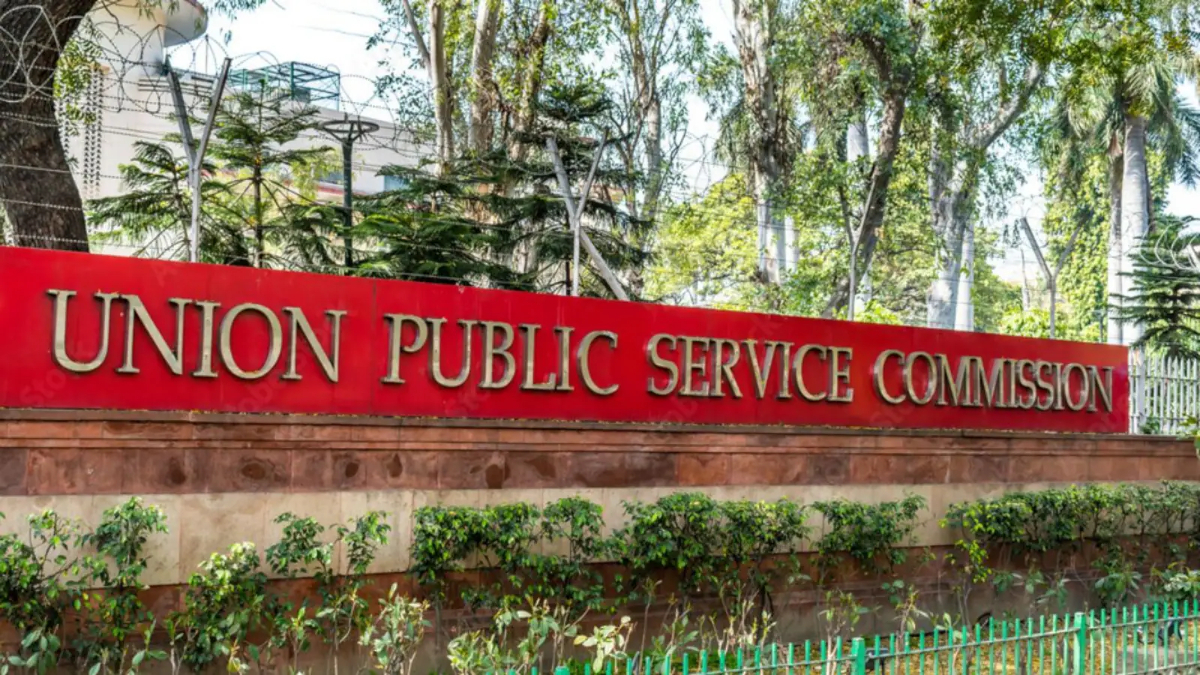
New Delhi, June 15, 2026 — In a major boost for government job aspirants seeking specialist roles, the Union Public Service Commission (UPSC) has officially announced a massive hiring drive under its Direct Recruitment Scheme. Breaking away from the traditional, generalized Civil Services gridlock, the Commission has notified over 400 specialized vacancies across several Union Ministries, Departments, and Union Territories.
This multi-sectoral recruitment drive primarily targets lateral entry and specialist officers in Group ‘A’ and Group ‘B’ Gazetted frameworks. Unlike the regular Civil Services Examination (CSE) which assesses all-rounders, this scheme evaluates candidates strictly on specialized academic backgrounds and targeted domain expertise, eliminating the grueling multi-stage general administrative exam formats for these roles.
A Breakdown of the Vacancies and Key Portfolios
The officially released roster covers highly niche technical, scientific, and legal domains spanning multiple ministries. Rather than filling general administrative posts, this particular direct recruitment seeks specialized technocrats capable of immediate project execution.
Among the standalone notifications, the Ministry of Health and Family Welfare accounts for a massive chunk of vacancies, looking to onboard over 120 Specialist Grade-III medical professionals across various clinical fields. Security and civil regulation have also received substantial allocations; the Directorate General of Civil Aviation (DGCA) has opened critical desks for Operations Officers and Air Safety Officers to supervise the country’s surging commercial aviation grid.
Simultaneously, the Ministry of Home Affairs is heavily modernizing its security apparatus by sourcing Deputy Central Intelligence Officers (DCIO – Technical) and Assistant Directors of IT to fortify cyber security and data mapping verticals. Additionally, 50 vacancies for Assistant Director Grade-II (Economic) roles have been created within the MSME ministry to manage macroeconomic strategy and development initiatives for small businesses.
Shift Towards Lateral and Specialist Entry
What makes this notification noteworthy is the explicit emphasis on matching core qualifications to precise technical responsibilities. Experts suggest that the Indian administrative framework is progressively shifting toward a model that values domain expertise over generalized managerial skills.
The educational eligibility is strictly tied to specific profiles. For instance, engineering professors are being directly recruited for the College of Military Engineering (CME) Pune, while the Central Bureau of Investigation (CBI) is inducting Assistant Public Prosecutors through this window. Rather than onboarding candidates and dedicating years to specialized re-training, this format allows the government to immediately leverage existing professional experience.
Crucial Timelines and Selection Mechanism
Candidates looking to apply must follow a highly structured selection protocol strictly monitored by the central commission.
1.One-Time Registration (OTR):Prerequisite.
Aspirants must create a profile on the official UPSC Online Recruitment Application (ORA) platform. This establishes a permanent profile, removing the need to fill basic personal records repeatedly for future notifications.
2.Document Verification & Form Submission:Active Window.
Applicants select their specific target advertisement, upload educational degrees, experience certificates, and valid ID proofs, and submit the online application along with the nominal processing fees.
3.Scrutiny and Recruitment Test (RT):Elimination Phase.
UPSC scrutinizes the uploaded documents based on the desired qualifications. If the volume of eligible applications is excessively high, the commission conducts a pen-and-paper or computer-based Recruitment Test (RT) to filter candidates.
4.The Personality Test:Final Stage.
Shortlisted candidates undergo a thorough face-to-face interview process. The final merit list is curated by combining performance metrics from the Recruitment Test (where applicable) and the Personality Test.
Because these are specialized portfolios, the age bar is generally more relaxed compared to standard civil services exams. The upper age boundary varies anywhere between 35 to 40 years depending on whether the application is aimed at an assistant officer level or a senior professor/specialist scale, with further statutory age relaxations applicable for reserved categories.
High Financial Stakes and Career Progression
Landing a direct recruitment slot through the UPSC guarantees entry into elite pay scales structured under the 7th Central Pay Commission (CPC). Most of these roles launch straight into Level-10 or Level-11 pay matrix brackets, translating to a starting basic salary ranging from ₹56,100 to ₹67,700, exclusive of Dearness Allowance (DA), House Rent Allowance (HRA), and other central government perks.
For senior advisory, medical specialist, and associate professor positions, the scale moves into Level-12 and Level-13 brackets, placing candidates directly at the mid-management tier of central governance. Beyond the financial stability, these positions promise a fast-track career path with rapid avenues for promotions into the highest policy-making bodies of respective ministries.
Crucial Advisory for Applicants
The Commission has explicitly warned candidates against submitting flawed documentation on the Online Recruitment Application (ORA) portal. Because direct recruitment relies significantly on initial vetting, any mismatch between structural educational claims and actual certificates results in summary rejection.
Candidates must ensure that their experience certificates are printed on official letterheads clearly delineating precise job descriptions, durations, and salary breakdowns. Furthermore, candidates must frequently check the official UPSC portal (upsc.gov.in) as specific schedules for exams, shortlisting criteria, and interview dates will be broadcasted individually per department over the coming weeks.