

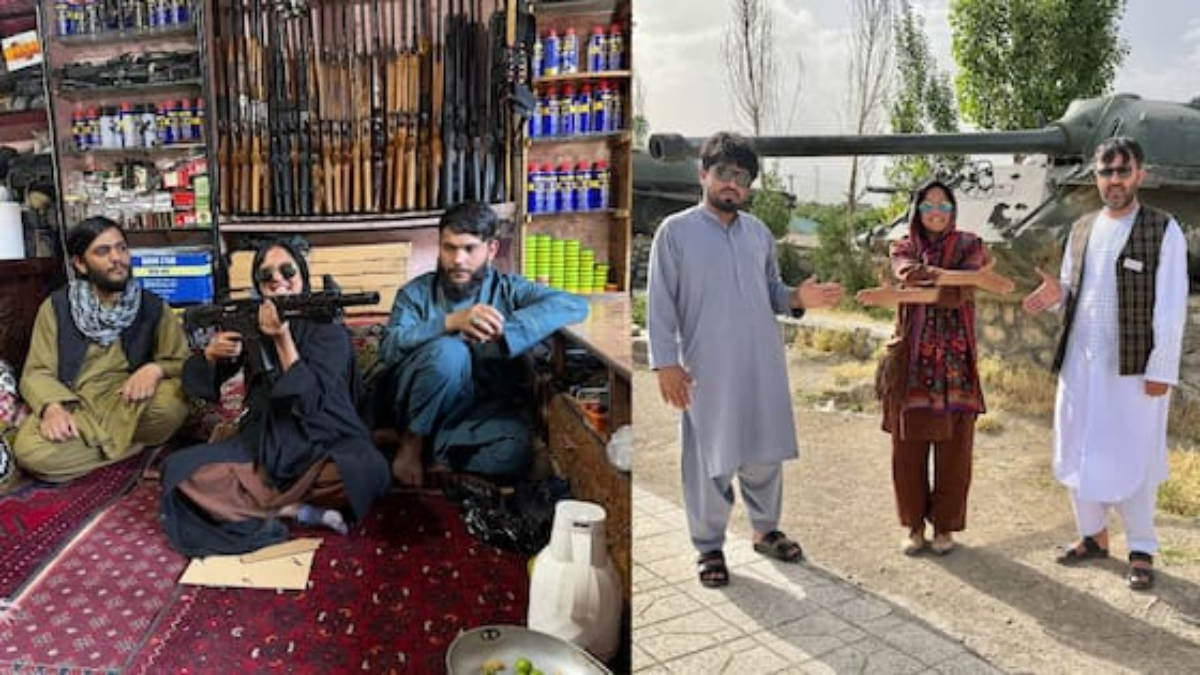
New Delhi, June 18, 2026: In an era where geopolitical borders feel heavier than ever, Indian travel influencer Ankita Kumar decided to step directly into one of the most closed-off nations on earth. Her recent 13-day solo expedition across Afghanistan has sent shockwaves through social media, sparking intense conversations about safety, the reality of life under the Taliban regime, and the hidden resilience of Afghan women. Armed with a camera, a willingness to listen, and an appetite for local hospitality, Kumar bypassed the traditional tourist trails to offer a raw, complicated look at a country caught between a violent past and an uncertain future.
For most global travelers, Afghanistan exists only as a series of grim headlines detailing conflict and systemic oppression. However, Kumar’s viral dispatches revealed a stark contrast between global perception and the daily realities on the ground. Over nearly two weeks, she navigated the bustling, mountain-fringed streets of Kabul, traveled through rural checkposts, and engaged directly with locals, capturing a side of the country that rarely makes it to the nightly news.
Shared Tea and Strange Encounters
One of the most surreal and widely discussed chapters of Kumar’s journey involved her unexpected interactions with the Taliban. In a country where armed fighters control every major intersection and highway checkpoint, encounters with the regime are entirely unavoidable. Yet, instead of hostility, Kumar documented moments of bizarre hospitality.
Because of the deep historical ties between India and Afghanistan—and a widespread love for Bollywood films and Hindi music—Kumar found that her nationality often acted as a diplomatic shield. At various military checkpoints, tense standoffs frequently melted into casual conversations once guards realized she was an Indian traveler. Despite the underlying tension, she noted that the strict security protocols actually made the physical act of traveling between provinces smoother, albeit under the constant, watchful eye of an armed patriarchal state.
Behind Closed Doors: Art and Afghan Women
While the superficial peace allowed her to move through the country, Kumar emphasizes that the true, heartbreaking heart of her trip lay in the homes of Afghan women. Since the Taliban returned to power, severe restrictions have stripped women of secondary education, most employment opportunities, and even the right to travel without a mahram (a male guardian).
For an independent female traveler, witnessing this reality firsthand was a profoundly emotional experience. Kumar spent days meeting secretly with local women who are refusing to let their identities be completely erased. In hidden apartments and quiet rooms across Kabul, she discovered a underground network of female artists, weavers, and poets using creativity as a silent form of rebellion.
“The strength of these women is staggering,” Kumar shared. She described sitting on floor cushions, sharing meals, and watching women paint vivid, emotional canvases that they cannot legally sell in public markets. “They told me that being a woman here right now can feel like a living death. Yet, they continue to paint, to write, and to teach younger girls in secret. Their art is their way of saying, ‘We are still here, and we still have a voice.’“
The Tourism Debate: Connection vs. Whitewashing
Kumar’s solo trip comes at a time when Afghanistan is seeing a small but steady rise in foreign travel vloggers and “dark tourism” enthusiasts. The current administration has actively welcomed international tourists, recognizing the potential for foreign currency and positive public relations.
However, this trend has ignited a fierce global debate. Critics argue that lifestyle content and travel vlogs risk “whitewashing” severe human rights violations, presenting a peaceful facade while millions of local women suffer under systemic gender apartheid.
Kumar is quick to defend her journey not as an endorsement of the regime, but as a bridge to the citizens. “There is a massive difference between normalizing a government and humanizing a population,” she explains. By focusing her platform on the hospitality of everyday bakers, the struggles of carpet weavers, and the hidden brilliance of female artists, she hopes to redirect the world’s attention to the people rather than just the politics.
Navigating a Cash-Only, Disconnected Reality
Logistically, the 13-day trip was an exercise in extreme independence. With international banking systems completely cut off from Afghanistan, Kumar had to carry her entire budget in crisp, unblemished US dollar bills, exchanging them in the chaotic open-air markets of Kabul.
Furthermore, navigating public transportation as a solo woman required a delicate balancing act. While foreign women are often given a “third gender” status—granted exemptions that local women are denied—the environment remained highly unpredictable.
Kumar admits that the journey took a psychological toll, forcing her to constantly reassure her terrified family back home. “Every single day, my main priority was just texting my parents to say, ‘I am alive, I am safe,'” she said. The constant presence of firearms, the lack of basic amenities in smaller towns, and the heavy atmosphere of a society under total surveillance meant that letting her guard down was never an option.
Ultimately, Kumar’s journey highlights a profound paradox. She returned to India with stories of immense warmth, breathtaking mountain landscapes, and unforgettable hospitality—yet wrapped inside the sobering reality of a nation where half the population is forced to live in the shadows. Her 13-day trip stands as a testament to the fact that even in the world’s most troubled corners, the human spirit refuses to be completely dark.