

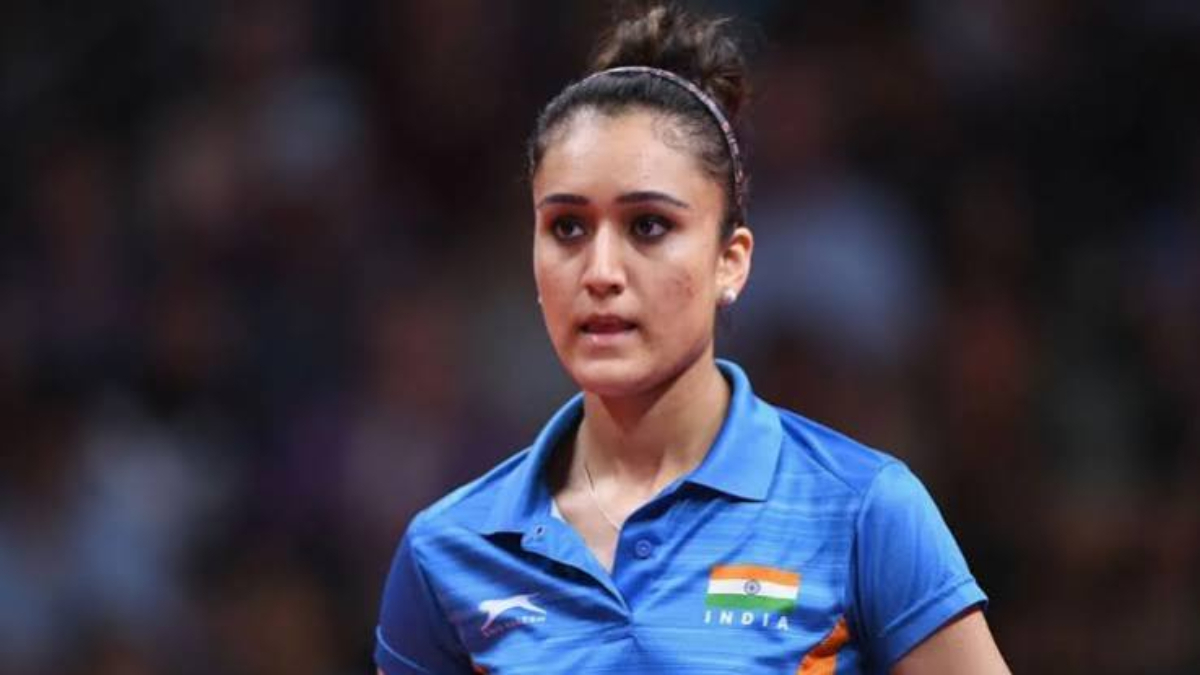
New Delhi, June 19, 2026: An administrative storm has hit Indian table tennis ahead of the 20th Asian Games in Aichi-Nagoya, Japan. Celebrated paddler Manika Batra has been omitted from the main 5-member women’s squad, relegated instead to the reserve list. On Friday, June 19, 2026, a day after the Table Tennis Federation of India (TTFI) announced the official continent, the 31-year-old Olympian took to social media to publicly voice her deep disappointment, appealing directly to Prime Minister Narendra Modi, Sports Minister Mansukh Mandaviya, and the Indian Olympic Association (IOA) to intervene.
Batra’s exclusion has reignited a fierce debate over the transparency, consistency, and fairness of domestic selection policies. Her primary grievance centers on a perceived lack of consistency, as she claims different thresholds and considerations were applied during previous selection cycles compared to her current situation.
Understanding the Selection Matrix
To comprehend how one of India’s most decorated table tennis players missed out on the main roster, it is essential to look at the mathematical framework used by the TTFI selection committee. Introduced in 2023, the selection policy employs a rigid, point-based formula divided into three distinct criteria:
- National Rankings (50% Weightage): Performance across domestic ranking tournaments.
- World Rankings (40% Weightage): Performance on the International Table Tennis Federation (ITTF) global circuit.
- Committee Discretion (10% Weightage): Subjective evaluation by the 9-member selection panel.
Under these regulations, any player positioned inside the world’s top 50 on the designated cut-off date (June 2, 2026) earns automatic qualification for major multi-sport events, bypassing the domestic evaluation. However, the margins for Batra were incredibly cruel. On the cut-off date, she was ranked World No. 51—falling just short of automatic inclusion by a mere three ranking points.
Because she did not cross the top-50 threshold, the 50% weightage allocated to national rankings came into full effect. Due to a combination of personal and medical reasons over the past year, Batra had limited participation in domestic tournaments. Consequently, her lack of a robust national ranking dragged down her cumulative score, causing her to lose out on a main spot to other domestic performers.
Outlining the Squad Layout
In defending its roster selection, the TTFI asserted that the process was strictly data-driven to ensure India is represented by its most consistent active performers. The women’s squad will be spearheaded by World No. 45 Sreeja Akula, who has steadily risen to become India’s top-ranked female singles player.
The Core of the Controversy
The decision to relegate Batra has exposed deep rifts within the Indian sporting ecosystem. Reports indicate that the 9-member selection committee was far from unanimous in its decision, with intense internal deliberations taking place alongside inputs from national coach Massimo Costantini before the final list was rubber-stamped.
Batra’s coach, Aman Balgu, highlighted the extenuating circumstances the player faced over the previous year, suggesting that a rigid algorithmic approach lacks empathy for real-world athletic hardships. Batra was sidelined for nearly two months following the sudden demise of her father and simultaneously managed a serious physical injury that restricted her competitive travel. Balgu pointed out that according to future point projections, Batra is expected to regain her status as India’s top-ranked female paddler as early as next month, making her exclusion from a tournament happening in September particularly difficult to swallow.
Furthermore, Batra’s public statement raises procedural questions. If the TTFI intends to stand firmly by its 2023 policy, she argues, it needs to explicitly clarify how discretionary points were distributed and why exceptions or safety nets utilized in previous Asian Games cycles were unavailable this time around.
A Legacy at Stake
The urgency behind Batra’s appeal is underscored by her historic contributions to the sport in India. She was the cornerstone of India’s historic breakthrough at the 2018 Asian Games in Jakarta, where she partnered with veteran Sharath Kamal to clinch a monumental bronze medal in mixed doubles. That medal, alongside a men’s team bronze in the same edition and a dramatic women’s doubles bronze by the Mukherjee sisters in Hangzhou, represents the absolute pinnacle of Indian table tennis achievements on the continental stage.
With the table tennis events at the Aichi-Nagoya Asian Games scheduled to take place from September 20 to September 28, 2026, the clock is ticking. While the TTFI maintains that the selection process rewards active consistency, the sporting community is divided on whether a system should rigidly exclude an athlete of Batra’s caliber over a microscopic deficit in international ranking points and domestic scheduling conflicts.
As the Ministry of Youth Affairs and Sports and the IOA review her formal appeal, Indian sports fans await a resolution to see whether administrative rules will hold absolute, or if an intervention will pave the way for the veteran paddler to make the main contingent.