

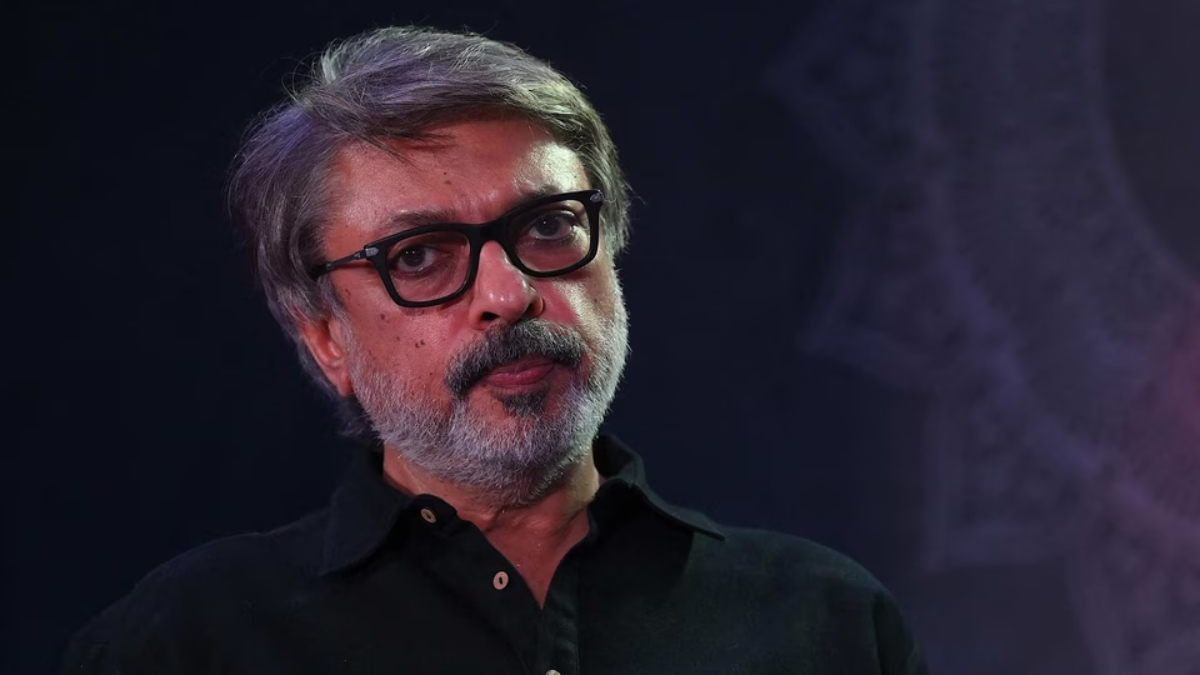
New Delhi, June 22, 2026: A horrific accident on the set of director Sanjay Leela Bhansali’s highly anticipated magnum opus, Love and War, has sent shockwaves through the Hindi film industry. A 42-year-old carpenter, identified as Chandradhari Singh Yadav, tragically lost his life after suffering a severe electric shock while working on the grand set construction.
The tragedy has not only left a family devastated but has also reignited a fierce, long-simmering debate regarding worker exploitation, poor safety compliance, and gruelling work schedules within Bollywood. Following the incident, prominent film bodies have stepped in, demanding an increased financial compensation of ₹50 lakh from Bhansali Productions, along with strict systemic reforms to prevent future loss of life.
The Fatal Incident: What Happened?
The tragic event took place at around 3:00 AM at the Royal Pump Studio in Goregaon East, Mumbai. At the time of the incident, production was actively underway, with actor Alia Bhatt reportedly present on set for the day’s shoot.
Yadav, a seasoned carpenter and a registered member of the Film Studio Setting and Allied Mazdoor Union (FSSAMU), was executing routine setup work when he suddenly sustained a massive electric shock. Preliminary investigations and eyewitness accounts point to a short circuit caused by raw, exposed wiring or faulty electrical cabling on the set.
The shock was severe enough to cause devastating burns, and although co-workers rushed Yadav to a nearby hospital immediately, medical professionals declared him dead on arrival. The local police and labor union representatives are currently awaiting the official post-mortem report to definitively legally log the exact technical cause of death. Yadav is survived by his wife and two young daughters.
Compensation Dispute: Union Pushes for ₹50 Lakh
In the immediate aftermath of the tragedy, representatives from the FSSAMU and the Federation of Western India Cine Employees (FWICE) approached Bhansali Productions to secure immediate financial assistance for the grieving family.
Acknowledging the immense loss, Sanjay Leela Bhansali’s production house offered a compensation package of ₹40 lakh to Yadav’s dependents. However, the FWICE leadership, spearheaded by President B.N. Tiwari, has formally requested that the amount be raised to ₹50 lakh.
The union’s stance is rooted in the long-term survival and stability of the family. Because Yadav was the sole breadwinner and left behind very young children, FWICE argues that the baseline corporate payout falls short of ensuring a secure future.
Beyond the direct cash compensation, the federation has made two additional critical demands to the filmmaker:
- Educational Sponsorship: The production house must fully fund and take responsibility for the complete academic education of Yadav’s two daughters.
- Employment for the Widow: A formal request has been written to Bhansali to secure a stable, permanent job for Yadav’s wife within Bhansali Productions to establish a reliable, independent stream of income for her going forward.
Exhaustion and Gruelling Working Hours Under Scrutiny
While the physical catalyst of the accident appears to be an electrical malfunction, film body officials have boldly highlighted a secondary, more pervasive culprit: extreme physical exhaustion.
FWICE Honorary General Secretary Ashok Dubey pulled back the curtain on the alarming shift schedules daily wage workers face on massive Bollywood sets. Dubey revealed that Chandradhari Yadav had been working under a brutal, non-stop timeline leading right up to his demise.
According to union tracking, Yadav had been working continuously on the Love and War set for three days straight. On the day he died, his shift had started at 7:00 AM and was still going strong at 3:00 AM the following morning—marking an exhaustive 20-hour workday.
Industry leaders argue that physical fatigue drastically reduces a worker’s situational awareness, making them significantly more prone to accidents when handling heavy machinery or working around high-voltage equipment. Union representatives stressed that while workers bear a personal responsibility to remain mindful on duty, production houses cannot escape blame when forcing labor to the point of absolute physical collapse.
Demands for Structural Reform and Government Oversight
This tragedy on a high-profile set has united multiple industry associations in calling for an immediate overhaul of safety standards. Ashoke Pandit, President of the Indian Film and Television Directors’ Association (IFTDA) and chief advisor to FWICE, expressed profound frustration over the lack of structural enforcement on sets.
Pandit noted that despite years of appeals to producer bodies, massive production studios, and government authorities to conduct mandatory, routine audits of electrical wiring, fire compliance, and structural integrity, their warnings have continually fallen on deaf ears. A single movie set can easily host between 150 to 200 daily wage crew members at any given moment, transforming an un-audited set into a literal ticking time bomb.
Furthermore, labor law violations regarding overtime pay remain a massive issue. While Indian labor laws explicitly dictate that workers are entitled to a defined 8-to-10-hour shift with overtime compensation thereafter, unions claim that daily-wage laborers are frequently underpaid, paid late, or denied their rightful overtime bonuses entirely.
Moving forward, the FWICE has confirmed it will be escalating the fight past studio walls. The federation is actively writing to Maharashtra’s Cultural Affairs Minister, Ashish Shelar, seeking direct state intervention. They have also signaled their intent to take these long-ignored labor concerns straight to the Chief Minister’s Office (CMO) and the Prime Minister’s Office (PMO) to fight for legally binding, mandatory Standard Operating Procedures (SOPs) across all active film sets in India.
About Love and War
Love and War remains one of Indian cinema’s most heavily anticipated epic dramas. Directed by legendary filmmaker Sanjay Leela Bhansali, the star-studded multi-starrer features Ranbir Kapoor, Alia Bhatt, and Vicky Kaushal in lead roles. Mounted on an extraordinarily lavish budget, the project marks a series of high-profile reunions, notably bringing Ranbir Kapoor and Alia Bhatt back to the silver screen together for the first time since 2022’s Brahmastra. The period drama is currently locked for a major pan-India theatrical release on Republic Day, January 21, 2027.
However, as production continues, the tragic loss of Chandradhari Yadav casts a somber shadow over the film, serving as a stark reminder to the entertainment industry that no cinematic masterpiece is worth the cost of a human life.