
 has uncovered major security and systemic lapses at the Ayodhya Ram Temple)
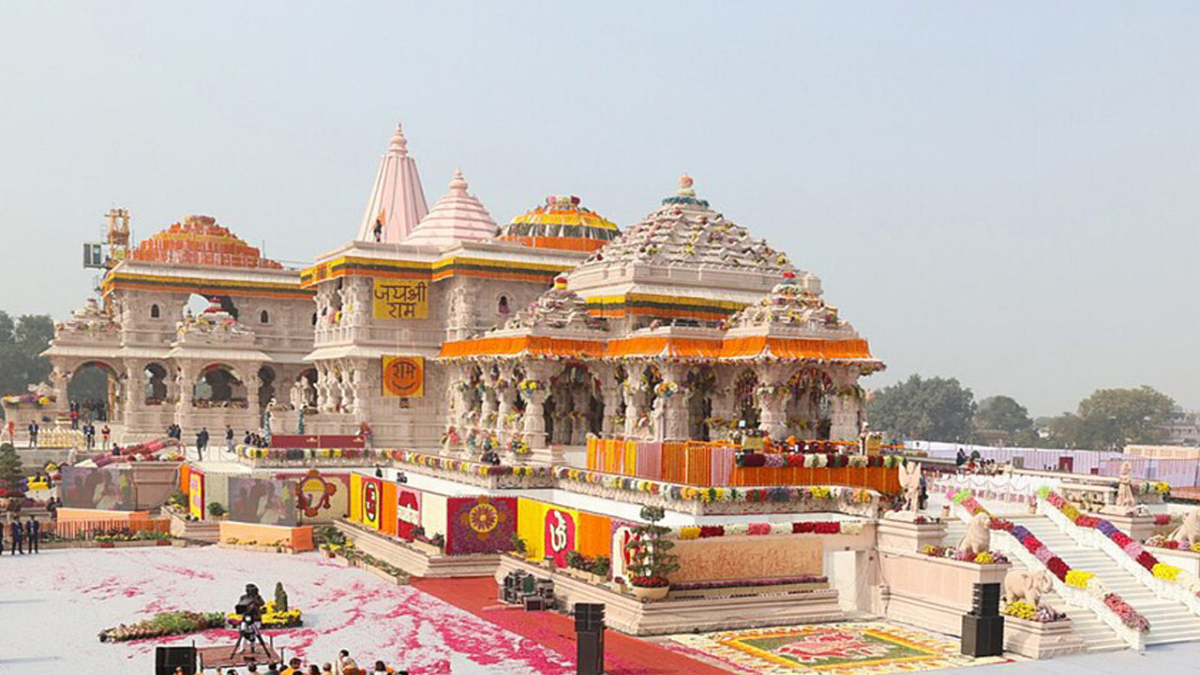
New Delhi, June 22, 2026: An intensive investigation by a Special Investigation Team (SIT) has uncovered major security and systemic lapses at the Ayodhya Ram Temple regarding the handling of billions in cash and gold offerings.
Constituted by the Uttar Pradesh government following allegations of embezzlement, the three-member panel—led by Lucknow Divisional Commissioner Vijay Vishwas Pant, Inspector General of Police Kiran S., and Finance Department Special Secretary Neel Ratan—is presenting its preliminary 150-page report to Chief Minister Yogi Adityanath. The initial probe has already resulted in the recovery of approximately ₹2 crore and placed key trust officials, private employees, and security networks under intense scrutiny.
High-Tech Obstacles: Deletion and Tampering of CCTV Footage
The most alarming revelation from the SIT probe involves the temple’s state-of-the-art surveillance network. Investigators uncovered distinct clues indicating deliberate tampering with, and partial deletion of, digital security records.
A central point of interest is a pen drive containing critical digital surveillance data, which investigators believe was compromised to hide illicit activities. The SIT has shifted significant focus toward the personnel managing, maintaining, and supervising the camera network, exploring whether there was systemic collusion within the security apparatus.
Sources close to the probe note that despite nearly ₹10 crore being spent on security management at the temple complex over the prior 11 months, individuals involved in the theft were allegedly able to maneuver around the system. In several instances, workers reportedly stood directly in front of cameras to deliberately block their view before pocketing cash and ornaments.
Lax Security and Uniform Violations in the Counting Room
The day-to-day operations inside the Pilgrim Facilitation Centre—located roughly 200 meters from the main temple—revealed a surprising lack of administrative control. The facility handles a massive volume of funds across two daily shifts, with normal cash collections ranging between ₹8 lakh and ₹13 lakh per day, and surging as high as ₹50 lakh to ₹60 lakh during peak seasons.
The SIT discovered that the State Bank of India (SBI), which oversees banking and deposit operations for the Shri Ram Janmabhoomi Teerth Kshetra Trust, outsourced the note-sorting and cash-counting duties to a private security agency based out of Varanasi. However, instead of deploying independent workers, the agency hired local laborers from Ayodhya based on direct recommendations from people connected to the Ram Temple Trust itself.
The investigation exposed several severe operational lapses:
- Lack of Frisking: There was no proper gate-checking or verification system to monitor what employees carried into or out of the secure zone.
- Dress Code Violations: While the trust had established a strict dress code and issued custom uniforms for cash counters, employees were consistently found counting bundles of currency notes in regular personal clothing.
- Nepotism in Hiring: Nepotism was highlighted when investigators discovered that a trust employee, Anukalp Mishra, had directly facilitated the hiring of his brother-in-law, Lavkush Mishra, for sensitive cash-counting operations.
Unexplained Valuables and Missing Trail of Gold and Silver
Beyond cash, the probe has exposed major discrepancies in the auditing of physical valuables. Devotees from around the globe have donated massive quantities of gold and silver jewelry, diamonds, and precious stones. However, when the SIT cross-referenced physical inventories with the trust’s official accounting ledgers, they found severe documentation gaps.
During grueling multi-hour interrogations, multiple trust office-bearers were unable to provide satisfactory explanations regarding the exact storage location, total inventory weight, or custody chains of these valuable items.
The timeline of the alleged grand-scale misappropriation points aggressively toward the massive Prayagraj Maha Kumbh Mela period in early 2025. During this time, the temple experienced an unprecedented spike in footfall, hosting nearly 10 lakh (1 million) devotees daily. Donation boxes across the complex were filling to the brim with raw cash within two hours of being placed, creating a chaotic environment that insiders allegedly exploited to siphon away unrecorded wealth.
Senior Leadership and Top Trust Officials Under the Scanner
The fallout from the investigation has reached the highest tiers of the temple’s administration. The SIT has interrogated 24 key individuals, including six employees from SBI and six digital systems experts from Tata Consultancy Services (TCS).
Crucially, the probe has trained its sights on Champat Rai, the powerful General Secretary of the Ram Temple Trust, alongside Trustee Anil Mishra (who directly oversees donation management) and Construction In-charge Gopal Rao.
A primary target of the interrogation is Ramashankar Yadav, alias Tinnu Yadav, a close, long-standing aide to Champat Rai. Following multiple rounds of intense questioning, investigators have begun mapped out the financial assets, properties, and bank accounts of Yadav and his immediate family members. An FIR against him is expected as the digital and financial audit trail tightens.
Widening the Scope: Land Scams and Procurement Fraud
As investigators reconstructed the entire financial flow—from the physical opening of the 40 donation boxes down to final bank deposits—they decided to widen the scope of the inquiry. The SIT is now actively investigating the trust’s historical real estate transactions dating back to 2021.
The team is reviewing allegations that the trust purchased approximately 71 acres of land surrounding the temple complex at hyper-inflated rates, sometimes paying between 500% to 800% more than the actual market value. The procurement pipelines for high-end construction materials used in the temple project are also being heavily audited for kickbacks and inflated billing.
Before returning to Lucknow to brief Chief Minister Yogi Adityanath, the SIT issued a strict travel ban, ordering all key trust members, temple functionaries, and suspect employees not to leave Ayodhya under any circumstances.
The public revelation of this investigation has already had a sharp impact on temple operations. Public trust has taken a temporary hit, with local reports indicating that daily donation box inflows have dramatically dropped while the probe plays out. Moving forward, the Uttar Pradesh government is expected to enforce a complete restructuring of the temple’s administration, introducing automated currency-sorting machines, stricter biometric checkpoints, and an independent, professional auditing system to restore the sanctity of the holy site’s financial management.
For a more comprehensive look into the digital manipulation uncovered by investigators, you can watch this breakdown on CCTV Data and Evidence Tampering in the Ram Mandir Case, which details how a key pen drive became central to the SIT’s ongoing inquiry.