

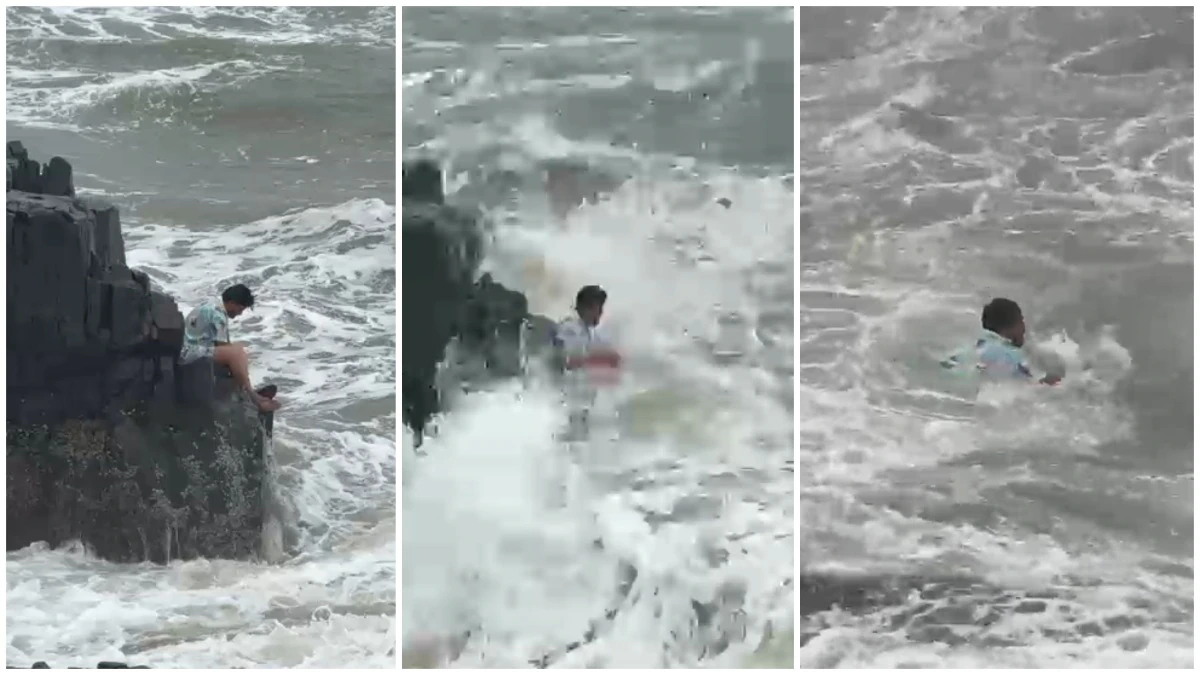
New Delhi, June 25, 2026: As news of the tragedy spread, the footage of the final moments before the victim was pulled into the sea has left viewers across the country in dismay. While the video has garnered millions of views, the conversation it has sparked is far more important than the clicks it has received: how many more lives must be lost before we learn to respect the sea?
The Incident: A Moment of Recklessness Turns Fatal
The tragic event unfolded on a day when the Arabian Sea was particularly turbulent, a common occurrence during the monsoon months in Goa. According to eyewitnesses and preliminary reports, Ashpak Masali had been spending time at Baga Beach with a female companion.
Reports suggest that despite the visible danger and the rough state of the sea, the victim ventured onto the rocky outcrops near the shoreline—an area notoriously hazardous when waves are high. While he was sitting on the rocks, seemingly unaware of the immediate danger, a series of powerful, high-energy waves surged toward the coast. In a matter of seconds, the force of the water proved too much to withstand.
The viral video capturing the incident shows the victim struggling to maintain his footing as the ocean’s strength overwhelmed him. Despite his attempts to stay above water, the strong currents and the pull of the receding tide quickly dragged him into deeper waters. His companion and onlookers reportedly raised an alarm, but the sea’s ferocity made any immediate rescue attempt nearly impossible. Following an extensive search and rescue operation by local authorities and lifeguards, his body was later recovered from the shoreline.
Why Monsoon Beaches are Different
For many tourists, the allure of Goa’s beaches remains strong throughout the year. However, there is a dangerous misconception that the beach is “just a beach,” regardless of the season. The reality, as evidenced by this tragedy, is drastically different.
During the monsoon season—which is currently active in Goa—the coastal environment undergoes a violent transformation:
- Unpredictable Waves: During the rains, the ocean currents become erratic. Waves do not arrive in a rhythmic pattern; instead, they can surge suddenly, catching even the most seasoned beachgoers off guard.
- Slippery and Unstable Terrain: Coastal rocks, which might seem like perfect vantage points for a photograph or a quiet moment, become slick with algae and moss. A single slip on these rocks can throw a person directly into the path of incoming waves.
- Rip Currents: Even if the water looks relatively calm near the shore, powerful rip currents—fast-moving channels of water that flow away from the beach—can pull a swimmer or someone standing in the shallows out to sea in seconds.
- Low Visibility and Rescue Delays: When the sea is rough, the water becomes murky, and the churning foam obscures everything. This makes it incredibly difficult for lifeguards to spot someone in distress or for a victim to keep their head above water.
The Responsibility of the Tourist
While authorities in Goa, including the “Drishti Marine” lifeguard services, regularly deploy flags and warning signs, a significant portion of beach safety comes down to individual responsibility.
The tragedy at Baga Beach highlights a recurring issue: the prioritization of the “perfect social media shot” or a thrill-seeking moment over basic survival instincts. When authorities declare a beach “red-flagged” or “no-entry,” these aren’t merely suggestions; they are life-saving boundaries.
Experts and local officials have repeatedly issued the following advice to anyone visiting coastal areas:
- Respect the Red Flags: If a beach has red flags, it means the water is dangerous. Do not enter. Period.
- Avoid Rocky Outcrops: Rocks near the shoreline are the most dangerous places to stand during high tide or rough seas. The spray from the waves can knock a person off-balance instantly.
- Heed Local Warnings: Lifeguards are trained to read the sea. If they ask you to step back, do so immediately. They are the professionals who know the local geography and the specific threats of that day.
- Avoid Alcohol Near the Water: Intoxication impairs judgment and reaction time—two things you desperately need when the ocean turns aggressive. As seen in this incident, alcohol likely played a role in the victim’s inability to react to the incoming surge.
- Don’t Turn Your Back on the Ocean: This is a classic maritime safety rule. Never turn your back on the waves. Stay alert and keep your eyes on the waterline at all times.
A Call for Change
The viral video of this tragedy is not just content for public consumption; it is a wake-up call. Every year, several tourists lose their lives in Goa’s waters, and a vast majority of these incidents are preventable.
As we move through the monsoon season, this incident should serve as a stark reminder to every traveler: nature is indifferent to our travel plans and our desire for a beautiful photo. When the sea is angry, it does not discriminate.
The most important takeaway from this unfortunate event is the need for a shift in perspective. A trip to the beach should be about relaxation and memories, not a challenge against the forces of nature. We owe it to ourselves, our families, and the rescue teams who risk their lives to find victims, to prioritize caution above all else.
Let the image of the waves at Baga Beach be a lesson etched in our minds—not one of regret, but one that encourages us to step back, stay safe, and respect the immense power of the sea.