

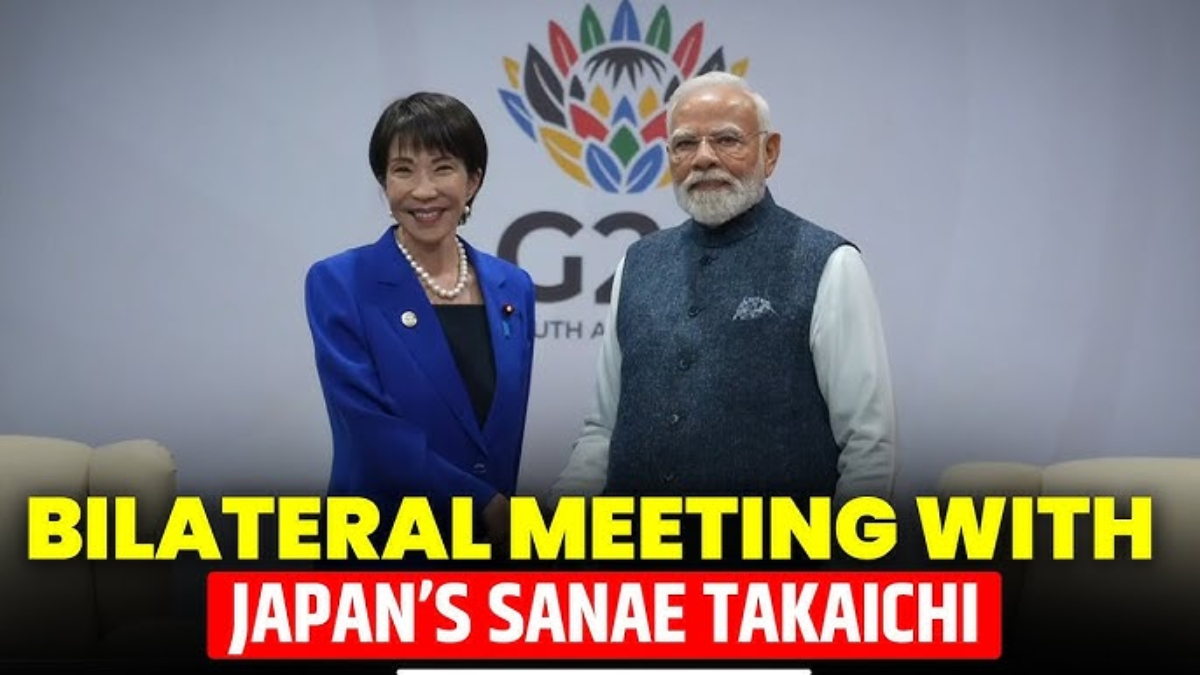
New Delhi, july 2, 2026 — In a major geopolitical development, Prime Minister Narendra Modi welcomed Japanese Prime Minister Sanae Takaichi to New Delhi for the 16th India-Japan Annual Summit. The high-profile three-day state visit, running from July 1 to July 3, 2026, marks Ms. Takaichi’s maiden official trip to India since taking office. The summit highlights a pivotal moment for both nations as they maneuver through complex global economic disruptions and shifting security dynamics in Asia.
Welcoming his Japanese counterpart, Prime Minister Modi shared his enthusiasm on social media, emphasizing the deep-rooted bond between the two democracies.
Navigating Global Turbulence Together
The meeting comes at a time when both New Delhi and Tokyo are facing unique global pressures. Geopolitical friction points across Europe and West Asia—notably recent security anxieties near the critical Strait of Hormuz maritime pathway—have triggered sharp economic challenges for both nations. Heavily dependent on external energy channels, both India and Japan have had to rapidly diversify their fuel and oil suppliers to hedge against inflation and protect local markets.
Compounding these energy stresses are arbitrary international trade tariffs and shifting alliances, pushing the long-standing partners to anchor their economic and defensive frameworks more locally. The strategic alignment between India and Japan has consequently transformed from a traditional friendship into an essential axis for regional self-reliance and risk mitigation.
Redefining Indo-Pacific Defence Cooperation
A central focus of the Modi-Takaichi bilateral summit at Hyderabad House is the significant upgrade in military and technology collaboration. As India continues to prioritize its Atmanirbhar Bharat (Self-Reliant India) program, Japan’s updated, proactive security orientation offers a highly complementary opportunity.
India is notably one of the few selected countries with which Japan holds a formal defence technology cooperation agreement, paving the way for advanced joint production. Beyond previous projects like the Indian Navy’s UNICORN stealth communication masts, discussions have turned toward groundbreaking initiatives:
- Naval Manufacturing: Cooperative manufacturing talks concerning Japan’s Mogami-class stealth frigates within Indian domestic shipyards.
- Propulsion Innovation: Exploration of next-generation hybrid and electrical propulsion frameworks for advanced warships.
- Aviation & Unmanned Systems: Potential co-development of high-performance engines tailored for military fighter aircraft and heavy-duty drones.
By diversifying its own defence industrial network into trusted partner geographies like India, Japan secures its supply chains, while India gains vital access to world-class manufacturing processes and specialized engineering capabilities.
Strengthening Economic Resilience and Tech Frontiers
Beyond defense hardware, the summit addresses critical structural weaknesses exposed by global manufacturing shortages. The Japanese yen and Indian rupee have both weathered headwinds from global currency fluctuations, making trade stability a high priority.
The two leaders are working to formalize deeper cooperation across multiple emerging technology sectors to insulate their economies from future shocks:Furthermore, substantial focus remains on regional development within India itself. Japan continues to actively back key infrastructure programs, most notably matching its “Free and Open Indo-Pacific” philosophy with India’s “Act East” policy. This is highly visible in Northeast India, where Japanese investments are powering connectivity projects designed to link landlocked states to broader Southeast Asian economic hubs.
The Power of the Quad and a Multipolar Asia
The New Delhi summit follows closely on the heels of the recent Quad Foreign Ministers’ Meeting hosted by India. Alongside Australia and the United States, the Quadrilateral Security Dialogue remains the bedrock of maritime security across the region. However, amid shifting diplomatic stances globally, the bilateral strength between India and Japan serves as a necessary anchor for the regional architecture.
Experts point out that the immense personal capital invested by Prime Minister Modi over the years, combined with Japan’s forward-looking foreign policy under Prime Minister Takaichi, ensures that the partnership remains resilient against changing political tides elsewhere. Rather than relying solely on Western-centric security umbrellas, the deepening of ties between New Delhi and Tokyo marks a steady transition toward a truly multipolar Asia, where regional powers assume direct responsibility for keeping trade routes open, lawful, and secure.
As Prime Minister Takaichi’s three-day itinerary continues, the ongoing dialogues in New Delhi send a definitive signal to the international community: the Special Strategic and Global Partnership between India and Japan is no longer just a diplomatic talking point. It has evolved into an active, functional alliance committed to safeguarding economic stability and a free Indo-Pacific.