

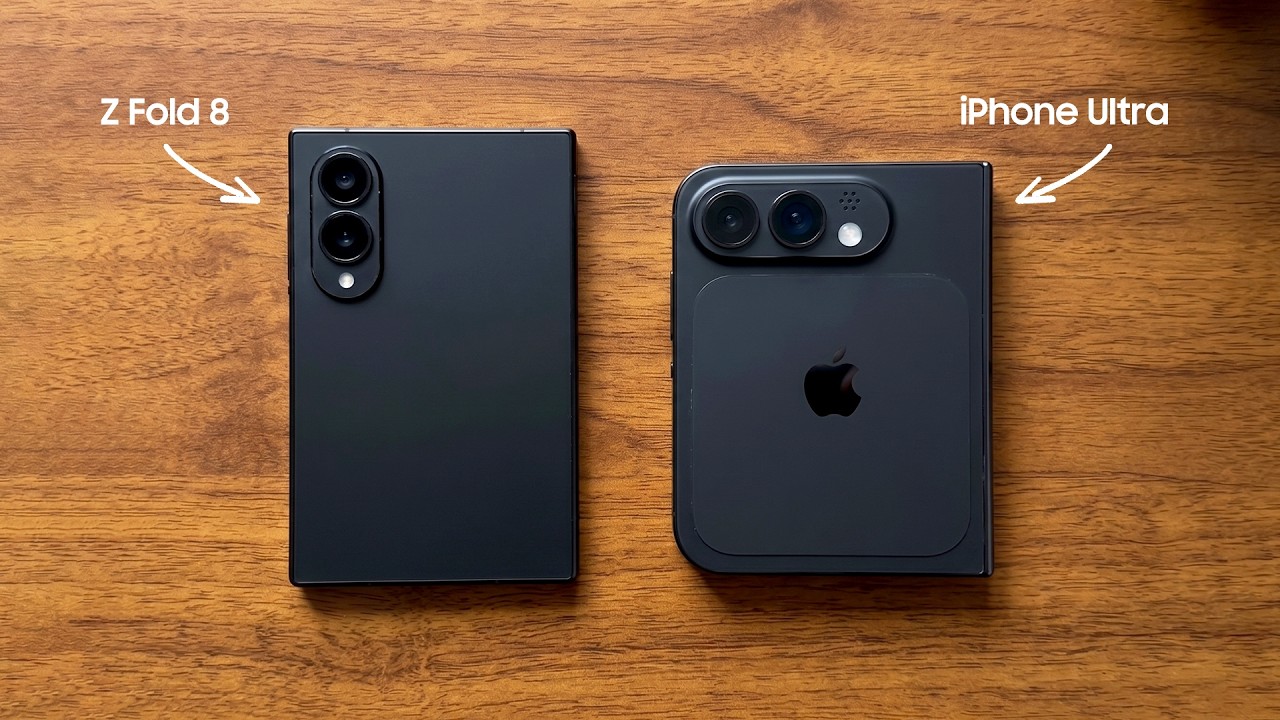
New Delhi, July 2, 2026: The premium smartphone market is on the verge of a historic showdown. For years, Samsung has enjoyed a dominant, comfortable lead in the book-style foldable arena. However, Apple is finally ready to gatecrash the party. The tech world is buzzing with massive leaks surrounding Apple’s first-ever folding smartphone, widely rumored to debut as the iPhone Ultra (or iPhone Fold).
Not one to back down, Samsung is completely rewriting its playbook. Instead of a standard incremental update, the South Korean giant is introducing a heavily redesigned, shorter, and wider flagship model: the Galaxy Z Fold 8 Wide.
With Samsung’s mid-year Galaxy Unpacked event set for July 22, 2026, in London, and Apple’s highly anticipated launch projected for September 8, 2026, the battle lines are officially drawn. Here is an updated, comprehensive look at how these two next-generation ultra-premium foldables stack up based on the latest industry data and supply chain leaks.
Form Factor and Design Philosophy
The biggest differentiators between these two heavyweights lie in their architectural footprints and design philosophies. Apple is focusing heavily on first-generation polish, aiming to solve long-standing consumer complaints regarding foldables, specifically bulk and display creases. Dummy units of the iPhone Ultra reveal an incredibly sleek, book-style device that measures an astonishing 4.5mm thin when unfolded. Apple is reportedly utilizing a premium titanium chassis and a revolutionary, redesigned hinge mechanism engineered to create an almost completely invisible crease on the inner display.
Samsung, meanwhile, is drastically shifting its form factor to counter Apple’s entry. Moving away from the narrow, tall designs of previous generations, the regular Galaxy Z Fold 8 is transforming into the “Wide” variant, while the classic aspect ratio is being pushed to a separate “Fold 8 Ultra” tier. The Galaxy Z Fold 8 Wide embraces a shorter, square-ish footprint. Leaked dimensions place it at 123.9 x 81.9 x 9.7mm when folded, stretching out to 123.9 x 161.4 x 4.5mm when opened. Despite being slightly thicker than past models due to its new wide hinge architecture, it utilizes a specialized laser-drilled metal support plate that distributes folding stress evenly, shaving its weight down to a featherlight 201 grams.
Battle of the Displays
When it comes to screen real estate, both devices approach the wider form factor with unique aspect ratios.
- Apple iPhone Ultra: Leaks indicate it will sport a comfortable 5.5-inch outer cover screen for quick, one-handed tasks. Unfolding the device reveals a massive 7.8-inch flexible OLED internal display, closely mimicking the screen real estate and utility of an iPad mini. Apple is sourcing these advanced flexible panels from Samsung Display but applying strict proprietary engineering to ensure maximum flatness.
- Galaxy Z Fold 8 Wide: Samsung’s wide-angle warrior features a 5.5-inch external cover screen built with a comfortable 16:10 aspect ratio, making it look and feel like a standard candybar smartphone when closed. Inside, it boasts a 7.6-inch Quad HD+ Dynamic AMOLED 2X main display with a distinct 4:3 aspect ratio. Both panels will fully support a fluid 120Hz adaptive refresh rate.
Processing Power and Performance
Under the hood, both tech giants are packing their absolute best silicon to handle intense multitasking and generative AI demands.
The iPhone Ultra will mark the grand debut of Apple’s next-generation A20 Pro chipset, built on a cutting-edge, ultra-efficient manufacturing process. Paired with a rumored 12GB of RAM—a necessity to run the company’s rapidly evolving Apple Intelligence features locally—the iPhone Ultra will focus heavily on sustained power efficiency, hardware-software synergy, and instantaneous app continuity when transitioning from the outer screen to the inner display. It is also expected to feature a next-generation C2 modem for advanced connectivity.
Samsung answers back with the formidable Qualcomm Snapdragon 8 Elite Gen 5 for Galaxy, the same high-performance chip powering the Galaxy S26 Ultra. Complemented by 12GB of RAM and up to 1TB of internal storage, the Fold 8 Wide is built to be a mobile workstation. Samsung will leverage this raw processing power to drive its new One UI 9 software environment, optimizing advanced split-screen multitasking, floating windows, and its suite of Galaxy AI tools.
Camera Configurations
Photography presents an interesting contrast in strategies for this generation of foldables.
The iPhone Ultra is rumored to opt for a minimalist but high-performance layout. It will house a dual-camera system arranged inside a sleek, pill-shaped module on the back. While exact sensor details remain under wraps, it is highly anticipated to borrow the advanced main camera technology from the iPhone 18 Pro series, potentially including a variable aperture system. For selfies, a clean hole-punch cutout will be located in the upper-left corner of the inner screen, alongside a centered cutout on the cover screen. Notably, rumor chains suggest Apple may swap out its traditional Face ID array for a Touch ID sensor embedded directly into the power button to keep the device’s profile incredibly thin.
Samsung’s Galaxy Z Fold 8 Wide leans into a reliable dual-50MP rear camera configuration. It will feature a 50MP primary camera with an f/1.8 aperture alongside a upgraded 50MP ultra-wide lens (f/1.9). While early rumors hinted at a massive 200MP sensor, recent supply chain details confirm Samsung is reserving that ultimate hardware for its “Ultra” foldable tier to keep the Wide variant competitively priced. For video calls and selfies, the Wide relies on a familiar pair of 10MP front-facing cameras located on both the cover and main displays.
Battery Life and Charging Speeds
Driving large dual-screen setups requires serious power management, and both manufacturers are upgrading their battery tech. Samsung is making a highly requested leap forward by fitting the Galaxy Z Fold 8 Wide with a robust 4,800mAh battery—a noticeable capacity upgrade over previous generations made possible by denser silicon-anode battery technology. It will support 45W wired fast charging alongside 15W wireless charging, allowing users to juice up their devices rapidly.
Apple’s battery capacity for the iPhone Ultra remains tightly guarded, but supply chain trackers indicate that Apple is similarly relying on high-density cells to fit inside its ultra-thin 4.5mm frame, backed by iOS’s legendary background power optimization.
Expected Pricing and Verdict
Premium innovation demands a premium price tag. The regular Galaxy Z Fold 8 Wide is expected to maintain Samsung’s established flagship baseline, starting at $1,999 USD for the 256GB base model, scaling up to $2,499 USD for the 1TB option. Apple’s iPhone Ultra is rumored to position itself as a hyper-premium luxury tier, with launch prices expected to start around $2,000 USD or higher, officially making it the most expensive iPhone ever released.
Ultimately, these two powerhouses target slightly different audiences. The Galaxy Z Fold 8 Wide is the definitive choice for those seeking a mature, heavily optimized multitasking ecosystem with a proven track record. The iPhone Ultra, conversely, will appeal to those who want a breathtakingly thin, crease-free piece of hardware that integrates flawlessly with the Apple ecosystem. The smartphone war of 2026 is officially wide open.